Illustrated · 1 min
When a pair of lines are crossed by a transversal line, the angles in matching corners are called corresponding angles.
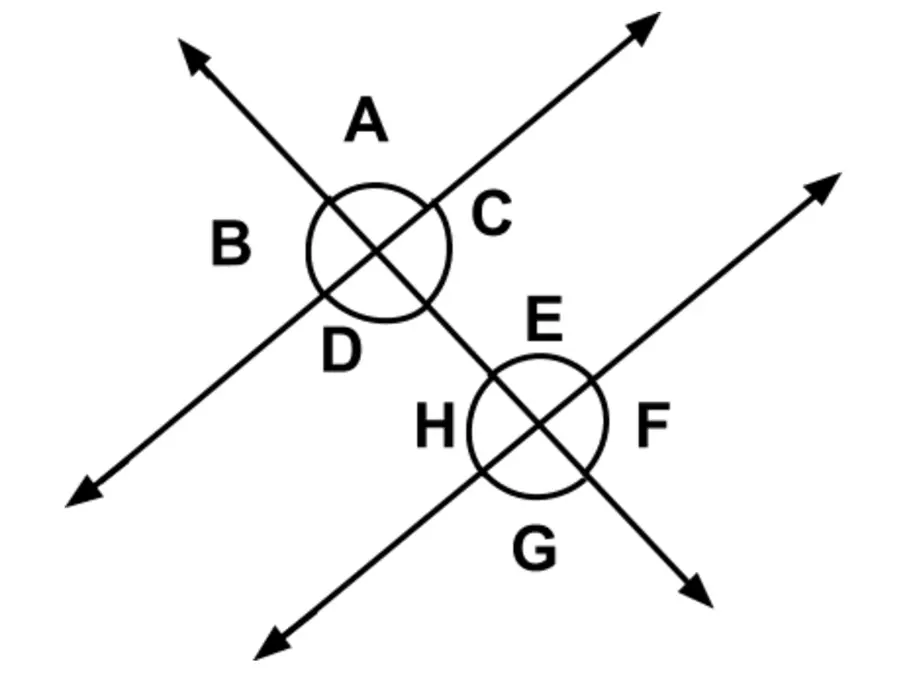
Observe the graph below. Corresponding angles lie on the same side of the transversal line EF, on the same side of lines AB and CD. This is another way to describe "matching corners". For example, in this case, b and f are corresponding angles. Can you identity more corresponding angles?
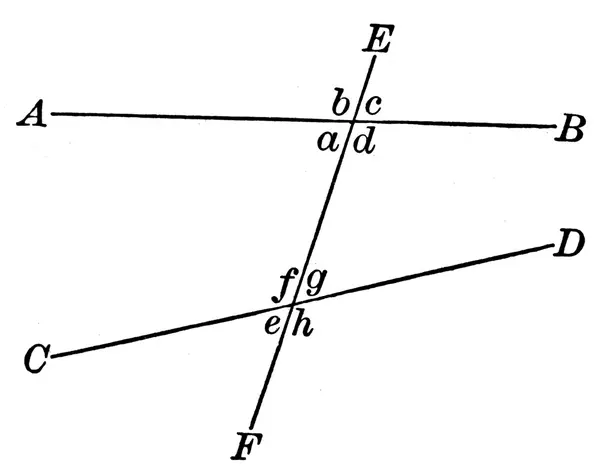
a and e; c and g; d and h are corresponding angles.
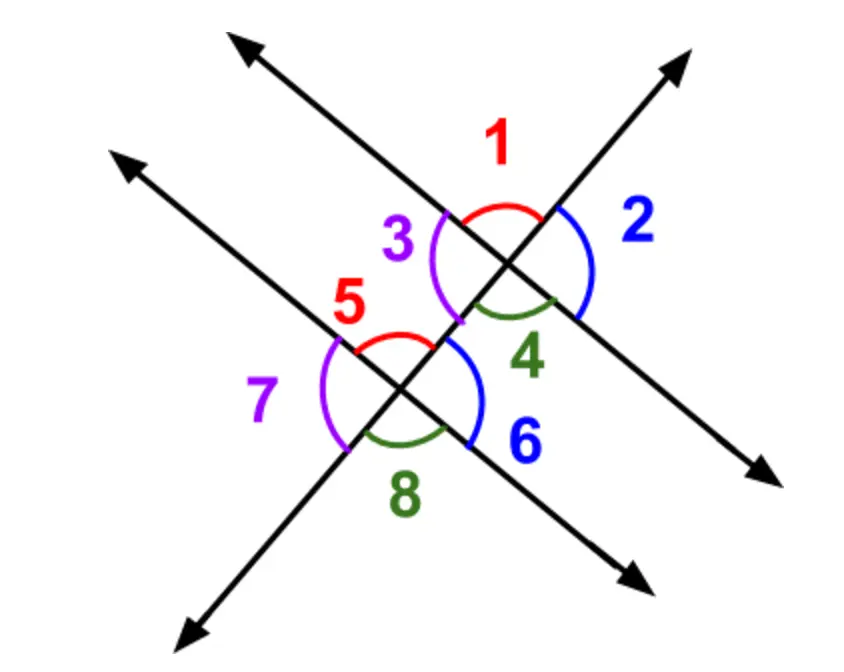
Now Let's look at corresponding angles in parallel lines. Observe the corresponding angles in the graph below.
Theorem: If the lines cut by a transversal line are parallel, the corresponding angles are equal, or congruent.
The converse of this is true as well: If the lines cut by a transversal line have equal corresponding angles, the lines are parallel.
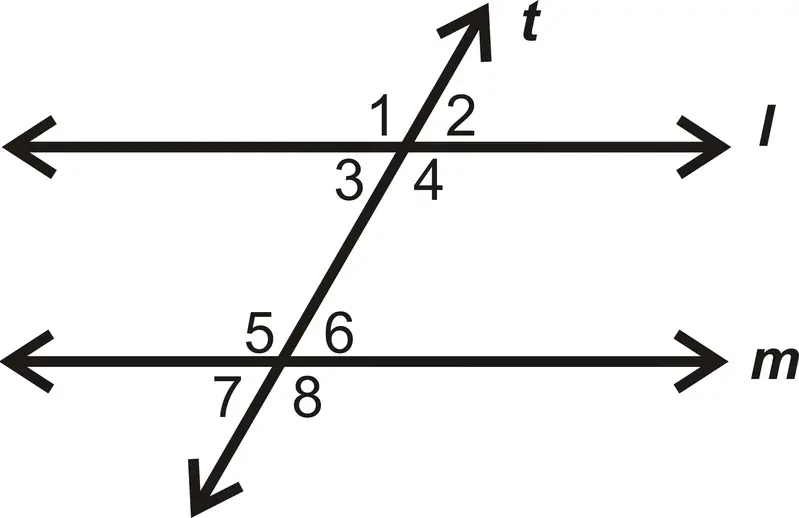
For example, in the graph below, line l and m are parallel, angle 1 and 5 are congruent. Try to identify other corresponding angles in this graph and verify that they are in fact congruent.
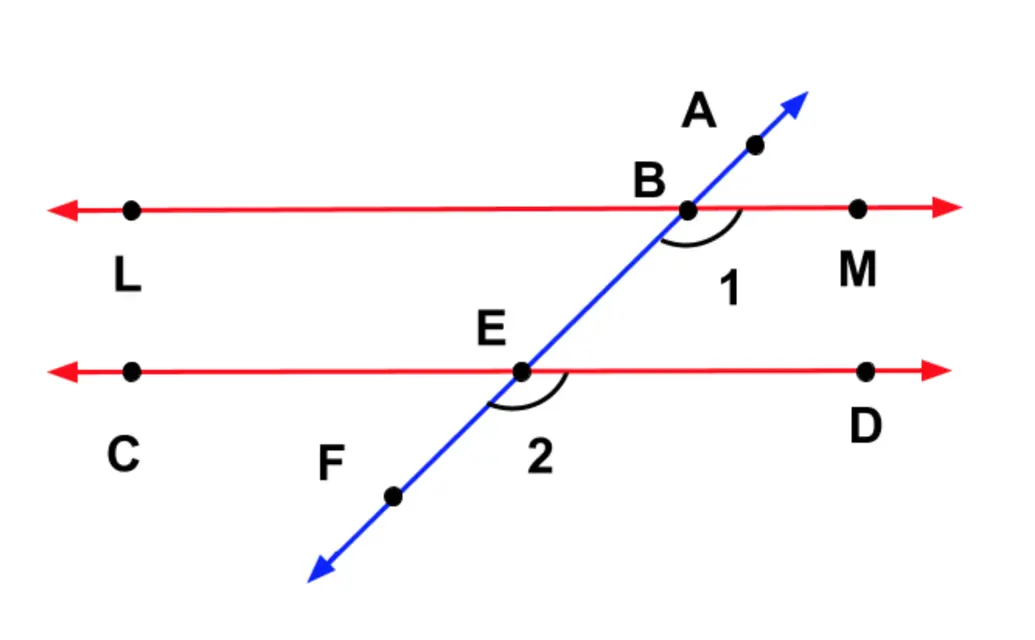
We can use this theorem to prove this