Practice problem
Universal Genetic Code (Evolution) — Evidence & Examples
By Deena Hauze

+1 contributors
Contributors

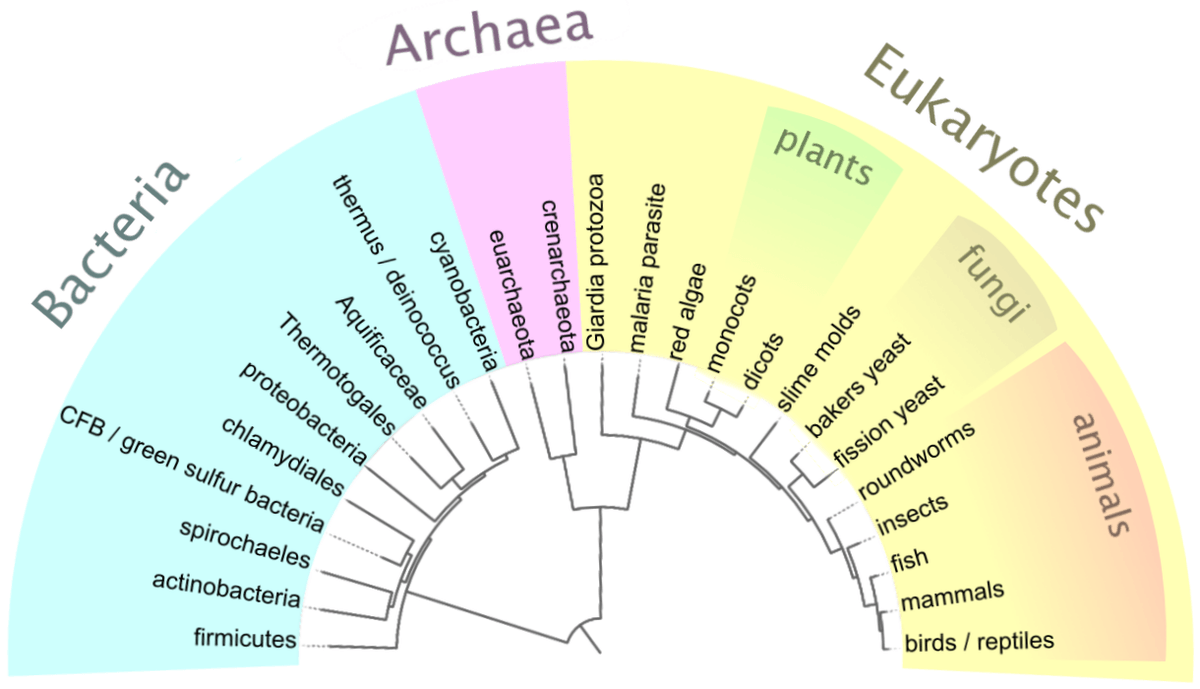
A simplified biological "Tree of Life"
Image by Madprime CC0 via Wikimedia Commons
Species that have a common ancestor have similar DNA and RNA. The more closely they are related, the more similar their DNA is. Using the "tree of life" above, determine which of the following organisms have the most similar DNA.