Abiotic Components of Ecosystems — Definition & Examples

Illustrated · 1 min

Examples of Abiotic Factors

Abiotic factors include all the nonliving things you find in nature. They play an important part in the lives of all organisms.

Some examples of these factors include wind, sunlight, soil, temperature, climate, and water.

Abiotic factors are the nonliving components of an ecosystem. Some examples include the wind, sunlight, soil, temperature, atmosphere, and water.

Image source: By Gabi Slizewska

Illustrated · 1 min

What Are Abiotic Factors?

Abiotic factors are all of the nonliving parts of an ecosystem.

Let's break down the word. The prefix a- means "not" and the root word bio means "life" and "living". So, abiotic means "not alive".

The word abiotic is written. Two arrows are pointing down beneath the word. The prefix "a" points to "not", while "biotic" points to "alive". So, abiotic means not alive.

Image source: By Sarah Morgan

Examples include things like pH, temperature, oxygen concentration, sunlight, climate, precipitation (rain, snow), water, and types of soil.

Abiotic stresses on plants include temperature, salinity, heavy metal contamination, sunlight, water levels, and soil.

Image source: By Michael James Oosten, Olimpia Pepe, Stefania Pascale, Silvia Silletti, Albino Maggio CC BY 4.0, via Wikimedia Commons

Why Are Non-living Factors Important?

Maintaining stable abiotic conditions is extremely important for sustaining life. Almost all biotic components in an ecosystem rely on abiotic conditions to stay alive. For example, sunlight, soil, and carbon dioxide have a big effect on plant growth.

What's Another Example?

Let's take a look at a lake ecosystem. Abiotic factors here include water, pH, sunlight, and temperature. If any of those features change, such as if the water pH increases, all aquatic life that relies on stable pH will be affected.

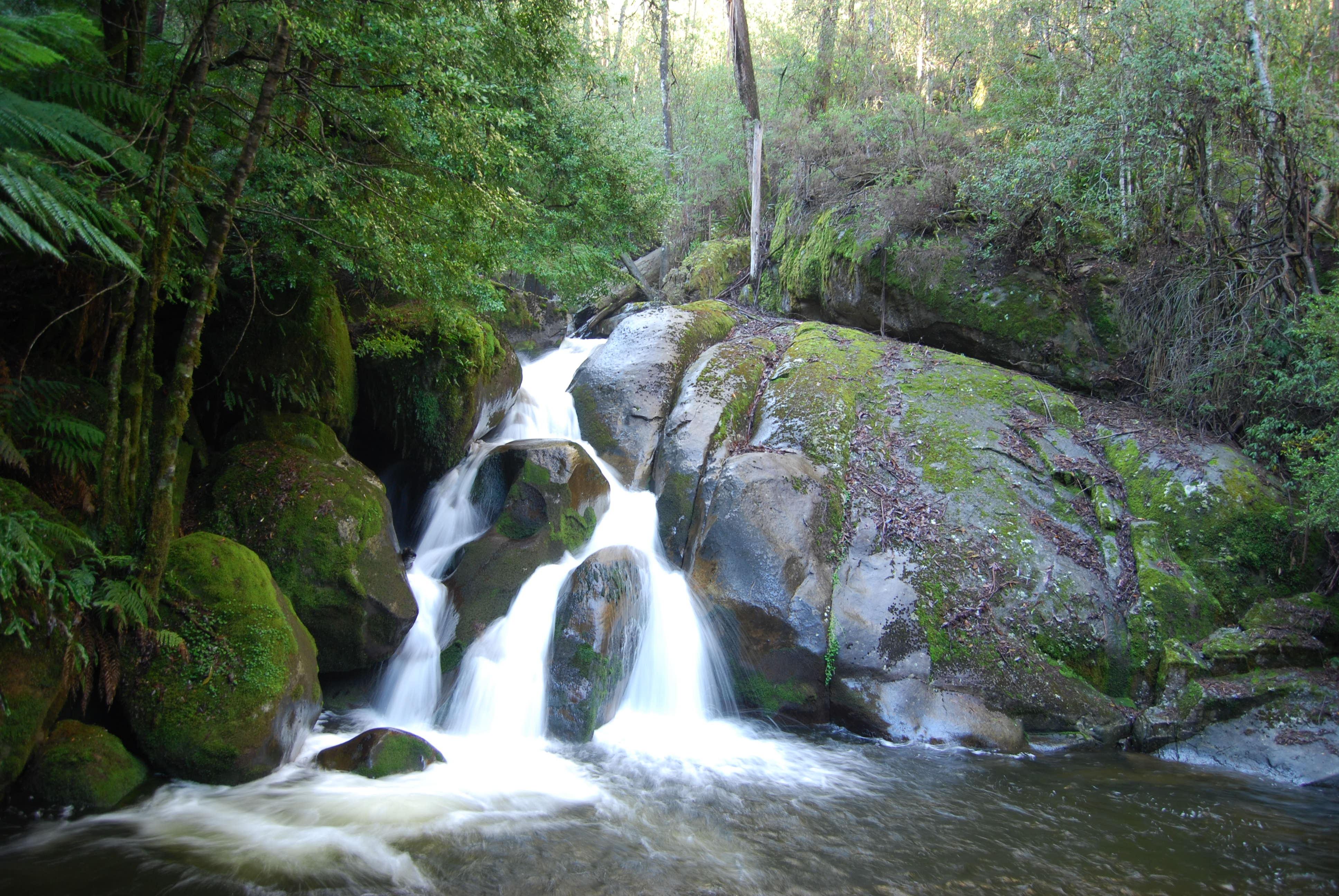
A small waterfall in the forest

Image source: By Peter Halasz CC BY-SA 3.0, via Wikimedia Commons

Vocabulary Review:\color{#8925AE}{\text{Vocabulary Review:}}

Biotic\color{#8925AE}{\text{Biotic}} : The living parts of an environment

Abiotic\color{#8925AE}{\text{Abiotic}} : The nonliving parts of an environment

Video

(Video) Abiotic and Biotic Factors

by Mark Drollinger

This short video clarifies what abiotic factors are and what role they play in biology. In other words, it explains how non-living things affect living things in an ecosystem.

Common abiotic factors include sunlight, oxygen, nitrogen, climate, temperature, pH levels, and water.

Type a concept, like “slope” or “photosynthesis”.

↑ ↓ to choose · Enter to openSearch explanations and problems