Interactive · 2 questions

+5 contributors




What Is an Acid?

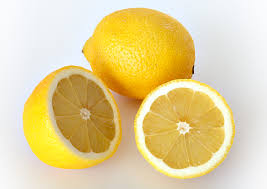
Image source: By Michael Fludkov CC BY 2.0, via Wikimedia Commons
Though most of us don't usually stop to think about protons when drinking a nice cold glass of lemonade or limeade, it is the lemons and limes that give our beverages and foods that yummy, sour taste. You've probably described food as acidic before, but what exactly does that mean?
In simplest terms, an acid is any compound that donates ions. Remember that H (hydrogen) contains only one electron and one proton. Since a ion is an atom missing one electron, an ion is actually just a proton.
So why are acids important? And, more pressingly, why do they taste so good? (Or gross, if you don't like sour food.)
They are important because of their reactions with bases, which are any compounds that lose ions. These two ions are important to each other because, when combined, they form , or , commonly known as water.
At its core, food is biology. Food is how we get all of the chemical compounds that grow our muscles and bones, cause the reactions that allow us to move and breathe and think, and give us the energy to stay alive. Every taste is caused by a reaction between the chemicals in your food and in your tongue, telling you that your body has a use for what you're putting in it.
Most reactions in your body take place in water. Acids and bases change the type of reactions that can occur in a specific solution. Because of this, a little bit of acid is good for you, but when it's very concentrated, it can cause your body to stop functioning the way it should, possibly killing you. Don't worry though. No amount of lemonade will do that. As it turns out, foods tend to only be very slightly acidic when compared to other substances such as the liquid found in batteries. The pH scale measures the amount of ions in a certain amount of solution, and is used to describe how acidic a compound is. The lower the pH, the more acidic the compound is.

Image source: By OpenStax College CC BY 3.0, via Wikimedia Commons
Which is more acidic: lemonade or lemon juice?
As noted, the acidity of a compound is measured by how many ions it contains per a certain amount of water in a solution. Lemonade itself is a solution of lemon juice in water. As you add more water, it becomes less sour because your taste buds recognize the acidity (concentration of acid), not the amount of ions themselves. Lemonade, therefore, has a higher pH than pure lemon juice.
Although a pH of 0, like battery acid, and pH 2, like lemon juice, may seem like relatively close pH values, the pH scale is not linear. Instead, it depicts the power of ten of the concentration of ions. You don't need to worry about this for now, but what it means is that lemon juice has 10 or 100 times fewer ions than battery acid.
Look at the pH scale above. How does the acidity of black coffee compare to the acidity of a soda with a 2.5 pH?