
Illustrated · 2 min
We have taken some time to learn about what a voltaic cell is. If you can remember, if not please click the link to review, let's recall that there are two electrodes within this voltaic cell--an anode and a cathode. These electrodes are actually known as active electrodes, but they're not the only type.
On this page, we are going to talk about the two different types of electrodes, and the differences between them. But let's begin by defining what an electrode is again.
Electrode: a conductor, or strip of metal, used to establish an electrical current with a nonmetallic part of a circuit
So basically, an electrode is some metal that is used to conduct electricity. What about these different types?
There are two types of electrodes: active and inert
When we talked about voltaic cells, a kind of electrochemical cell, we were talking about active electrodes. When we talk about electrolysis, we are talking about inert electrodes. Let's define each!
An active electrode is a metal strip that actively takes part in the chemical (oxidation-reduction) reaction in an electrochemical cell. An easy way to remember this is that an active electrode is actively participating in the reaction. Active electrodes:
- can be oxidized or reduced
- conduction of energy happens through ion exchange
- are used in electroplating
- most commonly made of copper
Let's take a look at a voltaic, or electrochemical, cell and point out these active electrodes.
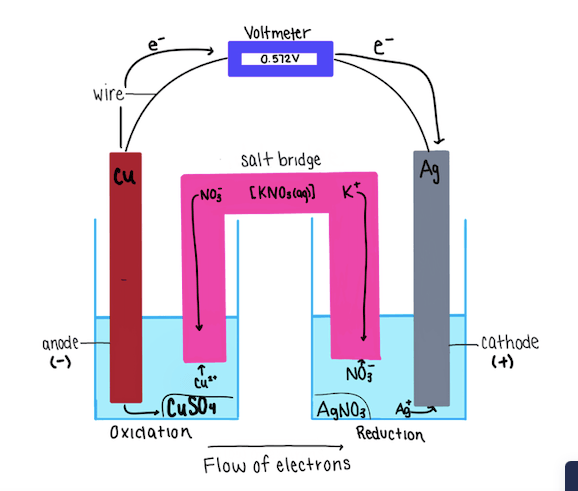
Voltaic Cell by Summer Black
In this image of an electrochemical cell, the active electrodes are the anode and the cathode. The flow of electrons moves from the negative anode, where oxidation is happening, to the positive cathode, where reduction is happening.
Now that we have established what an active electrode is, let's take about inert electrodes.
An inert electrode does NOT participate in the chemical reaction. These serve only as a source or sink for electrons without playing any sort of chemical role in the reaction. Inert electrodes:
- provide interface for reaction
- conduction of electricity happens through electron transfer
- used in electrolysis
- typically precious metals, mercury, or carbon
Now that we have established what active and inert electrodes are, let's put our information in a table for an easy side-by-side comparison of the two!
There you have it! Now you should know the difference between active and inert electrodes!
