Interactive · 1 question

Amino Acids

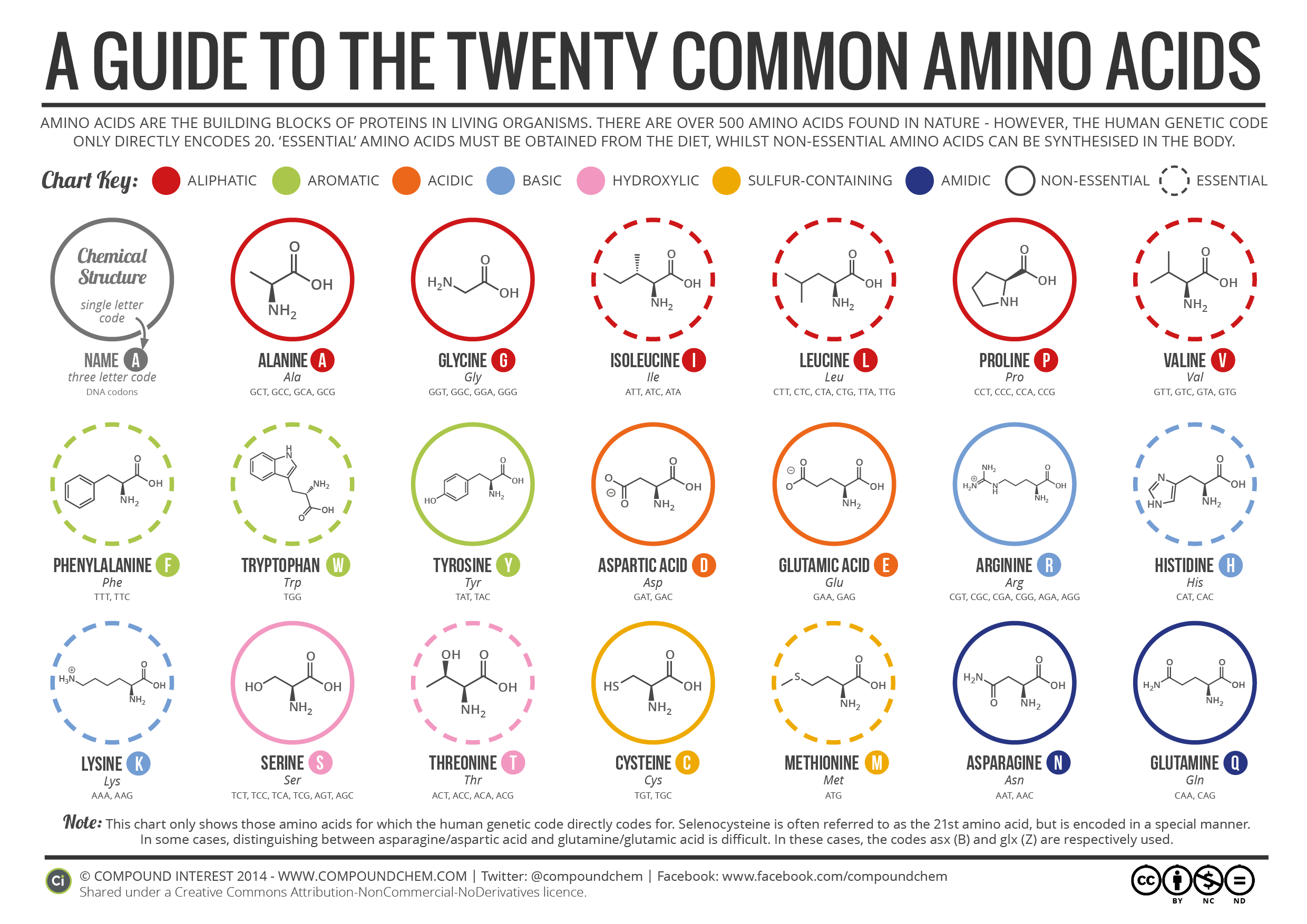
Amino acids are the building blocks of protein. Some are produced by our bodies, while others must be obtained through diet.

Our bodies can synthesize 11 of them. But how many amino acids are there in total?

Choose one answer

Illustrated · 1 min

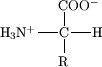
Amino acids are the basic units of proteins. They are composed of a central carbon, an amine group (H3N+)(H_3N^+), a carboxyl group (COOH)(COOH), and a functional group (R)(R), which varies and gives each amino acid its unique chemical properties. Amino acids link together to form protein primary structures by forming bonds between their amine and carboxyl groups; the amino acids' functional groups are responsible for secondary structure.

Amino acids are amphiprotic, because the amine groups lend them basic properties, while the carboxyl group lends them acidic properties. Depending on the particular functional group an amino acid has, it may be more acidic or basic. There are twenty "standard" amino acids commonly found in proteins, but many more exist.

Basic amino acid structure (Source: Ppfk, Wikimedia Commons)

Type a concept, like “slope” or “photosynthesis”.

↑ ↓ to choose · Enter to openSearch explanations and problems