Anatomical and Physiological Evolution — Evidence & Types

Illustrated · 1 min

Anatomical and Physiological Evidence of Evolution

Anatomical

Anatomical evidence of evolution focuses on similarities and differences in the body structures of different species. Comparative anatomy is the field of study dedicated to this.

Similarities in anatomical structures of different species signify that the two species have a relatively recent common ancestor. While it's possible for different species to develop similar skills independently, it's very unlikely that they developed that same or very similar bone structures independently.

We call anatomically similar body parts homologous structures.

A comparison of the anatomy of a human heart and a turtle heart

The human heart has a very similar structure to that of turtles and many other species. \\ Image source: By Gabi Slizewska

Note that homologous structures don't have to have the same function. For example, a human arm and a whale flipper are used for completely different purposes but are made of very similar bones. They are homologous to each other.

Physiological

Physiological evidence of evolution deals with the functions of body parts among different species.

Analogous structures are body parts of different species that have a similar function. These structures have a similar purpose but can look completely different.

Vestigial structures are also useful to observe. These are structures found in the body that no longer serve an important function. The human tail bone is an example. It suggests that humans evolved from a species that had a tail.

A comparison of the wing of a butterfly and the wing of a bat

The wings of a butterfly and the wings of a bat have the same function, to fly. However, the structures look nothing alike. \\ Image source: By Gabi Slizewska

Similar function does not mean that two species have evolved together. If the function is the same but the structures are not similar, then there probably is no recent common ancestor.

Analogous structures are important because they show how similar functions evolved independently among different species. Convergent evolution is the process by which different species independently evolve analogous structures because they have to adapt to similar environments.


Illustrated · 2 min

Evidence of Evolution: Anatomical and Physiological

The anatomical structures and physiological functions of different species provide evidence of evolution. Scientists compare and contrast types of anatomical features, known as homologous structures, vestigial structures, and analogous structures, to figure out how closely related different organisms are.

Homologous Structures

Homologous structures are parts of different species that originate from a common ancestor. For example, all vertebrate limbs have the same general structure but are used in astoundingly different ways.

The wing of a bird and the arm of a human can be considered homologous structures. How these structures are used and how they function is the physiological part of evolution. The physiology of these structures can be very different from one species to another. The same bone structure is used for hooves, wings, and fingers.

Homologous structures have similar forms but different purposes.

Image source: By Mcy jerry CC BY-SA 3.0, via Wikimedia Commons

A really cool example of a homologous structure is the human tail bone. Other mammals, like monkeys, share this bone with us; they just have a tail to go along with it.

Another bizarre example is the number of neck vertebrae that mammals have. We all have seven neck bones regardless of whether it's a person, a giraffe, a mouse, or a whale.

A kiwi bird

Image source: By James St. John CC BY 2.0, via flickr.com

Vestigial Structures and Homologous Structures

One kind of homologous structure is called a vestigial structure, which is an inherited structure that has lost most of, if not all of, its original functions. Some examples include the appendix of a human or the hip bones of a dolphin. We still have the vestigial structure, but we don't need it or use it.

The adorable kiwi bird, shown above, has hollow bones and some remnants of wing bones as vestigial structures, despite the fact it can't fly.

Analogous Structures Are the Opposite of Homologous Structures

Analogous structures are the exact opposite of homologous structures; they have very different structures but the same function. An easy to remember example of an analogous structure is a bat's wing and a bumblebee's wing; they both are used to fly but they have incredibly different structures.

Vocabulary Review:\color{#8925AE}{\text{Vocabulary Review:}}

Fossil\color{#8925AE}{\text{Fossil}} : The remains or stone impression of a long-deceased organism

Vestigial Structure\color{#8925AE}{\text{Vestigial Structure}} : Inherited structures that have lost most of, if not all of their original functions

Homologous Structure\color{#8925AE}{\text{Homologous Structure}} : Structures that are shared between different organisms and that originated with a common ancestor

Analogous Structure\color{#8925AE}{\text{Analogous Structure}} : The exact opposite of homologous structures; they have very different structures but the same function

Illustrated · 1 min

Homologous and Vestigial Structures

Scientists can look at the physical structures of different species to determine how they are related. When two different species have anatomically similar structures, we call them homologous structures. These structures look similar but don't necessarily have the same function. These anatomical similarities show how closely related two creatures are.

Sometimes these homologous structures are still used, such as the finger and wrist bones of mammals. The wrist bone and finger structures of modern mammals look very similar to each other and all ancient mammals. This shows that different species of mammals share a more recent common ancestor than, say, a mammal and a reptile. Below, you can see how the bones of different mammals look slightly different yet surprisingly similar.

Bone structures of a human arm, dog leg, bird wing, and whale flipper

Image source: By Волков Владислав Петрович CC BY-SA 4.0, via Wikimedia Commons

Another structure that can be looked for is called a vestigial structure. These are "leftover" bones or organs that are still present in modern organisms even though they serve little or no purpose. They might still be used for some things, but they are typically not essential. Below, you can see the vestigial bones in a whale. From the fossil record, we know that whales evolved from land-dwelling mammals, and the vestigial remnants of hind legs can be seen in modern whales.

Diagram showing the vestigial leg bones of a whale

Image source: By Andrew Z. Colvin CC BY-SA 3.0, via Wikimedia Commons

Video

(Video) Comparative Anatomy: What Makes Us Animals

by CrashCourse

In this video, Hank from Crash Course discusses what comparative anatomy is and the role it plays as evidence of evolution.

Video

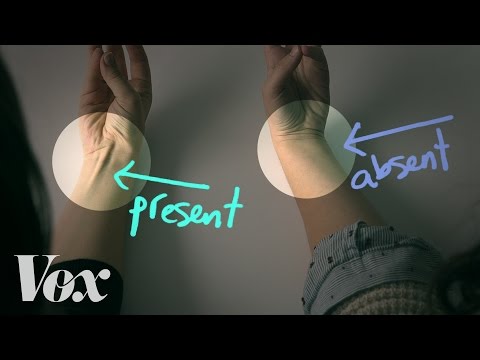
(Video) Proof of Evolution That You Can Find on Your Body

by Vox

In this video, Vox discusses odd characteristics that humans have which show evidence of evolution.

Type a concept, like “slope” or “photosynthesis”.

↑ ↓ to choose · Enter to openSearch explanations and problems