
Illustrated · 1 min
By Gabi Slizewska

+1 contributors
Contributors


Image source: By Gabi Slizewska
Illustrated · 1 min
Image source: By Gabi Slizewska
Illustrated · 1 min

Image source: By Valeri Natole
The biosphere is the broadest category for ecology. It includes all ecosystems on the planet, which is why it's sometimes called the zone of life. Every plant, animal, and single-celled microorganism is part of it!
This definition exists to talk about large-scale factors that affect everything. The biosphere can be discussed in terms of climate change, global warming, carbon dioxide levels, or sea levels. Because these things are global factors, they affect the global biosphere.
This level of organization is slightly different from biomes, the next category down. Biomes have distinct climates, vegetation, animal life, and adaptations needed to survive in them.
Earth may be huge, but small changes to natural resources have big effects on things like carrying capacity and fitness. It's a small world after all.
Illustrated · 1 min
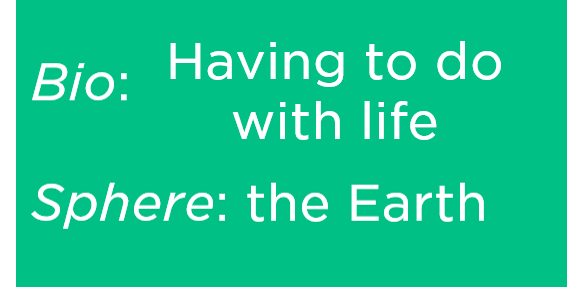
Image source: By Valeri Natole
The biosphere is the global ecological system. It includes all life on Earth and all ecosystems capable of supporting life. Every living thing, every plant, every lake, and every desert is a part of it. It's pretty massive and pretty amazing. This is the largest category of organization for biologists.
It's different from the next level of ecological organization, the biome. The biosphere can be divided into several biomes. These regions have specific climates, vegetation, animals, and adaptations necessary to survive in them.
Check out the graphic below. It shows each of the biological levels of organization, all the way from tiny atom to organism to gigantic planet.

Image source: By Mikala14 CC BY-SA 3.0, via Wikimedia Commons
Just like atoms interact to make a molecule or species interact in a community, ecosystems and biomes are connected with one another to form the biosphere. A critical example of Earth-wide connection is the water cycle. Living organisms need water, and there is a large number of living organisms on our planet. The water cycle moves the water that living things use from ecosystem to ecosystem across the biosphere.
: The study of organisms and their environments
: The global system which includes all life and ecosystems
: A large group of ecosystems defined by soil and climate types
: The interactions between a community and its environment
: A group of interacting populations
: A group of organisms of the same species living in a particular geographical area
: A group of organisms that can breed and create fertile offspring
: An living individual
Illustrated · 1 min

Image source: By Gabi Slizewska
Video
by Crash Course Kids

This video will introduce you to the spheres of Earth.
The geosphere includes rocks, soil, and other nonliving parts. The biosphere includes all living things.




