Biotic Components of Ecosystems — Definition & Examples

Illustrated · 1 min

Factors in an Environment

Every element of an ecosystem belongs to one of two categories: biotic or abiotic. It all depends on whether the element is living or nonliving. Any living thing found in an ecosystem is called a biotic factor.

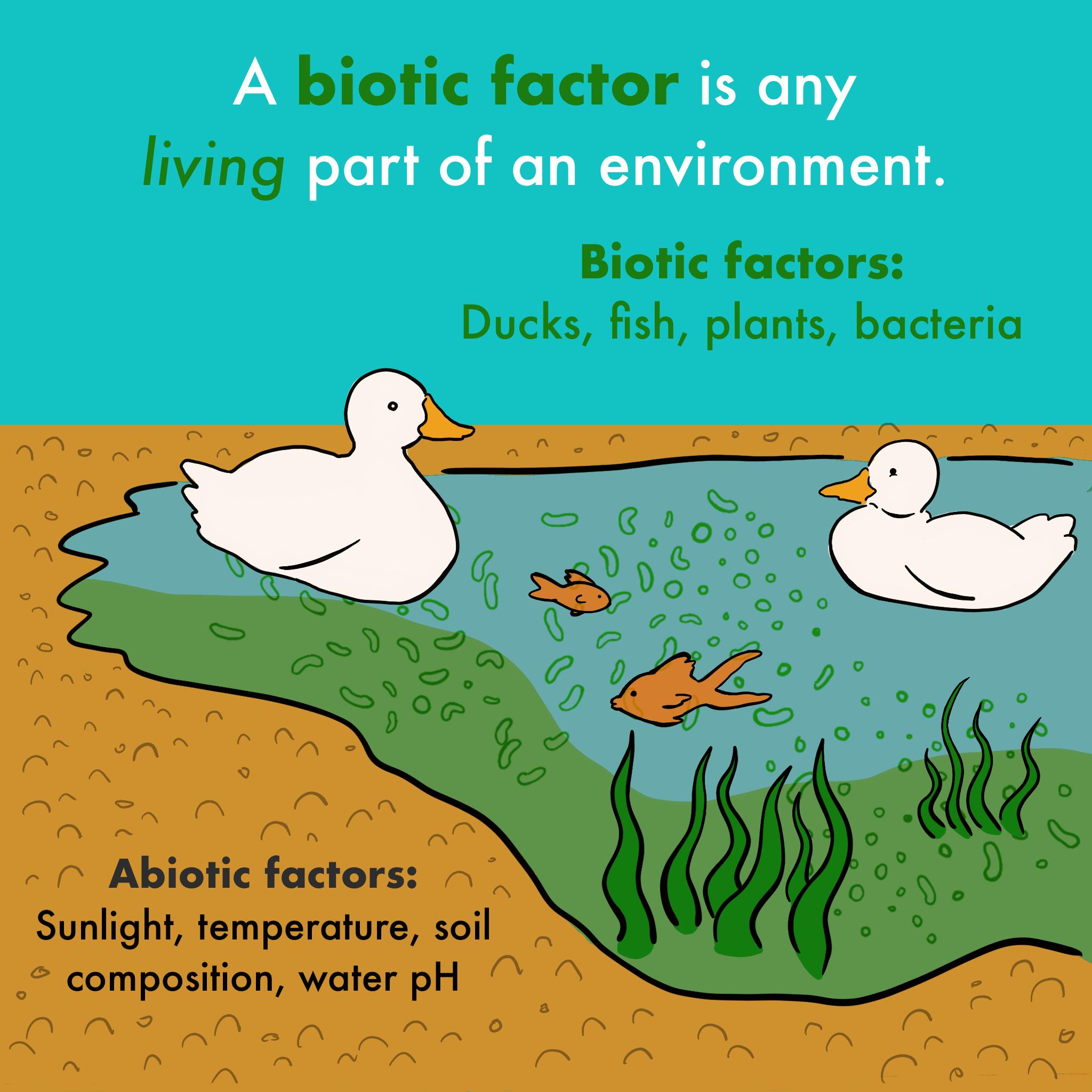
This is a cartoon illustration explaining biotic components of ecosystems. The image shows ducks, fish, algae, and plants in a pond. The text reads "A biotic factor is any living part of an environment. Examples include: ducks, fish, plants, bacteria. Abiotic factors include: sunlight, temperature, soil composition, water pH".

Image source: By Sylvia Freeman

Illustrated · 1 min

What Are Biotic Factors?

They are the living parts of an ecosystem. In other words, they are the plants, animals, fungi, and microorganisms that live in an ecosystem. It is basically the community in the ecosystem.

Let's break down the word. The root word bio- means "life" and "living". The suffix -tic makes something an adjective. So, together it means "something that is alive".

When you're in school, the biotic components that you interact with are things like the people in your school, class pets, and the bacteria that your fellow students leave on the doorknobs.

This is in contrast to abiotic factors, which are things that are not alive in an environment but still have an effect on it. Examples of abiotic factors include things like soil, climate, and water. Both types of factors play an important role in ecosystems.

Living things in an environment. A cat, wolf, spider, lizard, mouse, and tree are pictured.

Image source: By Oregon State University CC BY-SA 2.0, via flickr.com

Vocabulary Review:\color{#8925AE}{\text{Vocabulary Review:}}

Biotic\color{#8925AE}{\text{Biotic}} : The living parts of an environment

Abiotic\color{#8925AE}{\text{Abiotic}} : The nonliving parts of an environment

Video

(Video) Biotic Factors

by Steve Griffiths

Biotic components are the living parts of an ecosystem, like elephants and flowers. That's simple enough, but how do they all interact in an ecosystem?

This video goes in depth into the types of relationships between living things in ecosystems. Some examples are mutualism, commensalism, parasitism, competition, and predation. For more information on these topics, check out our section on biotic interactions.

Illustrated · 1 min

Living Components

Something is biotic if it is a living thing within a system that could affect another organism. This could be birds, trees, plankton, algae, or large predators. Basically, this category includes anything that is living and participates in the ecosystem.

For example, biotic factors that affect a fish are the larvae it eats, the bird that eats it, other fish that it has to compete with, or even the algae that provide it with oxygen.

These components aren't limited to just the community of plants and animals. They also include any living organism like insects and even microorganisms.

A crane in a swamp. The bird swoops down to pick up a fish.

Image source: By U.S. Army Corps of Engineers [Public domain], via Wikimedia Commons

How Are They Sorted?

Biotic components can be sorted into three groups: Producers or autotrophs, consumers or heterotrophs, and decomposers or detritivores. Producers are the first level in a food chain. They produce energy for other organisms to use. Consumers eat either producers or other consumers. Decomposers break down dead matter into a simpler form so that the producers can reuse it.

When one of these groups is affected by a change, it can lead to an increase or decrease in the population size of other groups.

A lake with geese

Image source: By Calum McRoberts CC BY-SA 2.0, via Wikimedia Commons

Illustrated · 1 min

Examples of Biotic Components

You’re soaking up the sun at everyone’s favorite part of the marine biome: the beach. There are biotic things—living things—all around you. A prime example is the community living in the beautiful, open ocean.

Killer whales, great white sharks, lampreys, clown fish, coral reefs—these are all biotic parts of the environment. They interact with one another, forming a colorful and well-balanced community. When you put this community of living things together with the nonliving parts of the ocean environment, you get the whole ecosystem.

Biotic factors in ocean ecosystems include corals, whales, fish, crabs, seals, sharks, and mollusks.

Image source: By Valeri Natole

Coral Reefs and Clownfish: An Example of a Biotic Interaction

If you’ve seen Finding Nemo, you know that clownfish make their homes in stinging anemones. But why do they do this? This is an example of a biotic interaction called mutualism, where each creature benefits. The stinging tendrils of the anemone protect the fish from predators, while the fish lure prey in for the anemone to make meals of.

A clown fish makes its home inside a sea anemone.

Here are two unlikely friends living in harmony.

Image source: By Nhobgood Nick Hobgood CC BY-SA 3.0, via Wikimedia Commons

Eat or Be Eaten: An Example of Energy Flow

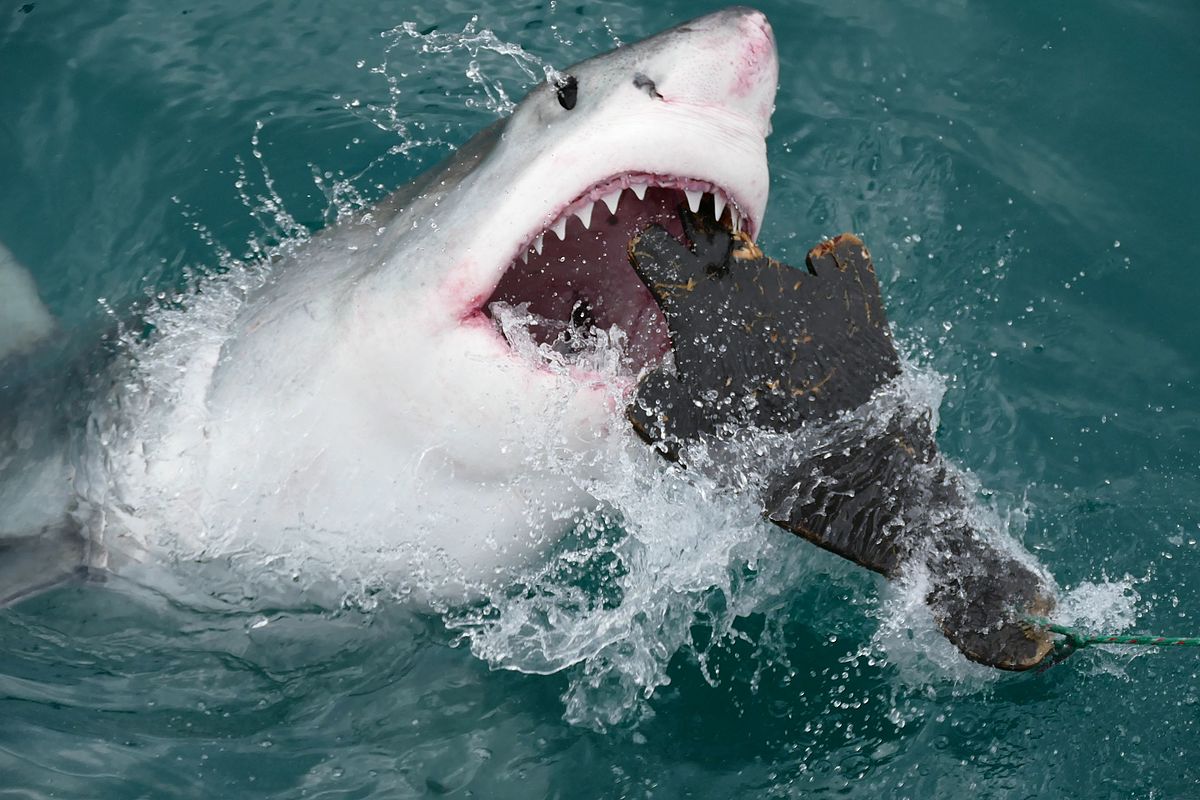
Energy flows through the living parts of an ecosystem through food chains. Organisms consume other organisms, whether they eat plants or animals or scavenge for decomposing organic matter. For instance, out in the deep sea, great white sharks hunt for seals. These incredible predators shoot up from below, capturing an unsuspecting meal in their cavernous jaws. Meanwhile, orcas (also known as killer whales) have recently been found to kill and eat sharks. Food chains are more complicated than you might think.

A great white shark catches a decoy seal in its mouth.

Image source: By Bernard DUPONT CC BY-SA 2.0, via Wikimedia Commons

Type a concept, like “slope” or “photosynthesis”.

↑ ↓ to choose · Enter to openSearch explanations and problems