Illustrated · 1 min

+1 contributors

===

Image source: By Gabi Slizewska
Cells are the tiniest form of life. Some bacterial cells can be just one micrometer across, but the cells in our bodies are closer to 100 micrometers long. To put this in perspective, you could fit over 360 million of the smallest bacterial cells on top of a penny. Some organisms are only made of a single cell, but we humans have over 30 trillion cells in our bodies.
All cells require a few basic components. They need to have DNA (genetic material) and a membrane that wraps around the entire cell.
From here, cells can differ widely. The two basic types of cells are prokaryotic and eukaryotic cells.

Image source: By Gabi Slizewska
Eukaryotic Cells
The defining element of a eukaryotic cell is the nucleus. This structure stores the cell's DNA and separates it from the rest of the cell with a special membrane called the nuclear envelope. Because it stores DNA, the nucleus is often called the control center of the eukaryotic cell. That's because the DNA holds all the instruction the cell needs to function.
Additionally, eukaryotic cells tend to be bigger and more complex than prokaryotic cells. They often have organelles, which are small, specialized, membrane-bound structures that perform specific functions in the cell. The nucleus is just one type of organelle.
Eukaryotic cells make up the human body. They can also make up some single-celled organisms as well as plants and animals.
Prokaryotic Cells
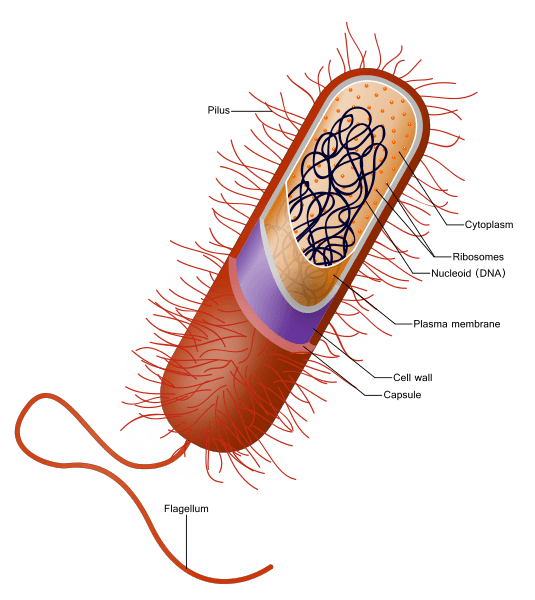
Prokaryotic cells tend to be much smaller and less complex than eukaryotic cells. They make up single-celled organisms like bacteria. They have DNA just like eukaryotic cells, but they don't have a nucleus. Instead, the DNA is found loosely inside the cell. Prokaryotic cells don't really have other organelles either. Still, these simple cells can do everything they need to survive.