Illustrated · 2 min
+6 contributors





What Does Change Mean?
All living things are able to change over time. Of all the characteristics of life, this one requires the most careful explanation.
We know that all organisms grow and develop and respond to changes in their environment.
Let's consider some examples:

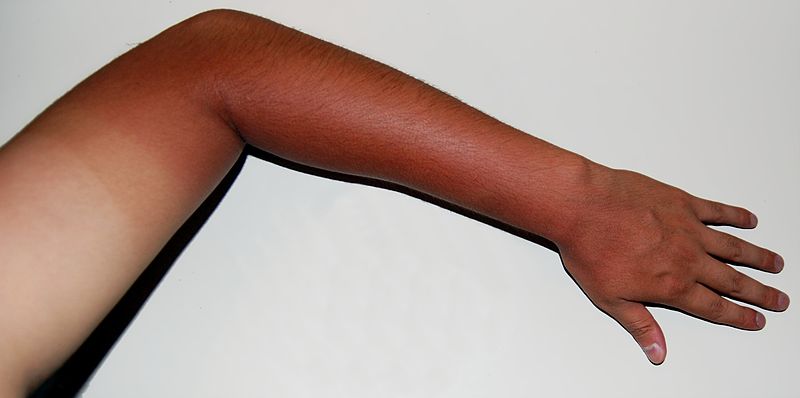
Image source: By OpenClipart-Vectors CC0, via pixabay.com Image source: By Dawn Hudson CC0 1.0, via publicdomainpictures.net Image source: By Bev CC0, via pixabay.com Image source: By Clker-Free-Vector-Images CC0, via pixabay.com
These are all ways that an individual organism can change during its lifetime.
Changes in Populations
There are also changes that occur on the population level. A population is a group of the same type of organism living in the same place.
Here are some example populations:
- All of the prairie dogs in one grassland
- All of the black ants in the same patch of forest
- All of the humans in your town
When populations change over time, we call this evolution.
So, to repeat, populations evolve; individual organisms change and develop.
Evolution involves changes in the genetic makeup of a population. If we see more or less of a particular trait in a population over time, the population is likely evolving.
Let's look at some examples of this:
Wings of Peppered Moths

Image source: By Harald Süpfle CC BY-SA 3.0, via Wikimedia Commons Image source: By Ben Sale CC BY 2.0, via Wikimedia Commons
In this example, the smoke and smog from British industrialization caused a layer of soot to cover most of the trees in London. This made the tree bark appear darker, so the lighter colored moths resting on it were easier for predators to find. Natural selection began to favor darker moths as a result, so the prevalence of dark-winged moths began to grow while white-winged moths grew to be less common.
Note that the wings of an individual moth did not change from white to black over its lifetime. Instead, the proportion of white and black wings in the entire moth population changed over about 50 years' time. This is evolution in action.
Beaks of Finches
Here's one more example:

Image source: By John Gould [Public domain], via Wikimedia Commons
Once again, you'll notice the beak of an individual finch did not change from medium to small over its lifetime. As with the moths, the changes here were in the proportions of finches with small beaks and those with medium beaks throughout the entire population.
Key Vocabulary:
- Organism
- Growth and development
- Population
- Evolve