Chemical Reactions in Biology
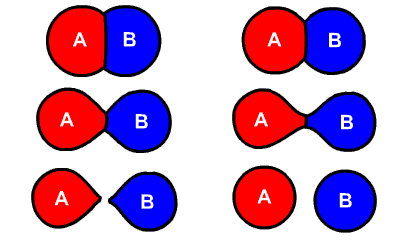
A chemical reaction is a process that changes or transforms one type of chemical into another. The key idea is that the bonds connecting atoms are changed. In the animation below, the blue atom (nitrogen) breaks a bond with the gray atom (hydrogen). The same blue atom is now able to form a bond with the black atom (carbon). Life is the result of countless reactions happening all at the same time, most often between carbon, hydrogen, nitrogen, and oxygen atoms.
It's also really, really important to remember that during chemical reactions the mass and energy must be conserved. You cannot try to create or destroy energy and mass; they are always constant. When living organisms eat food for energy, our bodies break it down into usable chemicals and energy. We describe this energy as calories. The energy from food will change forms, but it is never lost. Therefore, matter and energy is conserved.
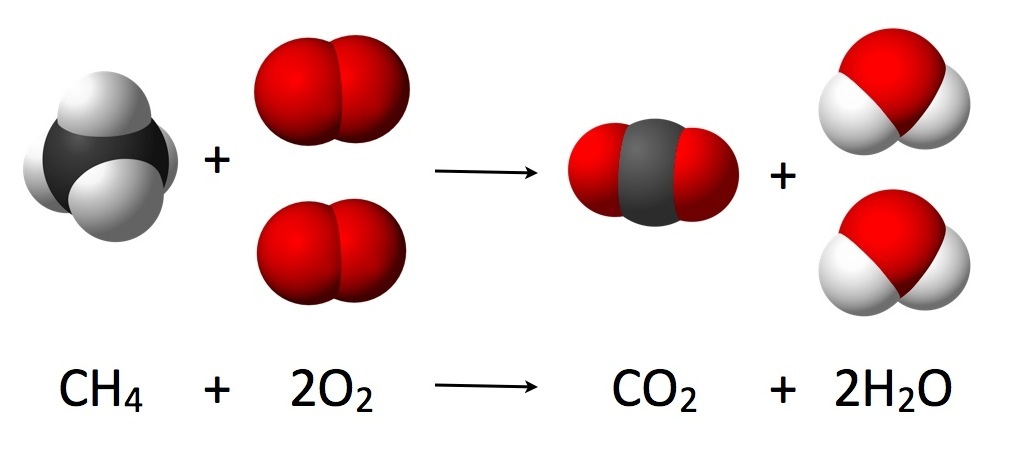
If you look at the picture above, the left-hand side is called the reactants and the right-hand side is called the products. Reactants are the atoms or molecules that enter into a reaction. The compounds that are produced by the reaction are called products. The arrow between the reactants and products always points towards the products of the reaction.
So, the reactants react and the products are produced.
Sometimes we cannot see when reactions are happening, but indications for reactions occurring are color change, temperature change, and state change. The reactants above are both gases, but the water formed is a liquid. The formation of water is an indication that a reaction is occurring.
When making a cake, the flour, sugar, and other ingredients are reactants. After you add them together and bake them (add heat), you've made something pretty different from the original ingredients. The finished cake is the product and we cannot easily remove the original reactants without another reaction.
Reactions in Biology
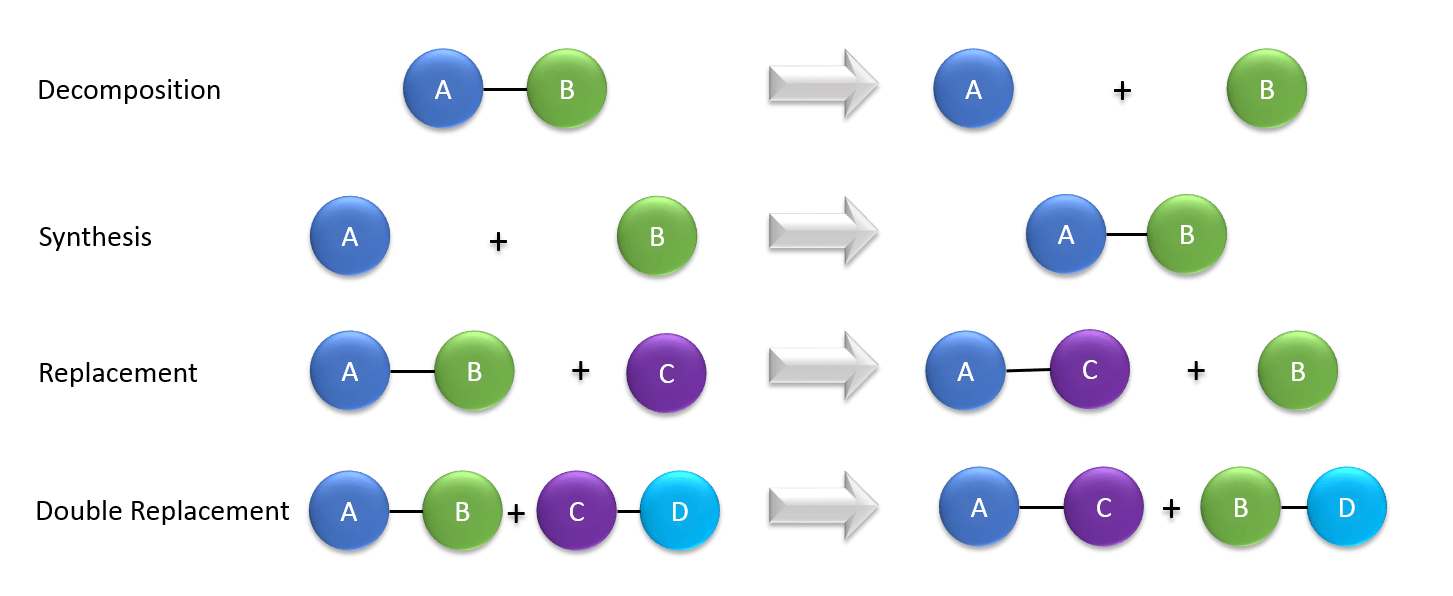
We only need to worry about three types of chemical reactions in biology: decomposition, synthesis, and replacement reactions.
Vocabulary Review:
Chemical Reaction : A process that changes or transforms one type of chemical to another
Reactant : The atoms or molecules entering into the reaction; the ingredients
Product : The atoms or molecules leaving the reaction; the finished product