Illustrated · 2 min
When studying Geometry it is important to know the properties of the different shapes and figures that you may be studying. In this case we will discuss the properties of a circle. Let's begin with the definition of a circle. A circle is a curved line that creates a closed loop. This line is made up of infinitely many points and each of these points are an equal distance to the middle.
Properties
A circle has many parts and properties which are listed below.
- Center: The center of a circle is defined as the point in the middle of the circle. The points that make up the curve that is the circle are all equidistant from the center point.

All points on the circle are equidistant (the same distance) from the center.
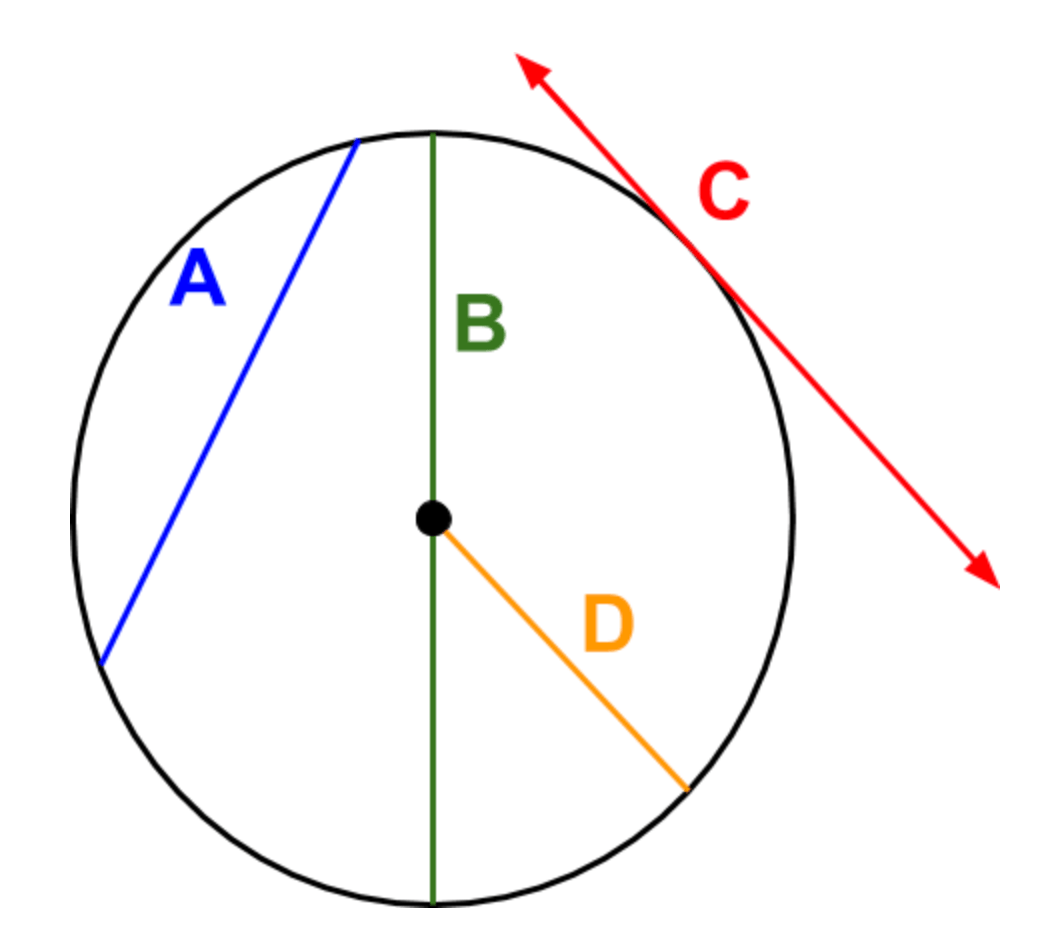
- Radius: The radius is the distance from the center point to the circle, this distance is always equal in a circle. It is half the diameter. When working with the radius in geometry it is often denoted by .

As you rotate in a circle, the radius (distance to the center) is constant.
- Diameter: The diameter is the distance from one side of the circle to the other side of the circle. This distance is twice the radius. When working with the radius in geometry it is often denoted by . It is important to remember that .

The diameter is sort of the "width" or "widest part" of the circle.
- Circumference: The circumference of a circle is the distance of the line that makes up the circle. Circumference is denoted by and can be calculated using the following formula: .

As you rotate once in a circle, you cover every point of the circumference.
- Area: The area of the space enclosed by the circle can be calculated with the following formula: .

Remember that area is how much two-dimensional space a shape contains.
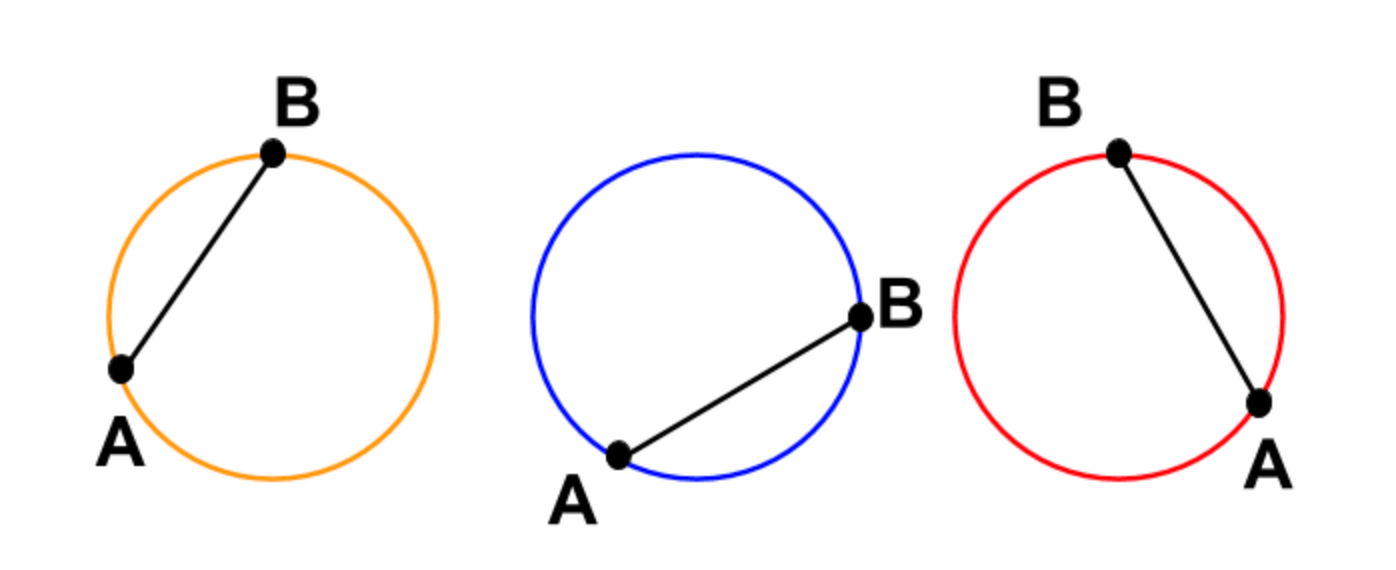
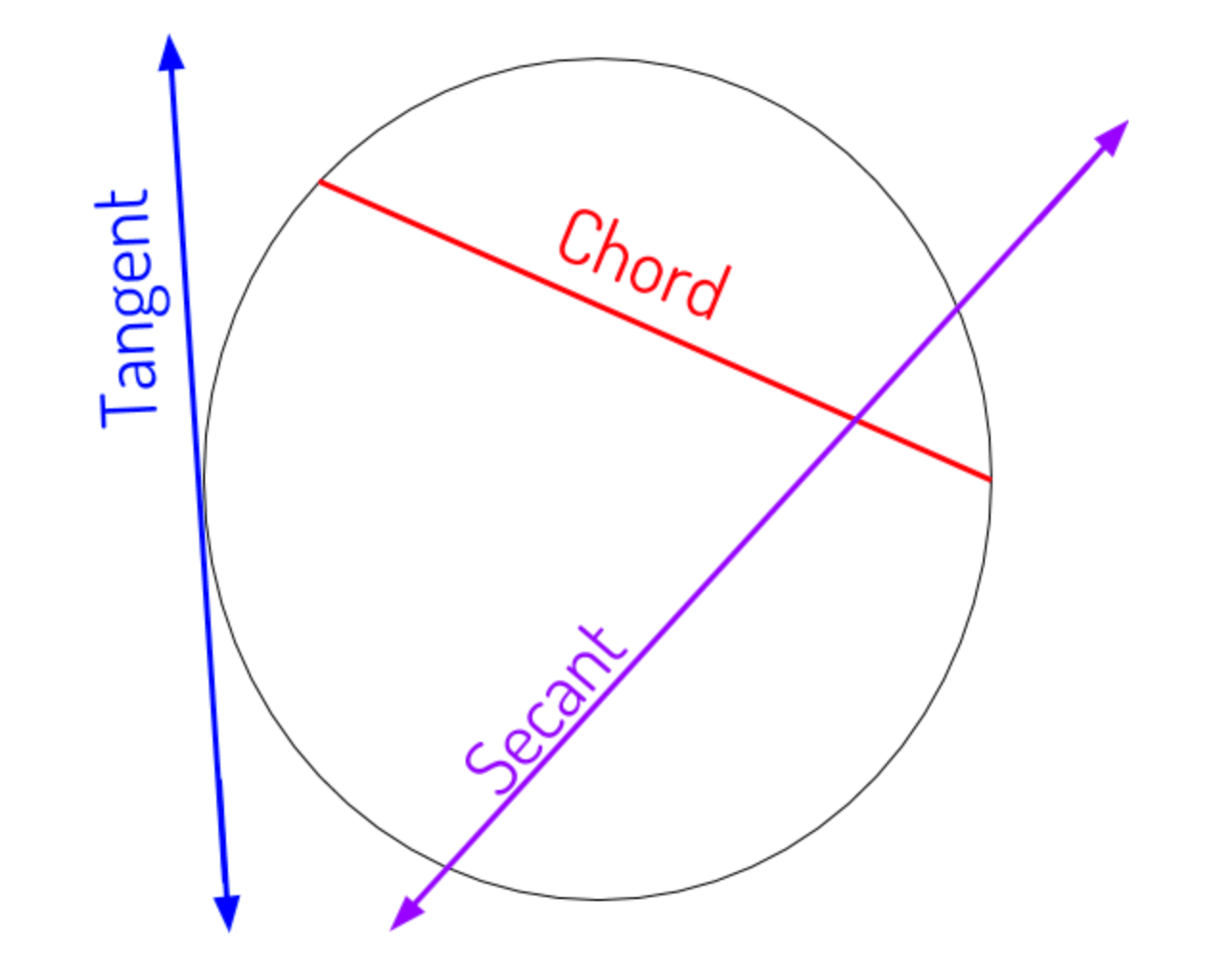
- Chord: A chord is a line segment that links any two points on a circle.

The two endpoints of a chord always lie on the circumference.
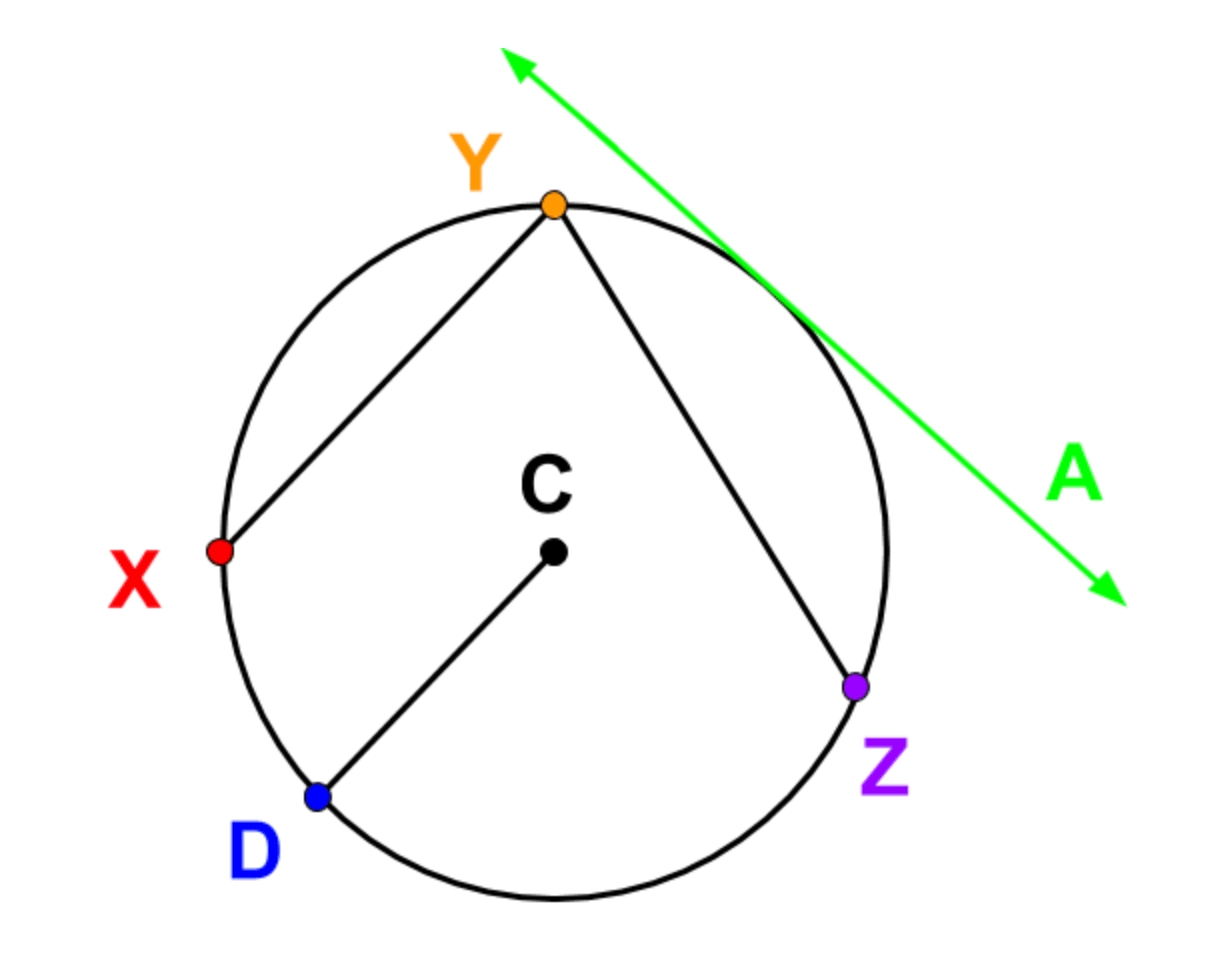
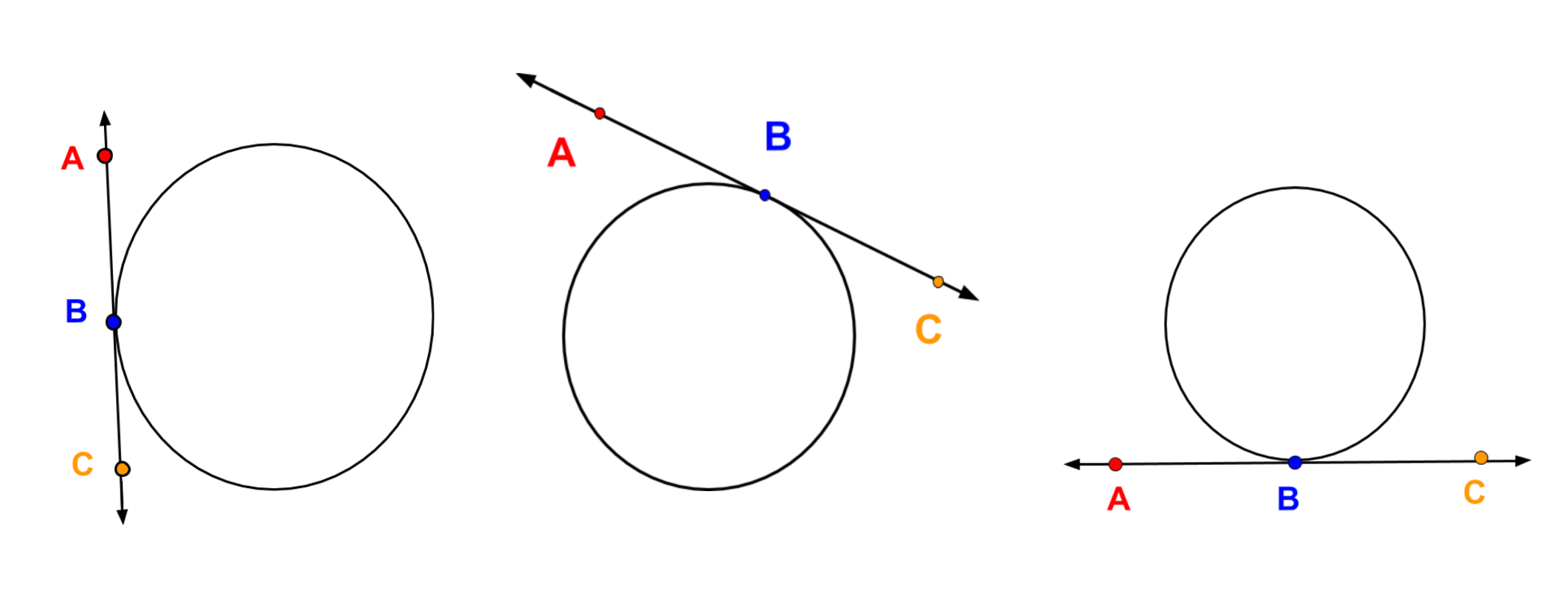
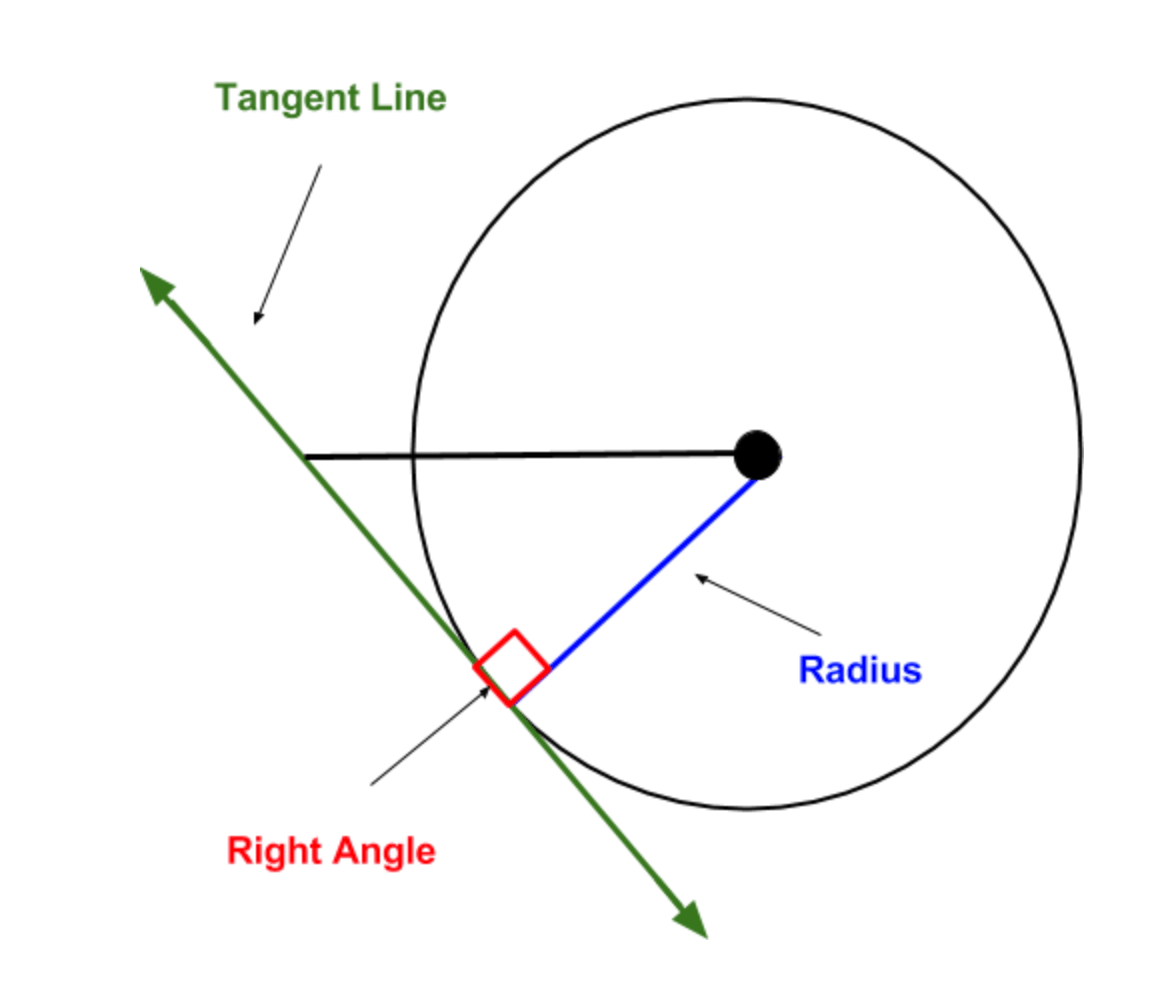
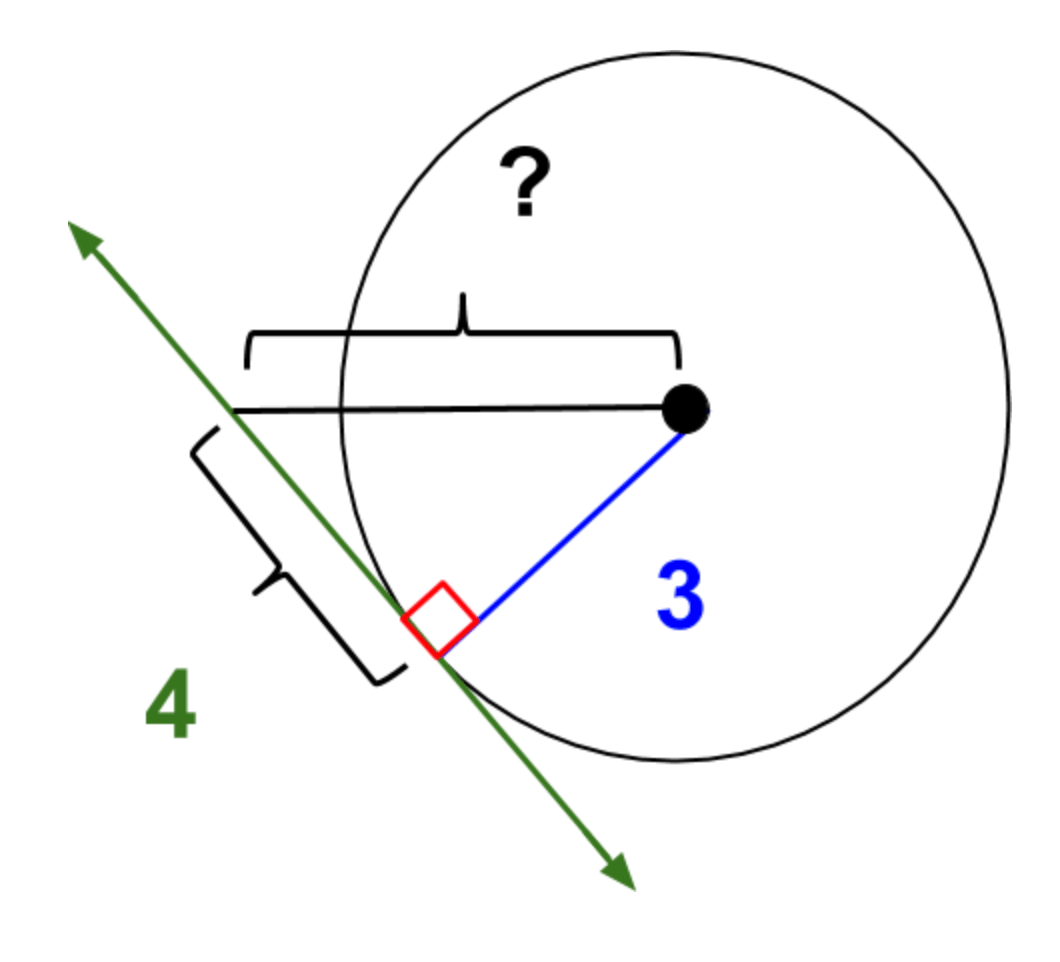
- Tangent: A tangent line is a line that touches a circle at one point.

A tangent line "just barely" intersects a circle, at a single point (unlike a chord).
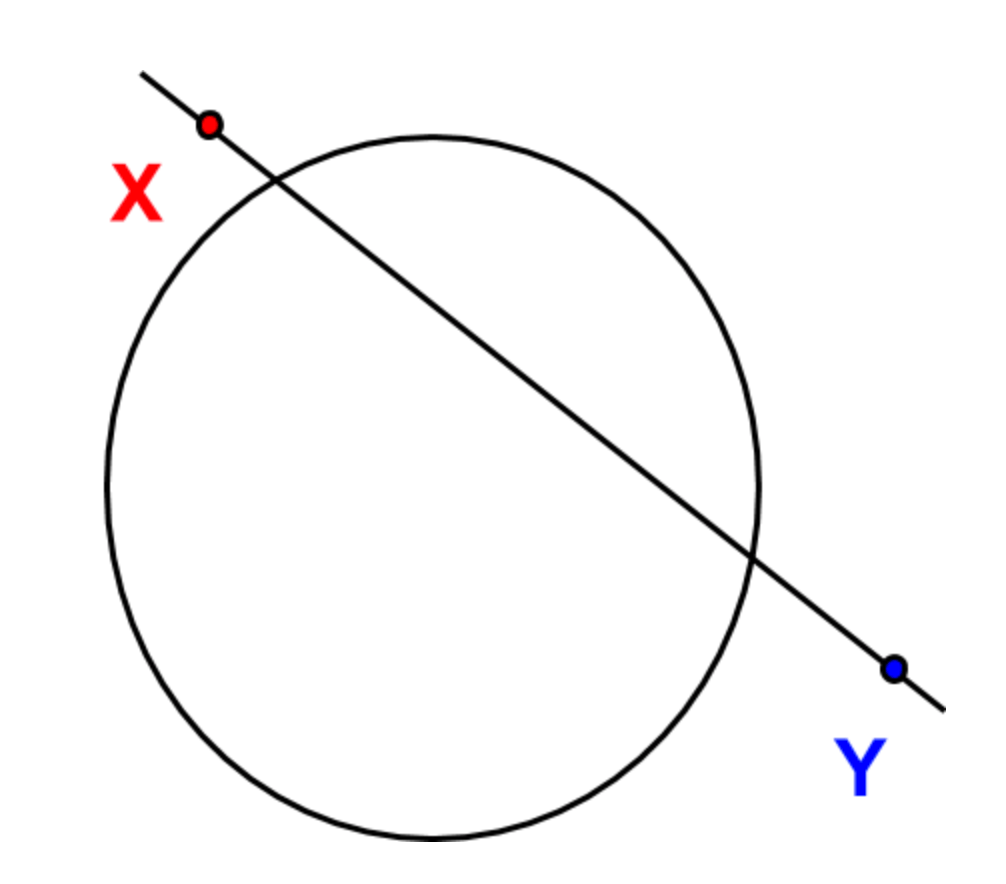
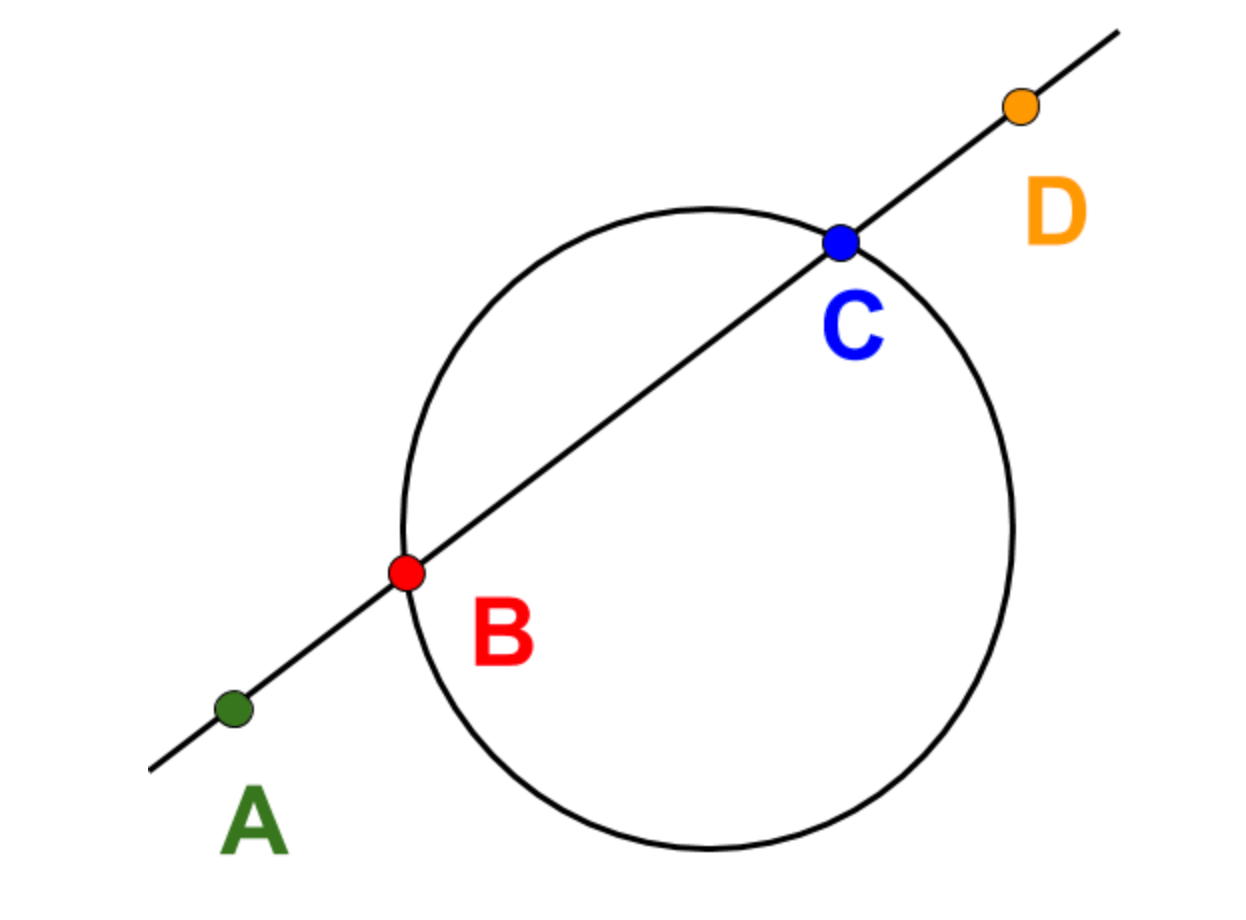
- Secant: A secant line is a line that goes through a circle and intersects the circle at two points.

A secant is technically not a chord, but it contains a chord (the segment between the two red intersection points).
Similar to a quadratic equation, a specific type of equation will create a circle when graphed. Unlike quadratic equations, the and terms are always squared. The equation of a circle is as follows: where and are the and coordinates of the center point of the circle.