
Illustrated · 1 min
By Valeri Natole

+2 contributors
Contributors


Earth Science: Climate Change

Image source: By Valeri Natole
Illustrated · 1 min
Image source: By Valeri Natole
Illustrated · 1 min
Much like how the glass of a greenhouse keeps all the heat in, greenhouse gases keep heat from solar energy from escaping Earth. Having some greenhouse gases is good because it keeps Earth from losing all heat and freezing over.
If the concentration of greenhouse gases is too high, you can end up raising temperatures so extremely that the oceans boil away. Scientists predict that this is what happened on Venus, which has an atmosphere with an incredibly high concentration of greenhouse gases.

Greenhouse gases insulate Earth and prevent heat from escaping.
Image source: By Sarah Morgan
As human activity releases greenhouse gases into the environment, it contributes to the greenhouse effect. This means more and more heat becomes trapped within Earth's atmosphere. These substances are released by things like fossil fuel burning. Greenhouse gases are a huge by-product of the electricity and power generation industry, the manufacturing industry, and even the cattle farming industry. We've been releasing them in large amounts since the Industrial Revolution.
As the gases accumulate, global temperatures will rise. This leads to huge changes in the global climate, especially in polar biomes. This includes the melting of glaciers, ice sheets, and arctic sea ice, as well as rising global sea levels. Many habitats like coral reefs can also be destroyed.
As Earth's climate rapidly changes, we can face extreme situations like hurricanes, wild fires, and other natural disasters. Many animals lose their ideal niches and can face extinction. Even humans can face adverse effects as property is ruined and lives are threatened by the quickly shifting environment.
Greenhouse gases include methane, carbon dioxide, fluorocarbons, and nitrous oxide. Greenhouse gases also include water vapor and ozone.
Video
by Joss Fong on TED-Ed

In this TED-Ed video by Joss Fong, you will learn about many factors that impact climate change.
Video
by CrashCourse
Climate change is one of the most pressing issues the world is dealing with today. In this video, Crash Course covers human impacts on the environment and vital signs that climate systems are changing.
Illustrated · 1 min
Climate change is currently the most serious threat to our planet's ecosystems. Temperature is an abiotic factor. It is extremely important in many plants' and animals' biological processes.
Increasing average global temperatures, also called global warming, are leading to earlier springs and longer, hotter summers. This is creating a huge impact on organisms that rely on the changing of the seasons in their systems.
These changes are also affecting how essential nutrients and gases, like carbon, oxygen, and nitrogen, are being cycled through ecosystems.
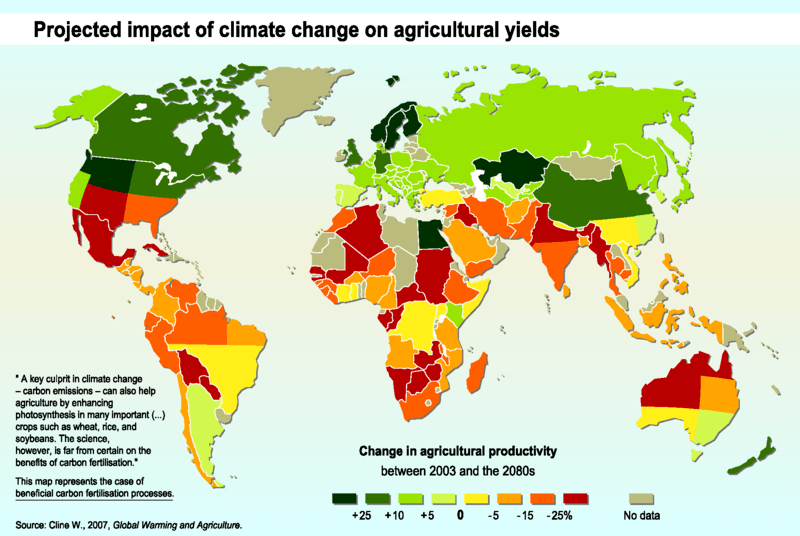
Image source: By European Environment Agency, Copenhagen, Denmark [Public domain], via Wikimedia Commons
Read · 1 min
Carbon dioxide and other greenhouse gasses are insulators, which means they keep heat in. Human activity, such as burning coal and deforestation (remember, trees store carbon and use carbon dioxide), has caused a massive build-up of carbon dioxide. Because the concentration of these gases has skyrocketed in the past century, Earth can't get rid of heat properly.
This is known as climate change; the climate system of Earth is changing.
These changes have also led to more powerful storms and hurricanes, and countless effects on animal and plant populations all over the world. The most immediate effects are seen in our aquatic biomes and include ocean acidification and sea level rise.
So, what can we do? There's no one solution, but recycling, using cleaner energy, and possibly even genetic engineering are all parts of the answer studied by scientists today.
: The change of global and local climates due to high concentrations of greenhouse gasses

