
Illustrated · 1 min
Control pathway mechanisms help to maintain homeostasis in response to different internal and external disruptions that can affect homeostatic balance. The main components of the control pathway include: a stimulus, the receptor, the control center, and the effector.
Once change is evoked by the stimulus and detected, the following control mechanisms come into play in either a negative feedback pathway or positive feedback pathway. -Receptor: detects the change and sends the information to the control center through nerve impulses -Control Center: once the signal is received from the receptor, the control center sends a command to the effector to correct the imbalance of the change in homeostasis -Effector: receives the signal from the control center to effect change that is needed to respond to the imbalance.
As the response to change comes into effect, this stimulus is fed back through the receptor and will either loop through the negative or positive pathway until the imbalance is corrected back into homeostasis.
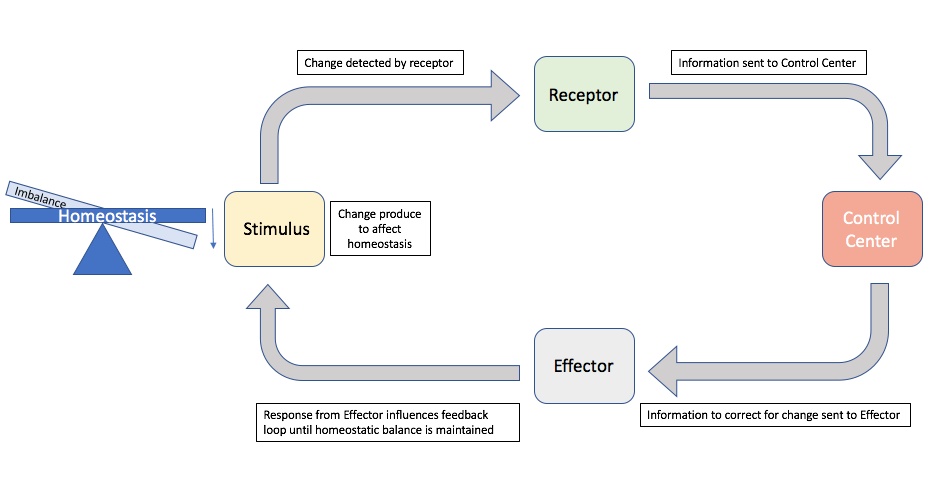
When a stimulus effects a homeostatic imbalance, the change is detected by the receptor. The receptor then sends the information of imbalance through nerve impulses to the control center. This information alerts the effector to respond to the change. The change then feeds back into the receptor and is received by the control center through loop mechanisms until the system returns to homeostasis.