Interactive · 1 question

+2 contributors


When Does a Protein Become Denatured?
Enzymes are biological catalysts. So, like most catalysts, they work best under certain conditions.
If you think of making a soup, it won't really work unless you turn on the stove-top and heat it up. If you heat it too much, you'll burn the soup. Similarly, enzymes need certain conditions to work at their best. These conditions are kept through homeostasis.

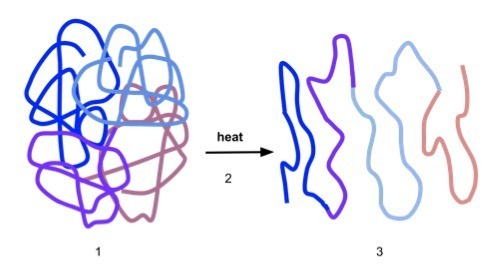
Image source: By Rhannosh CC BY-SA 3.0, via Wikimedia Commons
The activity of enzymes is dependent on temperature, pH, and regulatory molecules. If the enzyme is placed in conditions that it doesn't like, it can become denatured. Denatured enzymes can be thought of as the burnt soup: just ruined.

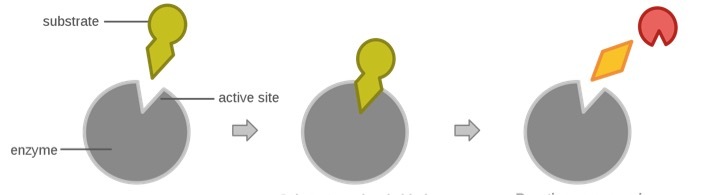
Image source: By Deena Hauze
The image above shows a substrate and an enzyme after it was denatured. Notice how the substrate no longer fits in the active site. Which of the images below shows what the enzyme most likely looked like before it was denatured?
: A protein that acts like a catalyst. It speeds up biological reactions but is not used up during the reaction
: Minimum amount of energy needed to begin a chemical reaction
: A substance that speeds up reactions but is not used up during the reaction
: Molecules that a specific enzyme binds to and recognizes. They are transformed during the reaction