
Illustrated · 1 min
By Gabi Slizewska

+1 contributors
Contributors

Types of Desert Biomes:
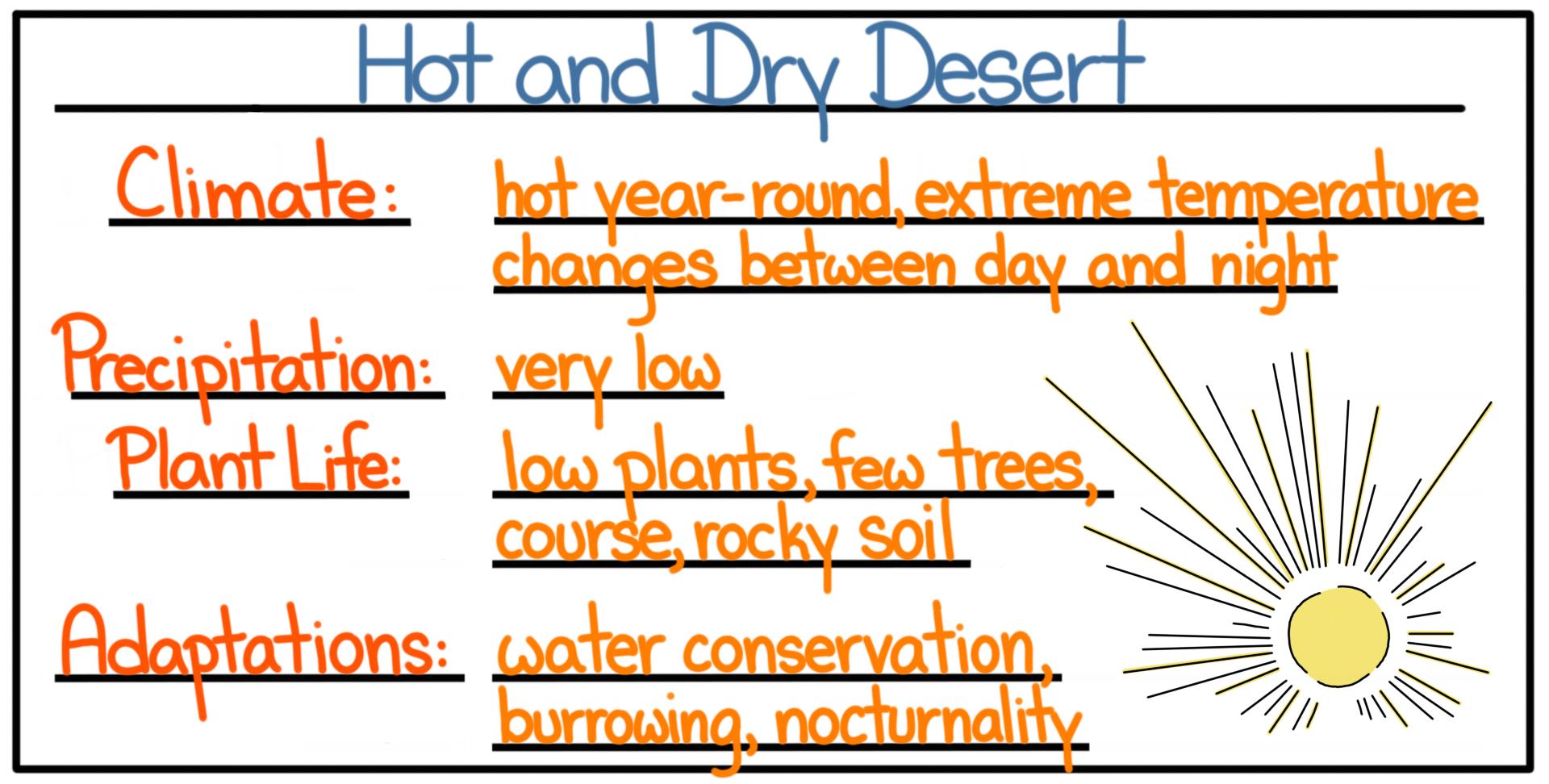


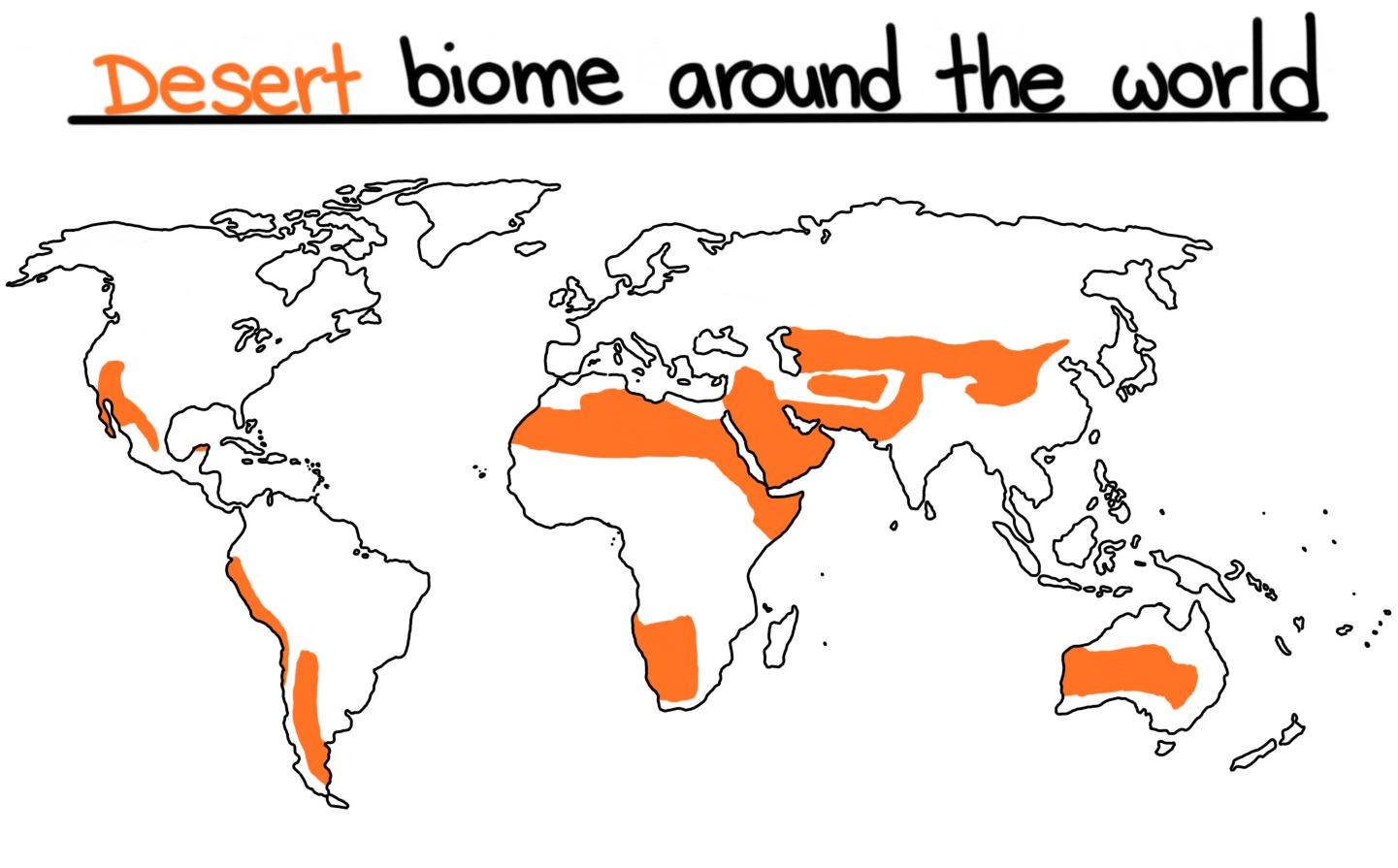
Image source: By Gabi Slizewska
Illustrated · 1 min
Image source: By Gabi Slizewska
Illustrated · 2 min
If someone asks you what a desert is, you'll probably say something about sand, lack of water, and extreme temperatures. You'd pretty much be right. The most defining characteristic of the desert is that it is incredibly dry.
The hot and dry desert is what we most commonly think of when we picture a desert landscape. It is very hot (unlike the freezing winters in the tundra) all year long and receives very little rain. Some don't see rain for years at a time.

Image source: By Pashi CC0, via pixabay.com
The semiarid desert is a more mild version. Arid regions have long, hot summers and more defined, mild winter seasons. Included in this group are the Sonoran Desert and the Great Basin in the American southwest. You tend to find arid lands in the valleys of mountain ranges.

Image source: By Ken Lund CC BY-SA 2.0, via Wikimedia Commons
The coastal desert has cool winters and long, mild summers.

Image source: By TravelCoffeeBook CC0, via pixabay.com
The cold desert tends to be cold all year long and receives all of its precipitation in the form of snow.

Image source: By dilshad3 CC0, via pixabay.com
In deserts, annual precipitation averages less than 25 centimeters. (Much different than tropical rainforests, where average annual rainfall can be over two meters.) Abiotic factors include low precipitation and soils rich in minerals but low in organic material. This makes it difficult for plants to grow easily.
However, desert environments do have a decent amount of vegetation. All of the plants are specialized in their ability to survive. Desert plants develop ways to store water and animals develop ways to find it.
Now, I know you've seen a cactus before. They're pretty iconic. You might not realize just how cool they are though. Cacti only exist in the Americas. They can't be found anywhere else in the world. They have this insanely neat adaptation where they store nutrients and water in their thick stems. This is where it gets weird. That thick stem? It's actually a kind of modified leaf.
Desert vegetation doesn't have broad leaves because water can escape from them. Instead, they have spines and needles.
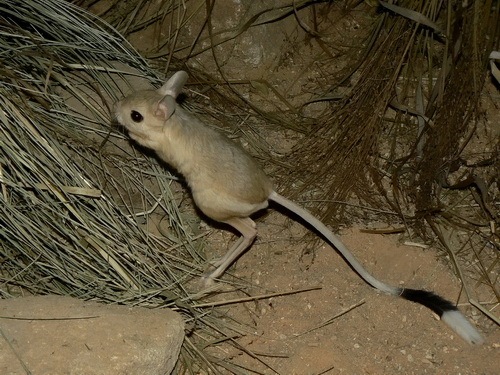
Image source: By Николай Усик CC BY-SA 3.0, via Wikimedia Commons
Desert animals are remarkable. They adapted to live in an environment with little water and pretty intense heat. Many animals here are nocturnal, which means they are active at night. Many of these critters have large extremities like ears. Fennec foxes and jerboas both have enlarged ears, which are pretty cute. These large ears help the animals stay cool through radiation.

Image source: By Emilfaro [Public domain], via Wikimedia Commons
Video
by National Geographic
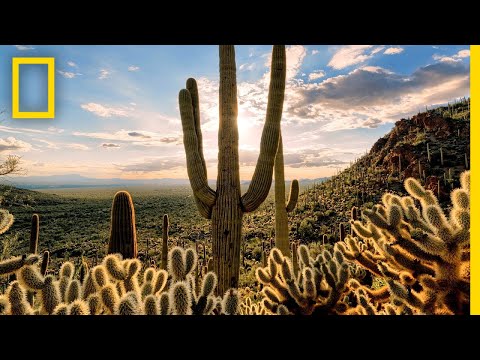
Did you know that almost of Earth's land mass is desert? There may not be much water in these environments, but they're still important habitats for many plants and animals. Learn more about this vast and beautiful biome with National Geographic's video.



