Interactive · 2 questions
How to Determine the Molecular Formula
What is a molecular formula?
The molecular formula shows the exact number of atoms for each element in a molecule.
Molecular Formula Example:
In the image below, we see the organic compound propanol. It has three carbons, eight hydrogens, and oxygen. The molecular formula tells us the number of each atom. But it does not tell us about the covalent bonding. The structural formula tells us the bonding. For example, in the molecular formula, we can't tell which carbon the oxygen is bound to. We also know that oxygen can form single or double bonds. We have to draw the structure to determine which we have.
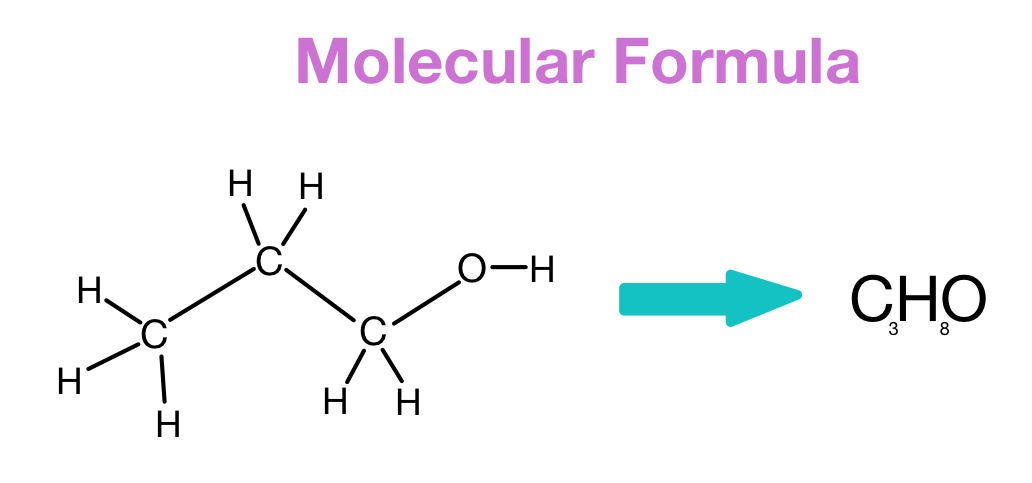
Image source: By Caroline Monahan
How do you calculate the molecular formula?
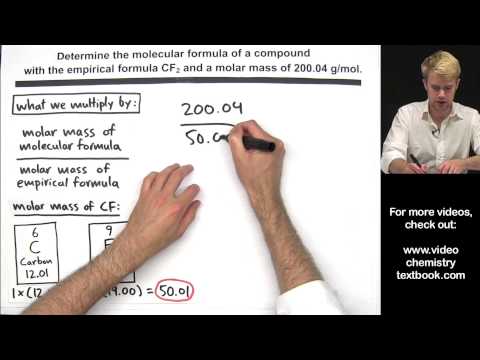
- To determine the molecular formula, you need to multiply the empirical formula by a coefficient.
- To find the coefficient, use the equation...

Steps to determine the molecular formula
-
If not given, determine the empirical formula. You may need to use the mass percent composition.
-
Determine the empirical formula mass.
-
Plug the empirical formula and the molecule's molecular mass into the above formula. Round the answer to the nearest whole number if needed. The differences are caused by experimental error and uncertainty.
-
Multiply the number by the empirical formula. EX: .
-
Double-check that the given molecular mass is the same as the mass of the molecular formula.
Walk-Through Problem to determine the molecular mass
A combustion reaction analysis determined that an unknown compound has an empirical formula of . If it's molar mass is 60.052 grams per mole. What is the molecular formula of this compound?
- We have the empirical formula given, so we can skip step 1 and go straight to determining the empirical formula mass. Use the atomic masses from the periodic table.
:
Carbon: 12.011
Hydrogen: 2(1.008) = 2.016
Oxygen: 15.999
15.999+12.011+2.016 = 30.026g/mol
- Now we can plug in the number we just calculated into the formula
Molecular mass/empirical formula mass
2
- We have a whole number so there is no need to round!
- Now we can multiply the number we got by the empirical formula
2() =
- Double-check to make sure the formula we determined has the same molecular mass as the molecular mass given!
Carbon: 2(12.011) = 24.022
Hydrogen: 4(1.008) = 4.032
Oxygen: 2(15.999) = 31.998
24.022+4.032+31.998 = 60.052g/mol
- This number matches our unknown so we have determined the correct molecular formula! As a side note, the molecule is an organic acid named acetic acid.
Now try some practice problems!
An unknown compound has an empirical formula of CH and a molecular weight of 78.11g/mol, what is the molecular formula of this molecule?
Here's a more difficult practice problem:
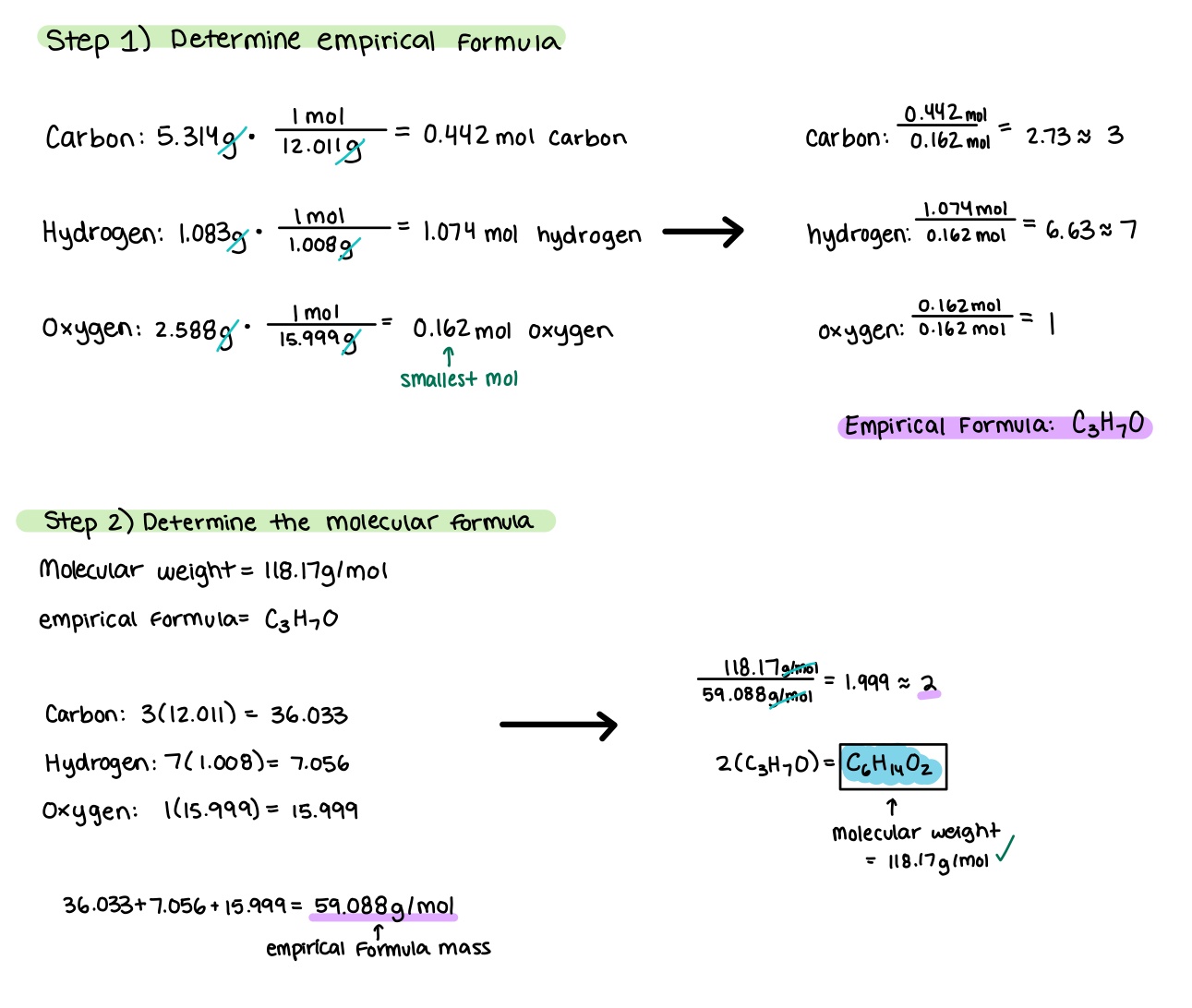
A student has a 8.985g of a compound made up of 5.314g carbon, 1.083g hydrogen, and 2.588g oxygen. The molecular weight of the compound is 118.17g/mol, what is the molecular formula?
Here's how to get the answer for the question above if you are struggling!