Interactive · 2 questions
+3 contributors



Base Pairs
The genetic code, or DNA sequence, is usually represented as a string of letters. There are only four available letters: A, T, C, and G. Each of these letters represents a base or a single rung along the genetic ladder. From just a small number of base pairs, we can make an endless number of proteins. How can we do that? By combining them in different ways! The sequence of bases itself is responsible for every aspect of life. But first, let’s discuss the bases themselves.
How Are the Bases Packed Inside DNA?
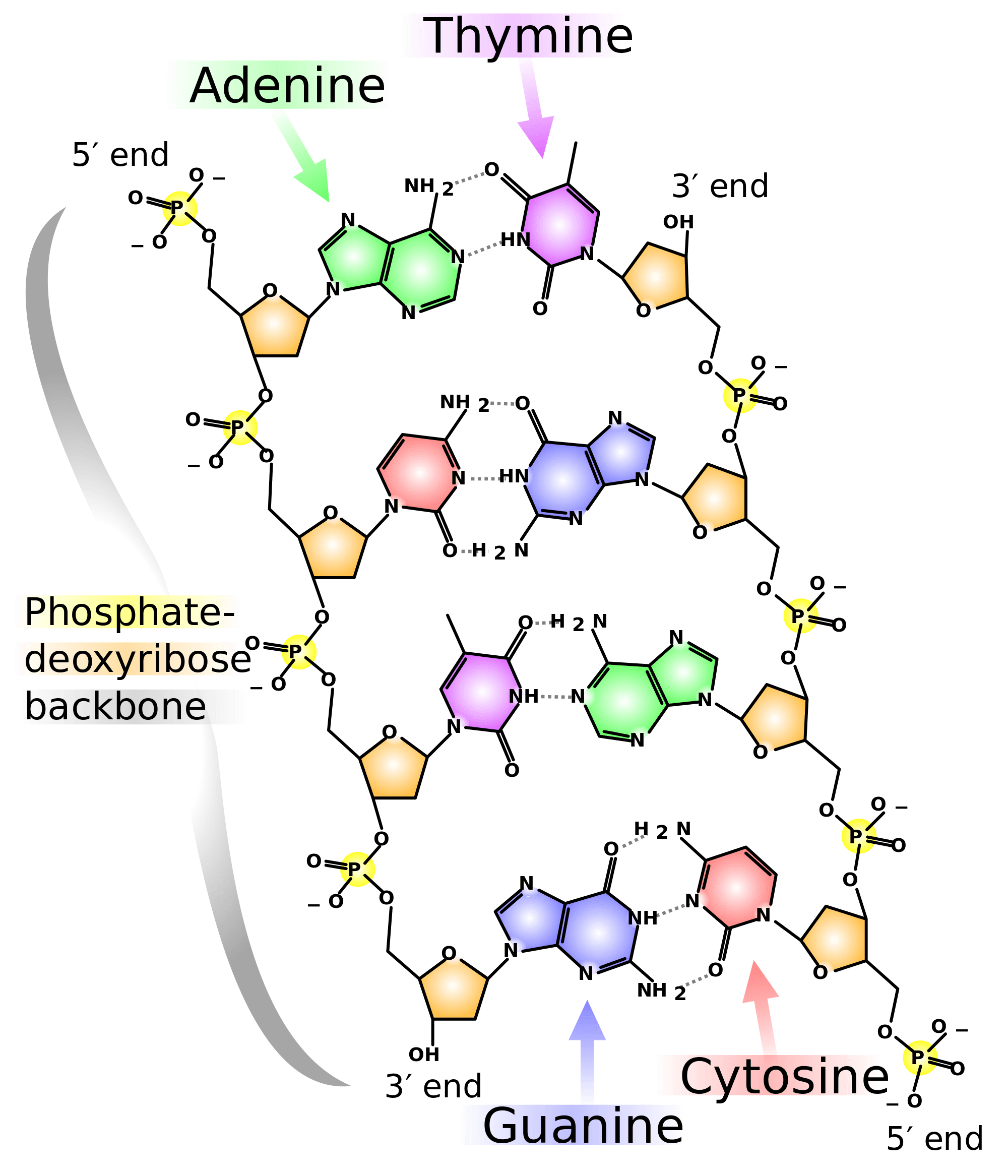
DNA is a double-stranded molecule, with rungs connecting the two strands. Each rung of the DNA ladder is actually a pair of bases that meet in the middle: a base pair. But each base is always only paired with one specific other base. This is because of their molecular structures. Each base contains one or two nitrogen rings, which makes it long or short. It also has a sticky end of binding sites that connects with exactly one other base.

This diagram illustrates the factors that determine base pairs. Image source: By Alex Falk
-
Adenine is long and has two binding sites.
-
Thymine is short and has two binding sites.
-
Guanine is long and has three binding sites.
-
Cytosine is short and has three binding sites.
Complementary Base Pairing
If you look at the diagram, you will see that it is impossible for a base to bond with any base other than its counterpart. This means that if you know the sequence on one strand of DNA, you automatically know the sequence on the other strand. This trait of DNA makes it easy for the cell (and researchers) to make changes to DNA. The phenomenon of having specific base pairs is known as complementary pairing.
The most important thing to remember is that A always pairs with T, and C always pairs with G. One way you can do this is to remember that G and C look similar.
Which of these is a factor in determining how bases pair with one another?
If the sequence on one half of the DNA strand reads AGGGTCAC, the sequence on the other DNA strand reads...