Illustrated · 1 min

+2 contributors



Image source: By Gabi Slizewska
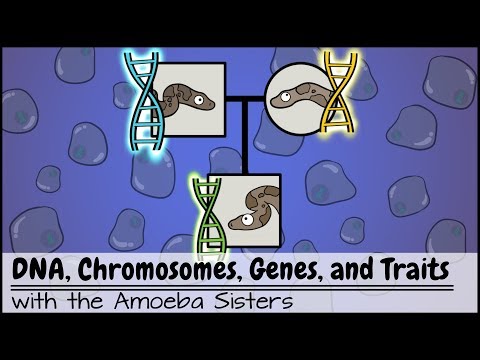
DNA (deoxyribonucleic acid) is a molecule vital to the survival of all organisms. It holds the instructions that are needed for normal cell function, growth, and reproduction. Our DNA dictates how we develop and function throughout our lives.
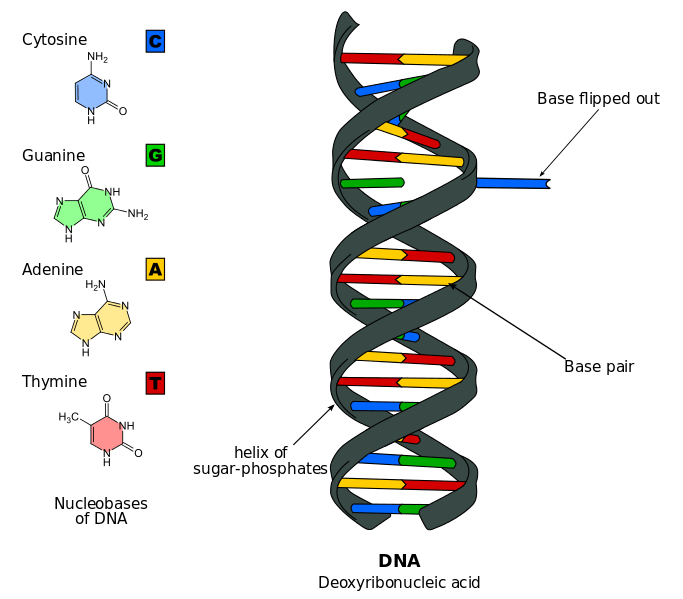
The structure of DNA was established by Watson and Crick in 1953. The basic structure is called a double helix. It consists of two strands, and each strand is made up of nucleotides. Each nucleotide is made of a nitrogenous base, a phosphate group, and a five-carbon sugar. Specific sequences of nucleotides make up genes, which contain instructions for cells. The amount of A bases in DNA equals the amount of T bases, and the amount of G bases equals the amount of C bases.

Image source: By Sponk CC BY-SA 3.0, via Wikimedia Commons
DNA contains a ton of information and is actually very long. If you took all the DNA out of one of your cells and stretched it out, it would be about six feet long. This is why DNA condenses into chromosomes to fit inside the cell.

Image source: By Gabi Slizewska