
Electrolytes — Definition & Overview

Before this, knowSolute and Solvent — Definition & Overview

Video

(Video) What Are Electrolytes?

by Professor Dave Explains
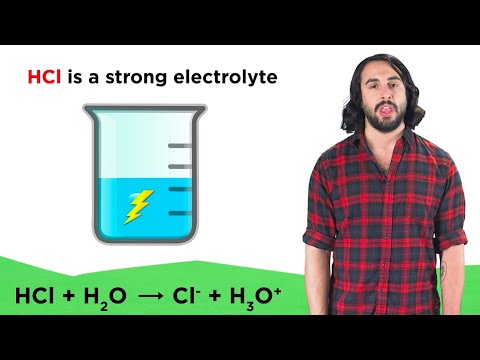
In this video, professor Dave explains how some substances dissociate into ions when placed in water. These substances are called electrolytes and they can conduct electricity. There are strong electrolytes, weak electrolytes, and nonelectrolytes. You will learn about each of these types, plus you'll have a chance to practice what you've learned at the end of the video.

Illustrated · 1 min

What Are Electrolytes?

An electrolyte is a solution which conducts electricity. Electrolyte solutions are usually **aqueous solutions **made with water. The solute dissolved in water is usually an ionic compound. The ionic compound in water breaks apart into ions. The ionic solution allows electrons in an electrical current to move through the solution.

Two solutions with water as solvent for both. Sugar solution does not conduct electricity. Salt solution does conduct electricity.

A sugar solution does not conduct electricity because it does not form ions in solution. The sugar solution forms ions and will allow for electrical flow though the solution. The salt solution is an example of an electrolyte.

Image Source: By Cassie Gates

Electrolyte Strength

The strength of electrolytes change depending on the amount of dissociation or formation of ions in solution. There are three main categories for electrolyte strength:

  • Nonelectrolyte - a compound that does not dissociate in solution.

  • Weak Electrolyte - a compound that dissociates minimally in solution.

  • Strong Electrolyte - a compound which dissociates between 70-99% in solution.

Many organic compounds are nonelectrolytes. Weak acids like acetic acid are weak electrolytes. Strong electrolytes include strong acids, strong bases, and soluble ionic compounds.

Type a concept, like “slope” or “photosynthesis”.

↑ ↓ to choose · Enter to openSearch explanations and problems