Interactive · 4 questions

+3 contributors



Chemical Elements
A chemical element is a pure substance that is made of only one type of atom. Elements cannot be broken down into any simpler substance. Each element is unique, having their own properties and characteristics.

These are the substances that make up you.
Image source: By OpenStax College CC BY 3.0, via Wikimedia Commons
Only about two dozen of the known elements are found in living things. For example, carbon plays a major part in living things. It is even known as the "backbone of life".
Before we get into the details, let's review some terms. Protons and neutrons make up the nucleus of an atom. The proton is the positively charged particle in the nucleus. The neutron is the neutral particle in the nucleus. The electron is the negatively charged particle that orbits the nucleus.
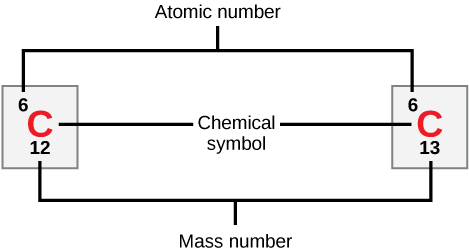
The number of protons in the nucleus of an element is called the atomic number. The number of protons in an atom determines what element it is. If all of the atoms have only one proton each, then the element is hydrogen. Similarly, if the nucleus has 50 protons, then the element is tin. The number of neutrons in an atom doesn't change what element it is; only the number of protons matters.
The number of __________ determines the identity of the element.
The number of neutrons does influence the mass number, which is the sum of the protons and neutrons together.
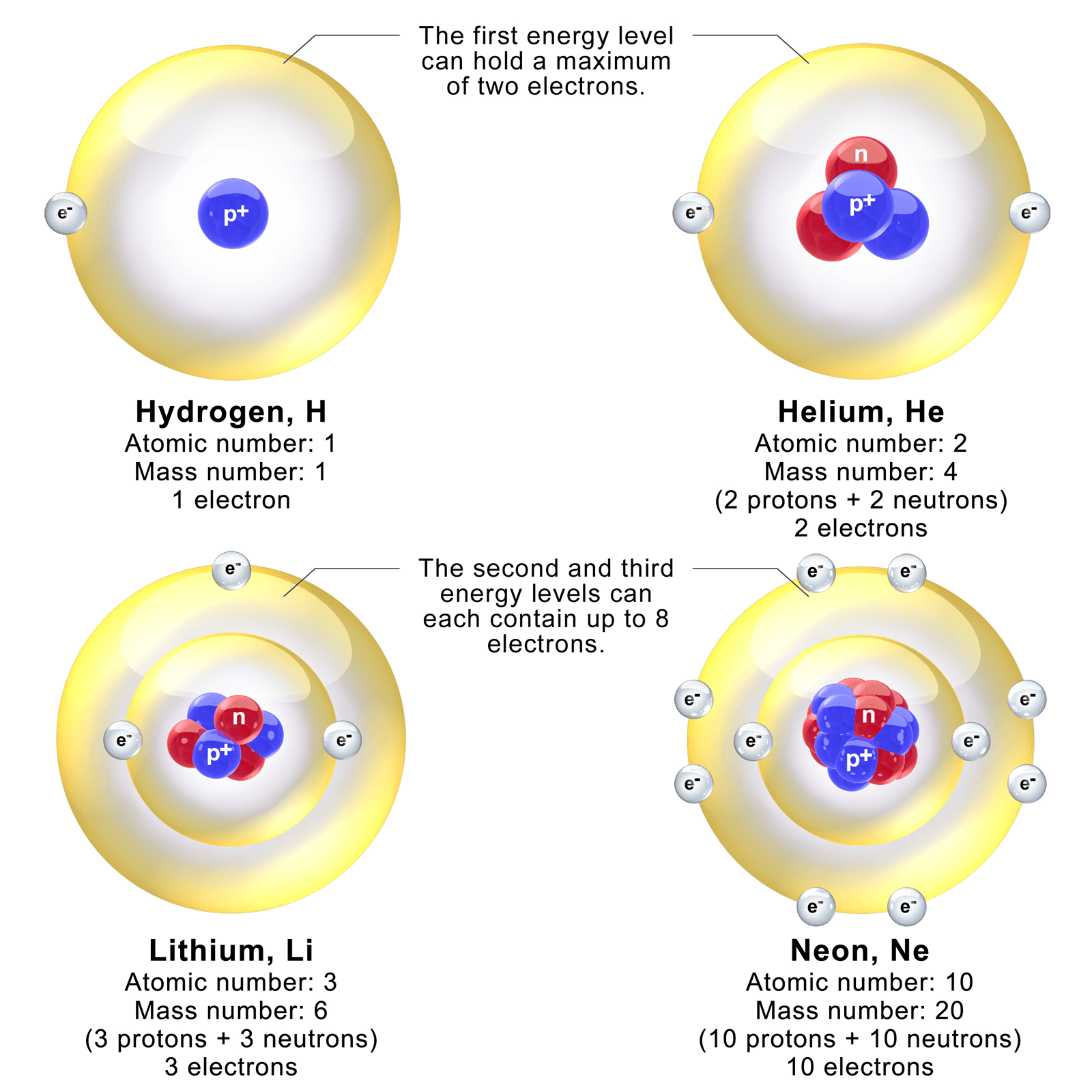
Image source: By BruceBlaus CC BY 3.0, via Wikimedia Commons
Check this out.
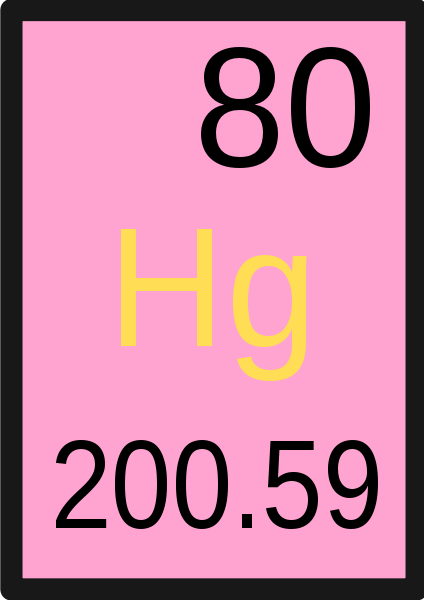
Image source: By me CC BY-SA 2.5, via Wikimedia Commons
It's a box.
Wait. It's actually how we organize each element. Think of it like a trading card.
- The number at the top of each box shows the atomic number for each element and the letter underneath it is the element's abbreviation.
- Each element is given an abbreviation, typically one or two letters long. The abbreviations usually make sense for the name of the element. Except this one. The abbreviation Hg, as shown above, is for mercury.
- Underneath the element's abbreviation is something called the atomic mass. It is the combined weight of the protons, neutrons, and electrons.
Using the picture above, what is the atomic number of mercury (Hg)?
The Periodic Table of Elements, shown below, is an amazing resource for figuring out all things related to elements.
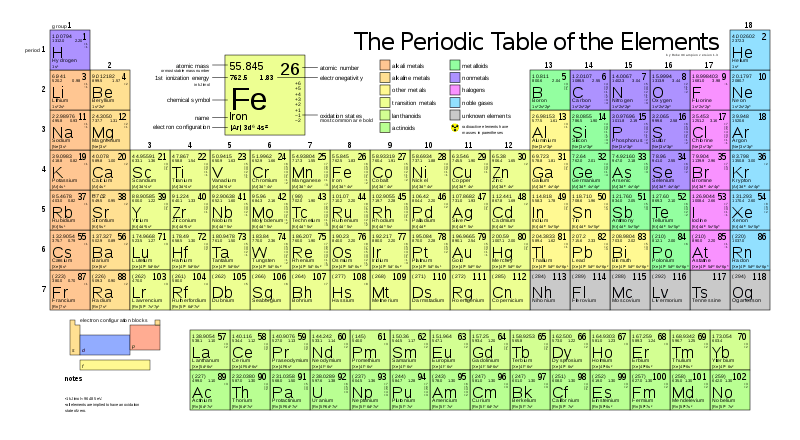
Image source: By 2012rc [Public domain], via Wikimedia Commons
Each of the over 100 elements we know of has a specific spot on this table. The elements are organized by atomic number, which are aligned so that elements with similar properties are in the same column, called a group. The rows, or periods, are organized by increasing atomic number.
Using the periodic table above, what is the abbreviation for carbon?
Use the periodic table above to answer this question. What group does the element nitrogen (N) belong to?
: The smallest particle of an element that has the properties of that element
: The positively and neutrally charged subatomic particles, protons and neutrons, located in the center of the atom
: The mind-bogglingly small, negatively charged subatomic particles that orbit the nucleus
: A positively charged subatomic particle located in the nucleus
: A subatomic particle with no charge located in the nucleus
: A substance that can not be broken down into other substances. All atoms of an element have the same atomic numbers
: The number of protons in the nucleus, which lets us identify which element it is