Illustrated · 2 min

+1 contributors

Translation: Elongation of the Polypeptide Chain
Once initiation of translation is complete, elongation begins.
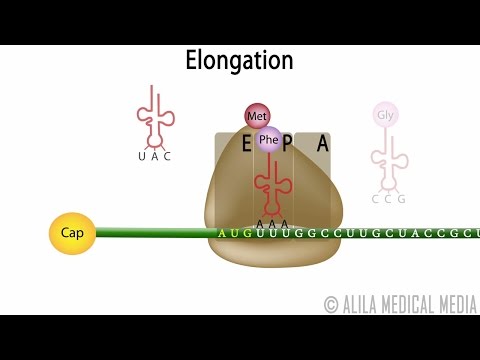
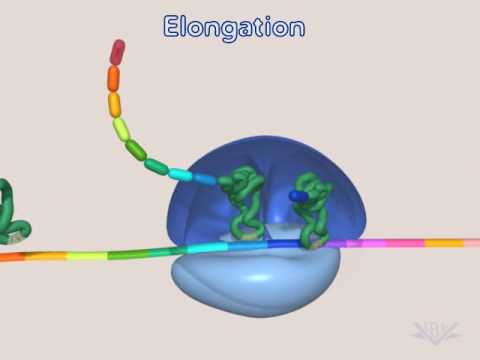
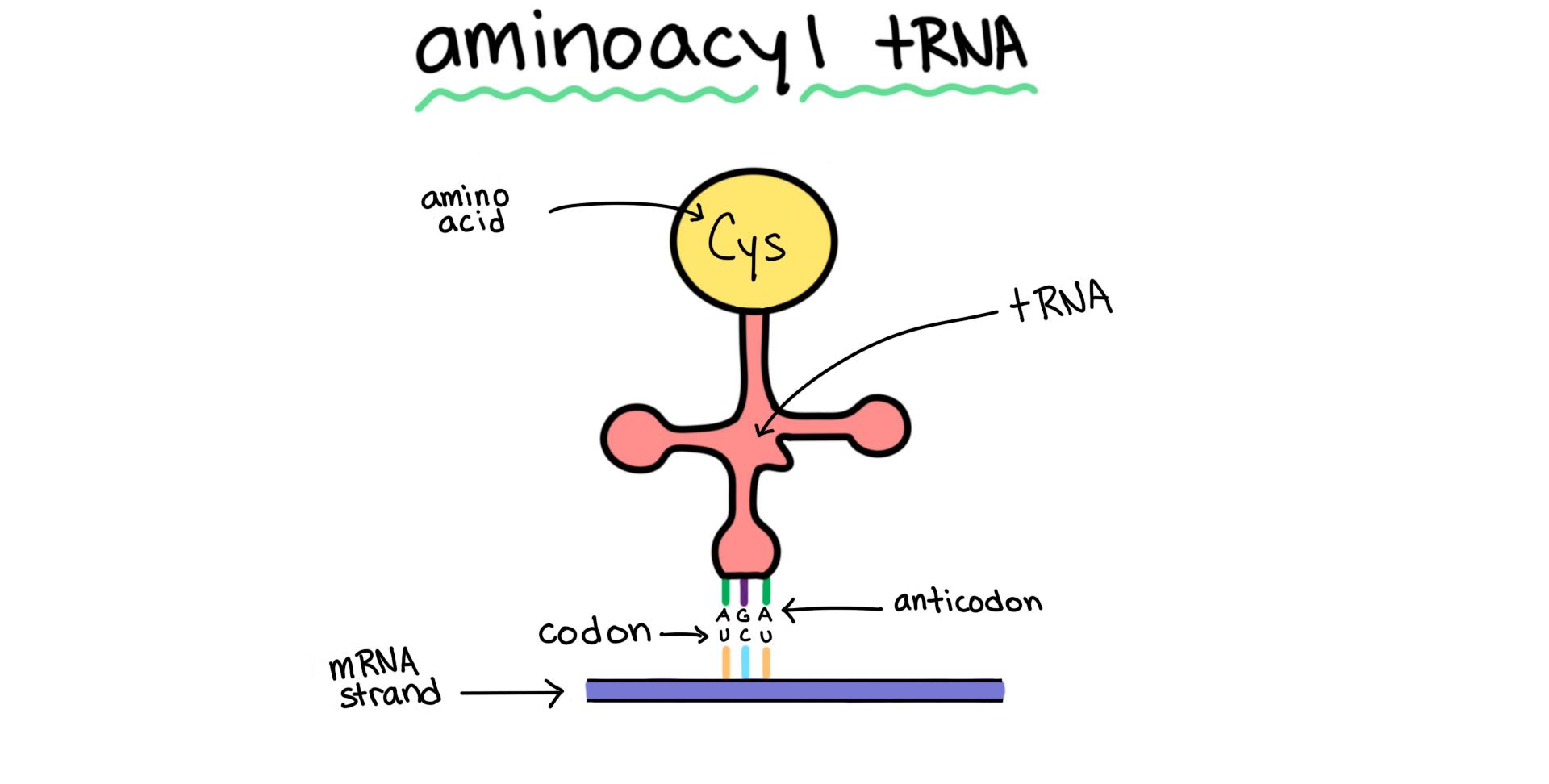
During this part of translation, the ribosome "reads" the mRNA strand, one codon at a time. Amino acids bound to tRNAs are brought into the ribosome and added to a growing polypeptide chain. A tRNA bound to an amino acid is also called an aminoacyl-tRNA. Each tRNA contains a sequence called the anticodon. This region is complimentary to a specific codon on the mRNA sequence and corresponds to a specific amino acid.
Translation always begins with the start codon, usually AUG, which translates to the amino acid methionine. In prokaryotes, the first amino acid is a modified methionine, fMet.
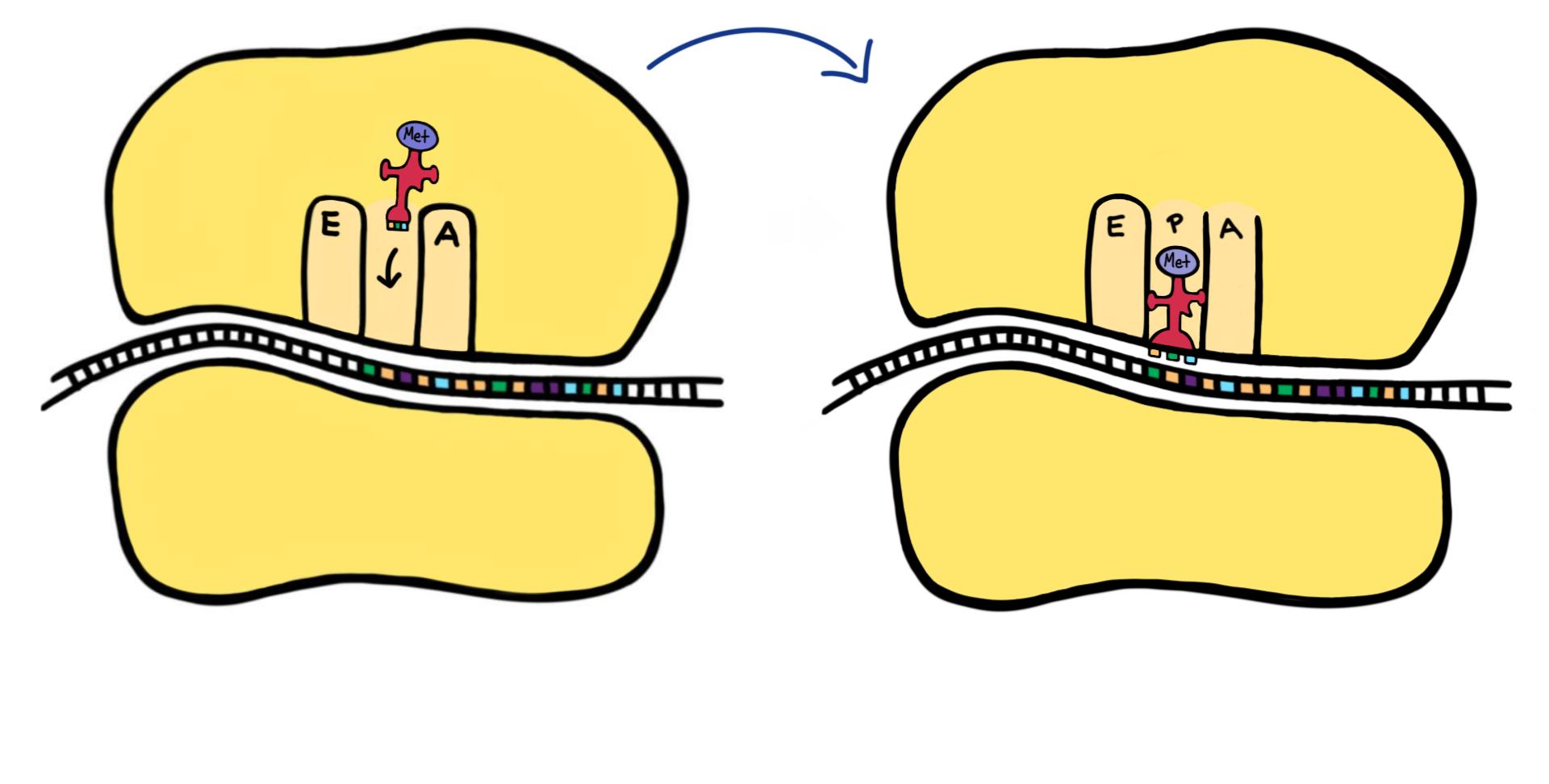
There are three main binding sites on a ribosome: E, P, and A.

The tRNA bound to methionine enters the ribosome and binds to the P site. This causes a conformational change in the ribosome which opens up the A site. A tRNA carrying the amino acid corresponding to the next codon on the mRNA strand can now bind to the A site. This process requires an input of energy from the hydrolysis of GTP by various elongation factors.
At this point, the P site contains the beginning of the growing polypeptide chain. The A site contains the amino acid to be added to the chain. The methionine detaches from the tRNA in the P site, and binds to the amino acid in the A site. With the help of the enzyme peptidyl transferase, a peptide bond forms between the two amino acids.
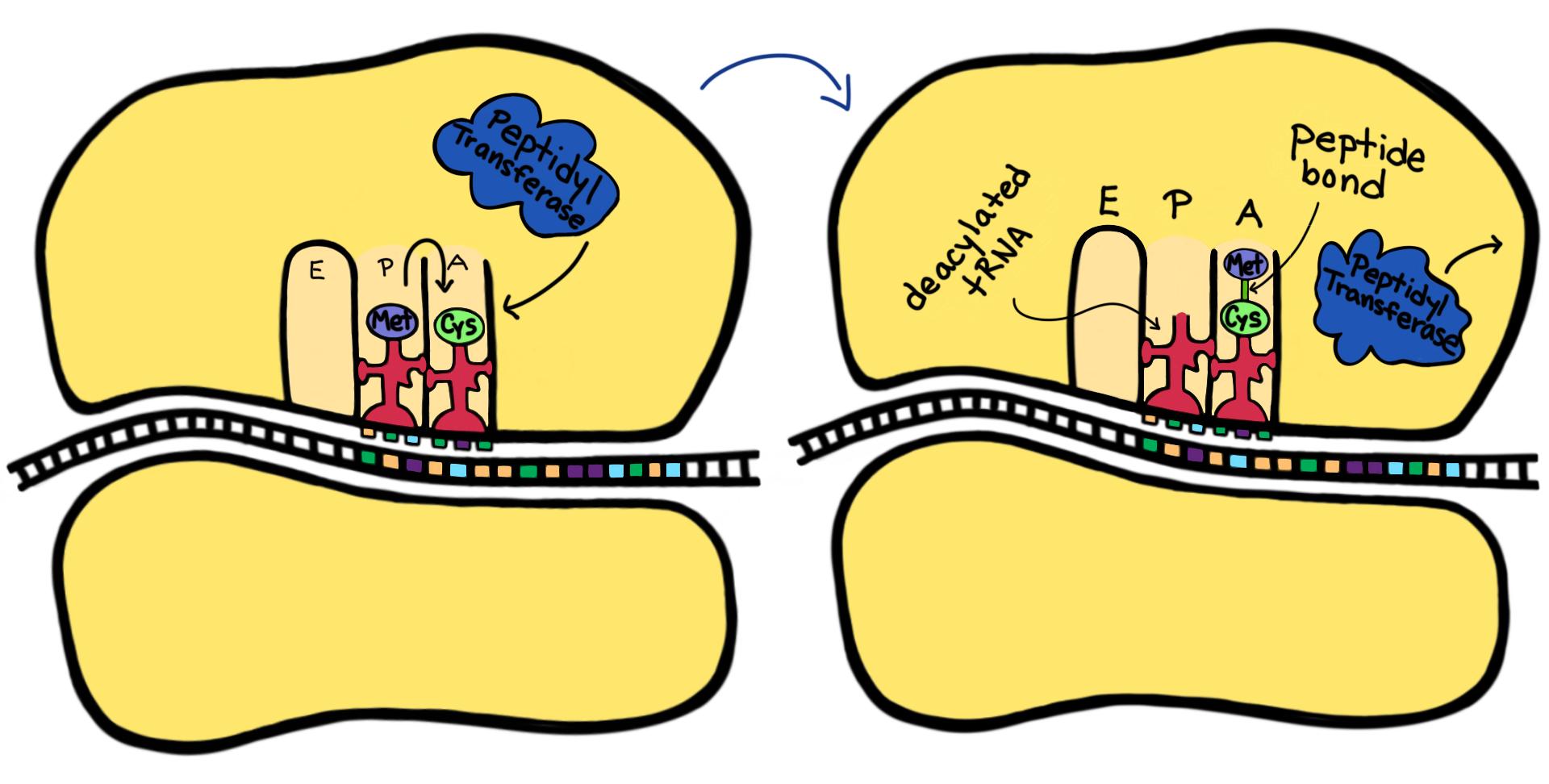
Now, there is a polypeptide chain attached to a tRNA in the A site of the ribosome, and the P site contains an unbound tRNA (also called a deacylated tRNA). In the new polypeptide, methionine becomes the amino- or N-terminus. A new amino acid can bind to the carboxyl- or C-terminus of the polypeptide. The carboxyl end in this case is at the Cys amino acid
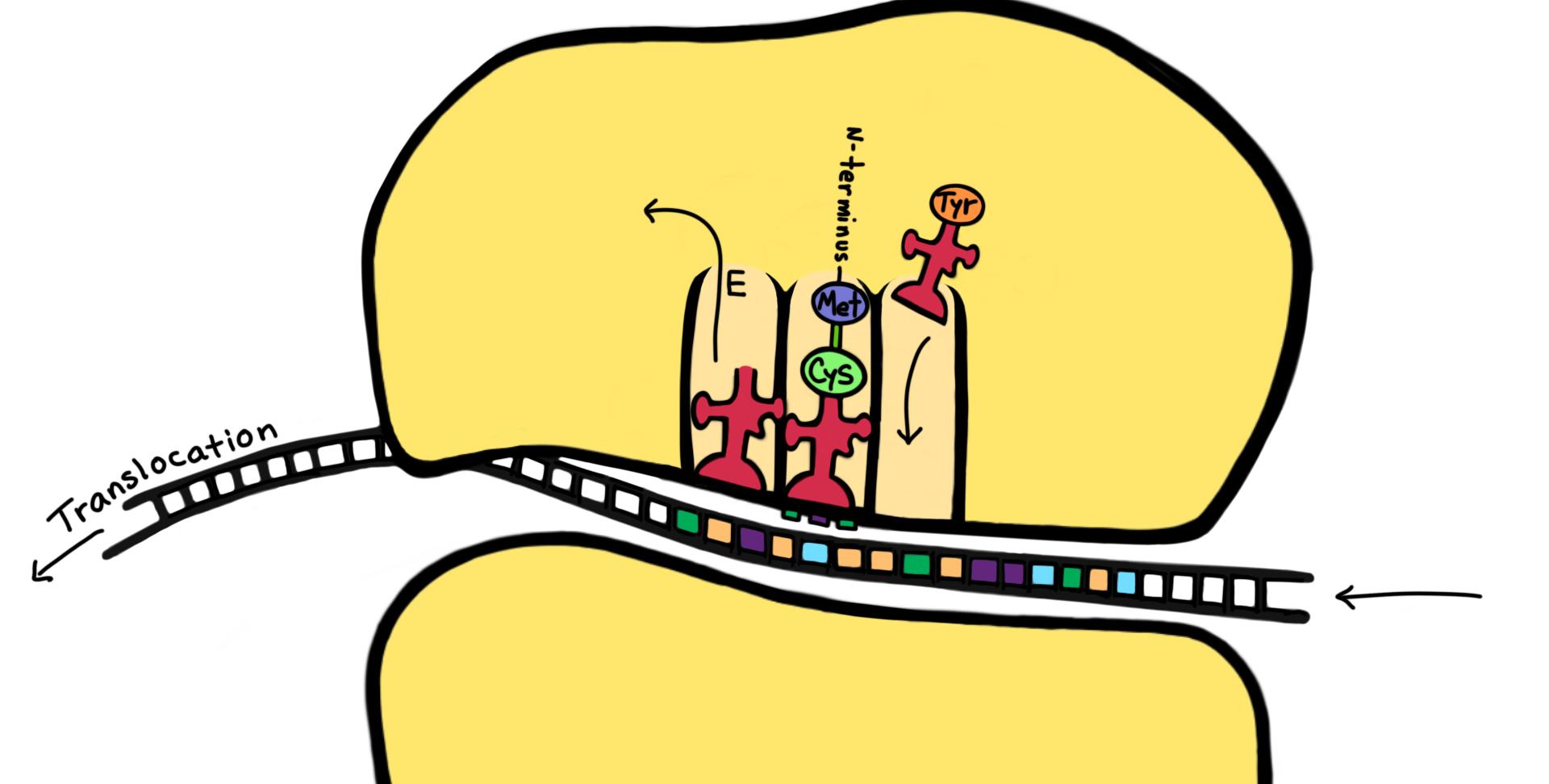
The ribosome moves to the next codon on the mRNA strand. This final step of elongation is called translocation. With the shift of the mRNA strand, the unbound tRNA moves from the P site to the E site. The polypeptide moves from the A site to the P site, exposing the new mRNA codon in the A site. A complimentary aminoacyl-tRNA can now bind to this codon. The unbound tRNA can now exit the ribosome through the E site.
The steps of elongation are facilitated by several elongation factors. In prokaryotes, these factors are EF-G, EF-Tu, and EF-Ts. In eukaryotes, they are eEF and eEF.
The elongation process repeats until the ribosome reaches a stop codon (UAG, UGA, or UAA) on the mRNA strand. Once this happens, the termination step of translation can begin.