Interactive · 3 questions
+1 contributors

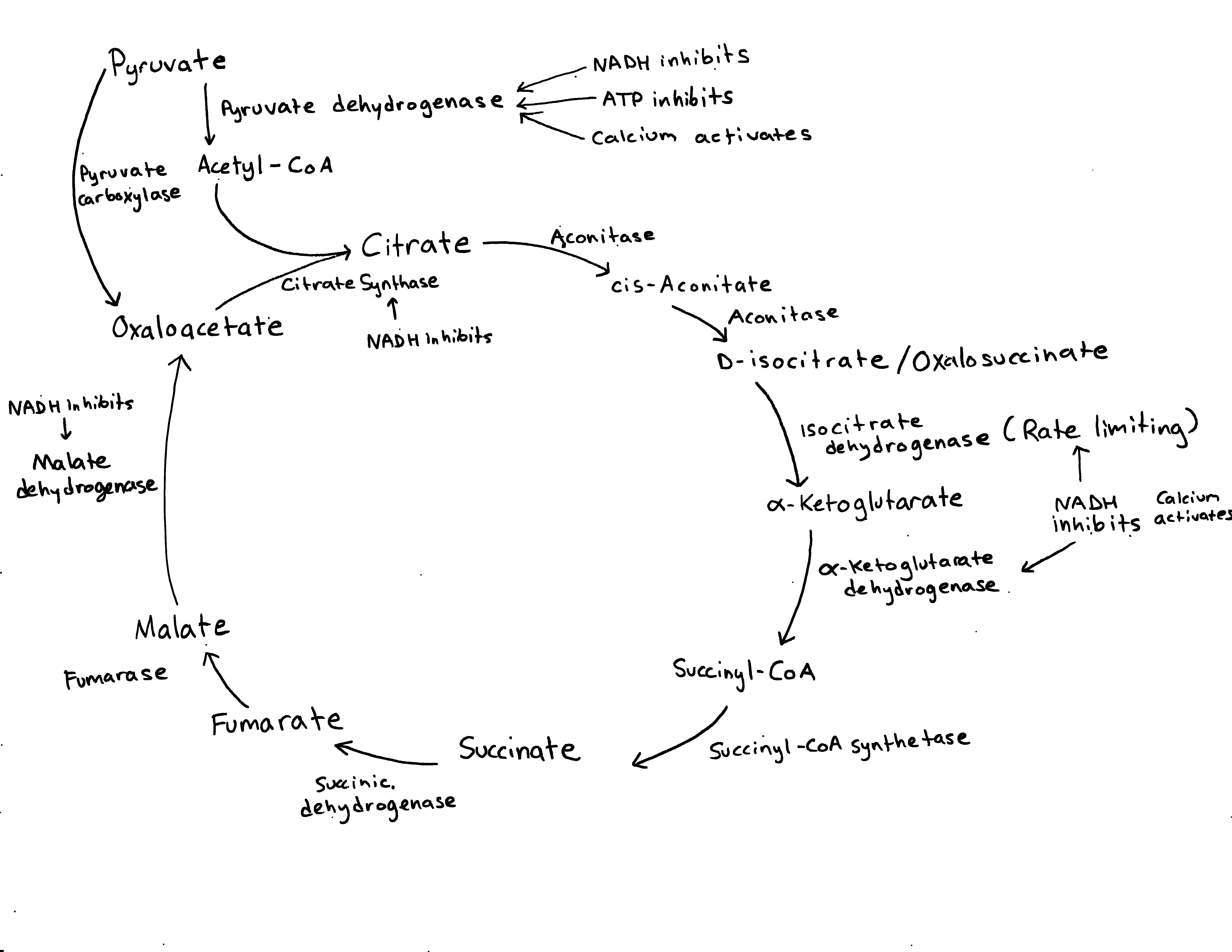
This version of the Krebs cycle only has enzymes and their regulators represented.
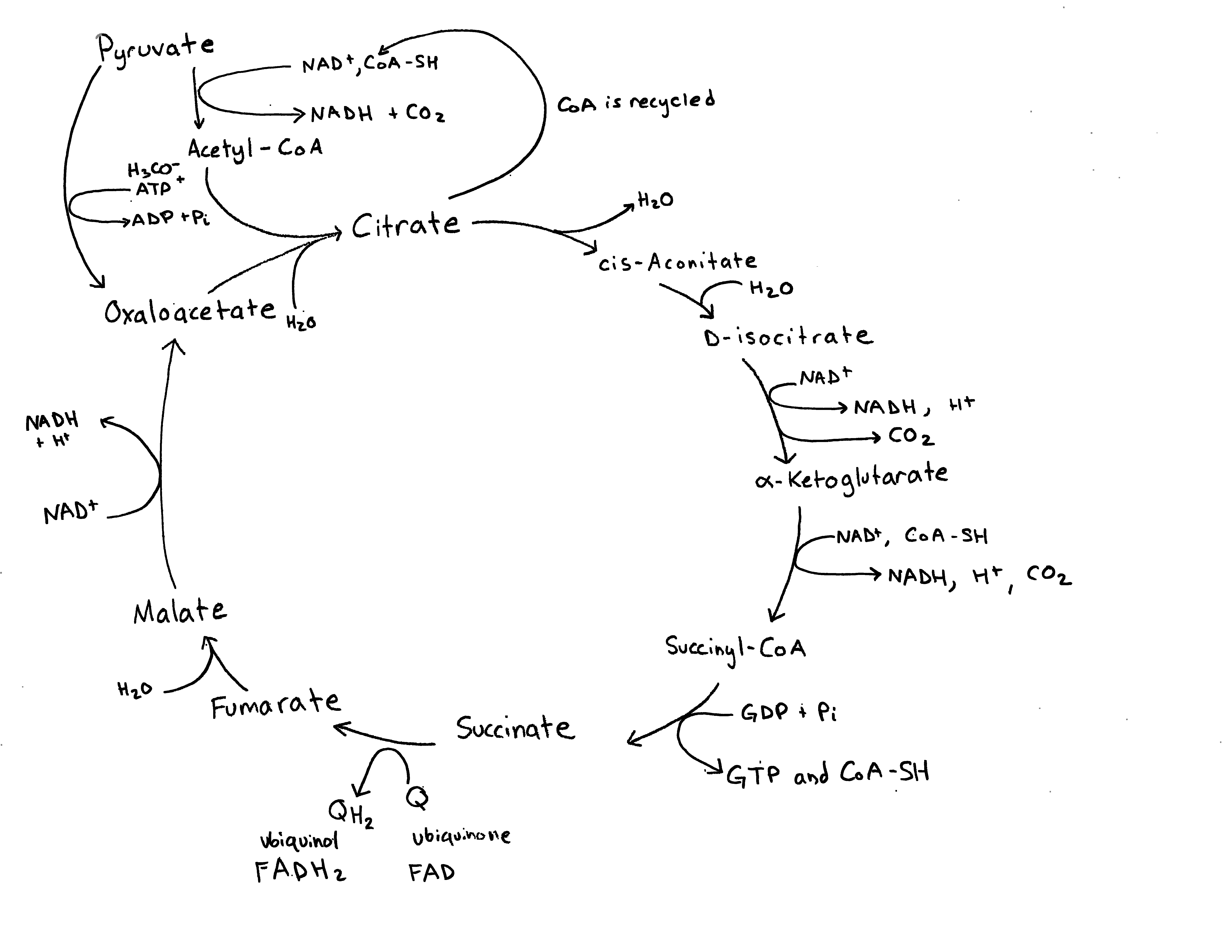
This representation of the Krebs cycle has only NAD, ADP, GDP, H2O, and CO2, as well as respective reduced forms, represented around the chart.
How is the Citric Acid Cycle regulated? How does energy remain balanced in the Citric Acid Cycle?
The Krebs cycle is regulated mostly by its own products. Allosteric regulation, or the regulation of an enzyme by binding a molecule to it somewhere other than the active site, is often used to activate and inhibit the Krebs cycle enzymes. ATP, NADH, and acetyl-CoA are all able to allosterically regulate enzymes in the cycle.
How do NADH and ATP regulate the Citric Acid Cycle?
When the cycle reduces NAD+ to NADH, the NADH products can inactivate enzymes that are used early in the cycle. NADH can inactivate pyruvate dehydrogenase, citrate synthase, isocitrate dehydrogenase, and alpha ketoglutarate dehydrogenase. NADH can also inactivate malate, which prevents the overproduction of oxaloacetate.
ATP can inhibit pyruvate dehydrogenase, while ADP can activate it. In cells that use GDP/GTP instead of ATP, the same process can occur.
How do the carbon products of the Citric Acid Cycle self-regulate?
The carbon products of the enzymes in the cycle can also be used to prevent further synthesis. Acetyl-CoA can inhibit pyruvate dehydrogenase. Citrate can inhibit citrate synthase, and succinyl-CoA can inhibit alpha ketoglutarate dehydrogenase. Citrate can also regulate glycolysis by inhibiting phosphofructokinase-1.
How does calcium regulate the Citric Acid Cycle?
Calcium ions can be used to activate the cycle because mitochondrial calcium levels are linked to physical activity. High levels of ADP can also activate the cycle for the same reason.
This system of self regulation keeps the cell from wasting materials like pyruvate in the Krebs cycle when energy is already abundant. It also ensures that enough NAD+ is available for glycolysis and other reactions.
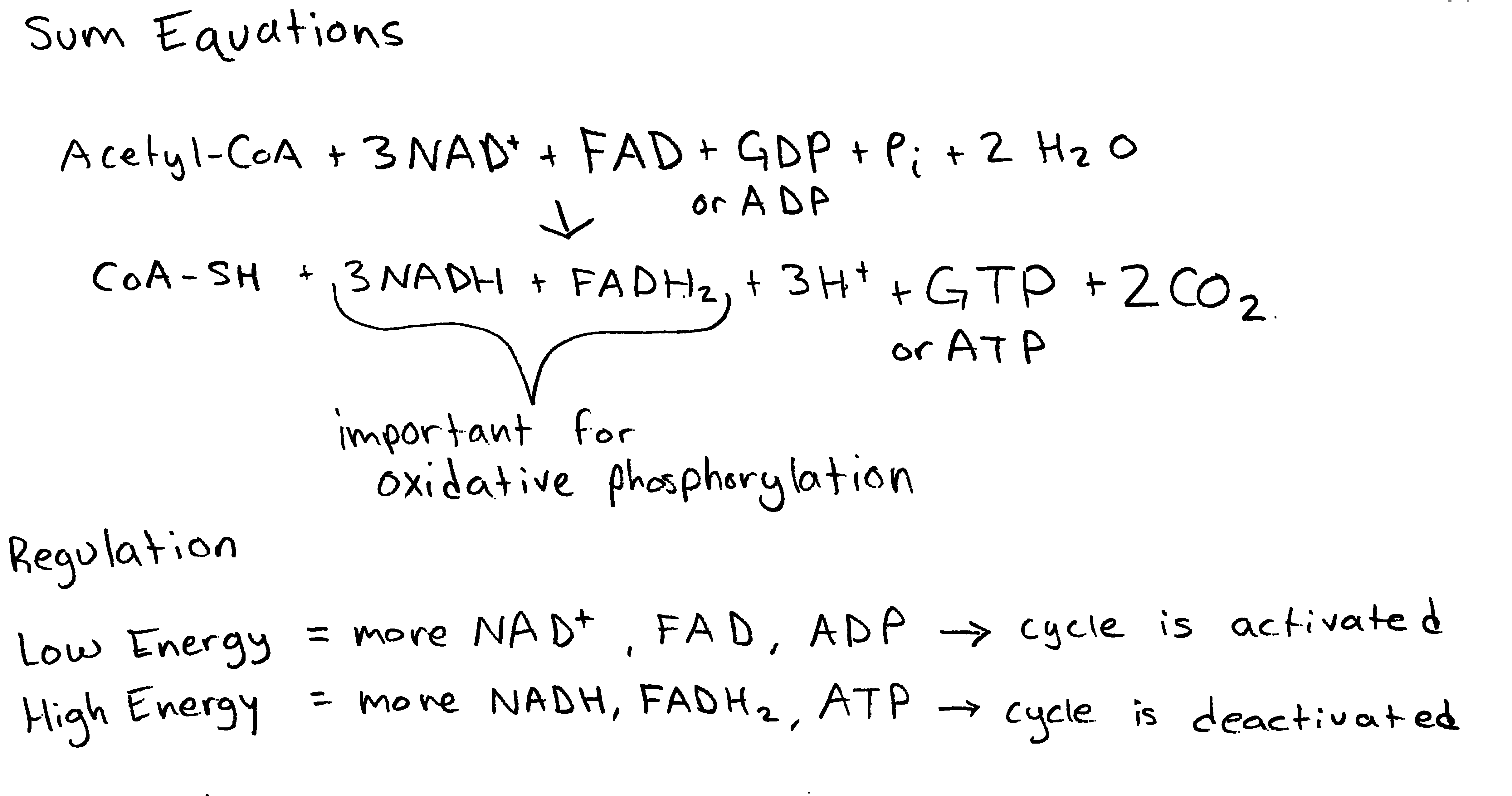
In summary, ATP, NADH, and the carbon products like acetyl-CoA and citrate can be used to inhibit the Krebs cycle. ADP, NAD+, and calcium ions can be used to activate the Krebs cycle.
If a cell has a lot of NAD+, the Krebs cycle...
If a cell has a lot of acetyl-CoA, then...
If a cell has a lot of ATP, then...