Energy in Chemical Reactions — Role & Overview

Before this, knowChemical Reaction — Definition & Overview

Interactive · 2 questions

What Is Activation Energy?

Understanding the role that energy plays within a reaction is a powerful way to predict how it will react. This concept is most easily understood using a reaction coordinate diagram, like the one below.

A reaction coordinate diagram. The reactants are at some arbitrary energy, and the reaction must proceed over an activation energy threshold to reach the lowest energy state, the products.

Image source: By Jasper Brown

Let's examine this diagram. We start out with the reactants. If we want this reaction to occur, we need to input some minimum amount of energy to the system. This is called the activation energy. Sometimes this energy is super high, and sometimes it is super low, but for our purposes, it is always higher in energy than the products or reactants. The activation energy can be provided in many different ways, but it is most commonly provided through either heat or light.

An important note about the activation energy is that it is always measured from the peak to the reactants. What this means is that the activation energy for the forward reaction will not be the same as the activation energy of the backwards reaction. To get a feel for this, imagine you are in a valley, and you want to push a ball over a hill into a smaller valley.

A diagram of pushing a ball over a hill onto higher elevation

Image source: By Jasper Brown

If we want to do this as shown, it requires a lot of energy to get over the hill. But, if we start in the 'final' position (the reverse reaction), we only have to push it over a tiny hill. Activation energy is the same sort of phenomenon.

Which statements about activation energy are true?

Choose all correct answers

Interactive · 2 questions

Activation Energy

Chemical reactions need something to get them going, whether it is heat, light, or flat out smacking the reactants with a hammer. That something is known as energy.

Recall the law of conservation of energy, which states that energy cannot be created or destroyed. This means that energy has to somehow be put into the reaction—it can't just power itself. We call this the activation energy of the reaction.

A graph showing the activation energy required for a reaction to occur

Chemical reactions need to overcome their activation energy barrier to happen.

Image source: By Brazosport College CC BY-SA 3.0, via Wikimedia Commons

What needs to be overcome for a chemical reaction to occur?

Choose one answer

Illustrated · 2 min

Law of Conservation of Energy

Before we talk about anything else, we need to briefly go over the Law of Conservation of Energy. This law tells us that, in an isolated system (like most of the reactions you'll see in biology), the total energy remains constant.

This means that a chemical reaction neither creates nor destroys energy. Chemical reactions simply transform energy from one form into another.

Some of these forms of energy are thermal (heat), radiant (light), kinetic (movement).

Law of Conservation of Energy\color{#3DB917}{\text{Law of Conservation of Energy}}

Main idea: energy is neither created nor destroyed by a chemical reaction. It is just transformed from one form into another.

Activation Energy

Reactions require energy. Activation energy is the specific amount of energy it takes to get a reaction going.

Activation energy is the amount of energy it takes to get a reaction going.

Image source: By Community College Consortium for Bioscience Credentials CC BY 3.0, via Wikimedia Commons

The picture above is just one example of how reactants and products are related to the activation energy. Let's talk about what the image shows us.

  • On the left (very early in the progress of the reaction), we have our reactants. They have little or no energy.
  • The reactants have to overcome a big hill of activation energy in order to become products.
  • Once the reactants get enough energy to get to the top of this "hill", they can become products and the reaction completes itself.

There's something else that you should be aware of: when the reactants reach the required amount of activation energy, they are moving. Notice how the reactants at the top of the graph are blurry? This is showing us that they are moving quickly.

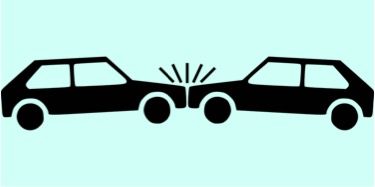
Reactions occur when reactants collide with each other. Reactants that move faster are more likely to collide and collide harder. Think about a collision of two cars; there's more energy involved when both cars are moving quickly.

To get reactants to move faster, we often add heat.

Faster movement means harder collisions of molecules.

Image source: By Open Clipart [Public domain], via publicdomainvectors.org

Enzymes and Activation Energy

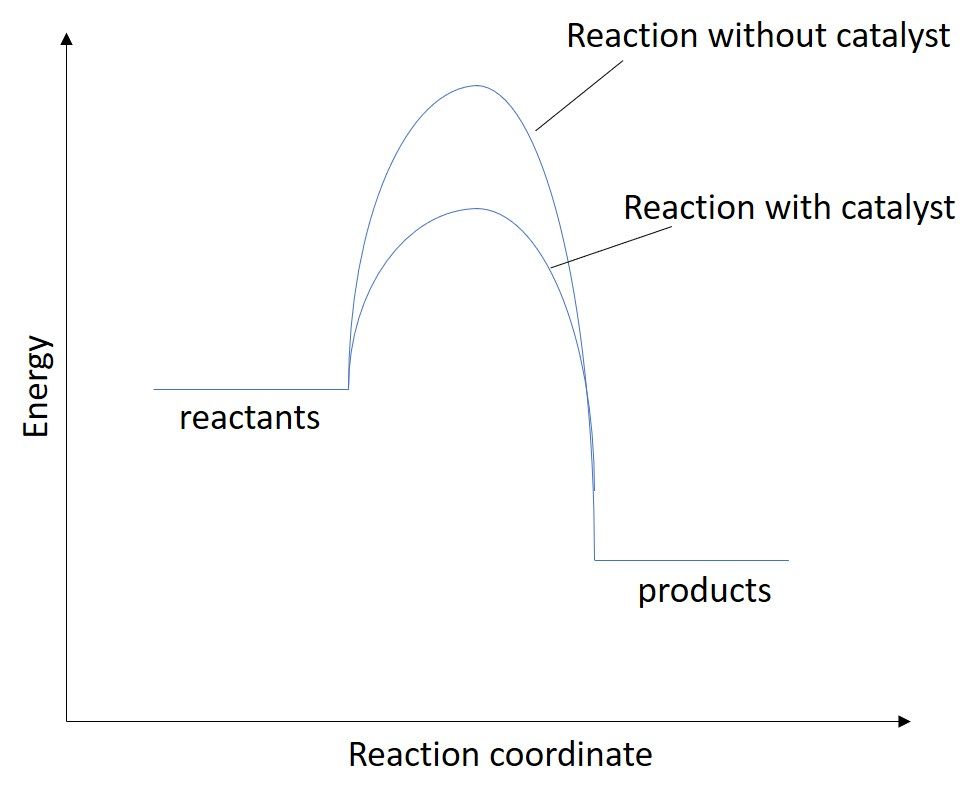
One way to get a reaction going faster is to reduce the activation energy required. This can be done with enzymes.

Enzymes reduce activation energy

Image source: By myself CC BY-SA 3.0, via Wikimedia Commons

Endothermic vs. Exothermic Reactions

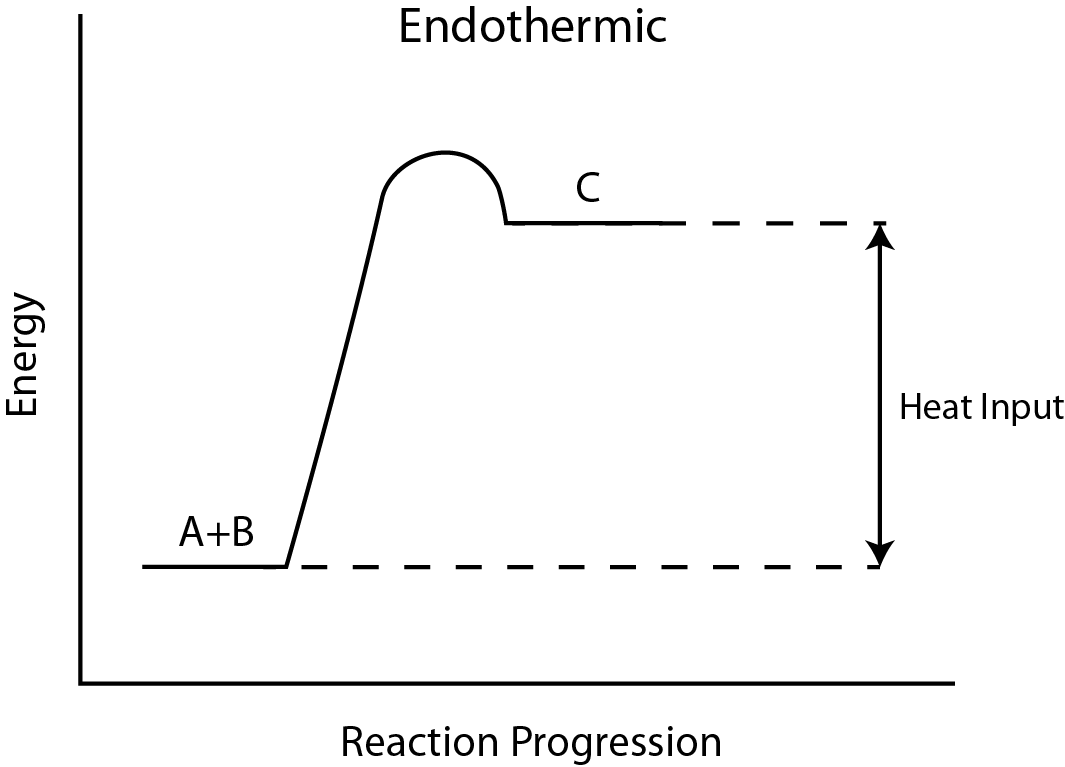
Endothermic reactions take in heat. As a result, the products have more energy than the reactants.

To help you remember, endo- means "in". These reactions take in (or absorb) energy.

The products in endothermic reactions have more energy than the reactants.

Image source: By Brazosport College (modified by expii) CC BY-SA 3.0, via Wikimedia Commons

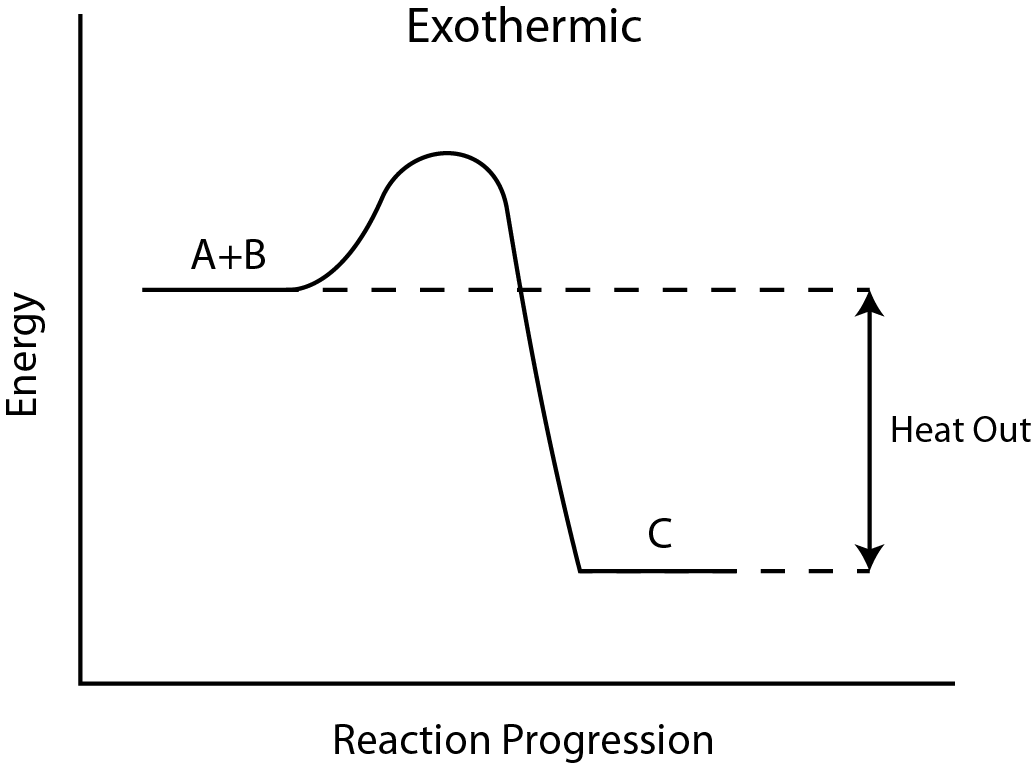
The products in exothermic reactions have less energy than the reactants.

Image source: By Brazosport College (modified by expii) CC BY-SA 3.0, via Wikimedia Commons

On the other hand, exothermic reactions release heat energy. As a result, the reactants have more energy than the products.

To help you remember, exo means "out". These reactions put out (or release) energy.

Key Vocabulary:

  1. Conservation of energy
  2. Activation energy
  3. Endothermic
  4. Exothermic

Video

(Video) Exothermic and Endothermic Reactions

by Cognito

Energy: not just what coffee gives you in the morning. This video breaks down what energy looks like in different chemical reactions and what makes activation energy so important.

Video

(Video) What Triggers a Chemical Reaction?

by Kareem Jarrah on TED-Ed

Check out this video for a quick description of activation energy, exothermic reactions, and endothermic reactions.

As an example, you will see a combustion reaction, which happens between hydrogen and oxygen molecules. When the molecules react, they release energy in the form of heat and light. Afterwards, we are left with the product: water. Since the starting energy was greater than the final energy of the product, this is an exothermic reaction.

Type a concept, like “slope” or “photosynthesis”.

↑ ↓ to choose · Enter to openSearch explanations and problems