Interactive · 2 questions

+1 contributors

What Is Activation Energy?
Understanding the role that energy plays within a reaction is a powerful way to predict how it will react. This concept is most easily understood using a reaction coordinate diagram, like the one below.

Image source: By Jasper Brown
Let's examine this diagram. We start out with the reactants. If we want this reaction to occur, we need to input some minimum amount of energy to the system. This is called the activation energy. Sometimes this energy is super high, and sometimes it is super low, but for our purposes, it is always higher in energy than the products or reactants. The activation energy can be provided in many different ways, but it is most commonly provided through either heat or light.
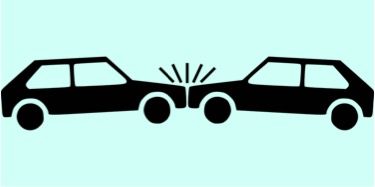
An important note about the activation energy is that it is always measured from the peak to the reactants. What this means is that the activation energy for the forward reaction will not be the same as the activation energy of the backwards reaction. To get a feel for this, imagine you are in a valley, and you want to push a ball over a hill into a smaller valley.

Image source: By Jasper Brown
If we want to do this as shown, it requires a lot of energy to get over the hill. But, if we start in the 'final' position (the reverse reaction), we only have to push it over a tiny hill. Activation energy is the same sort of phenomenon.
Which statements about activation energy are true?
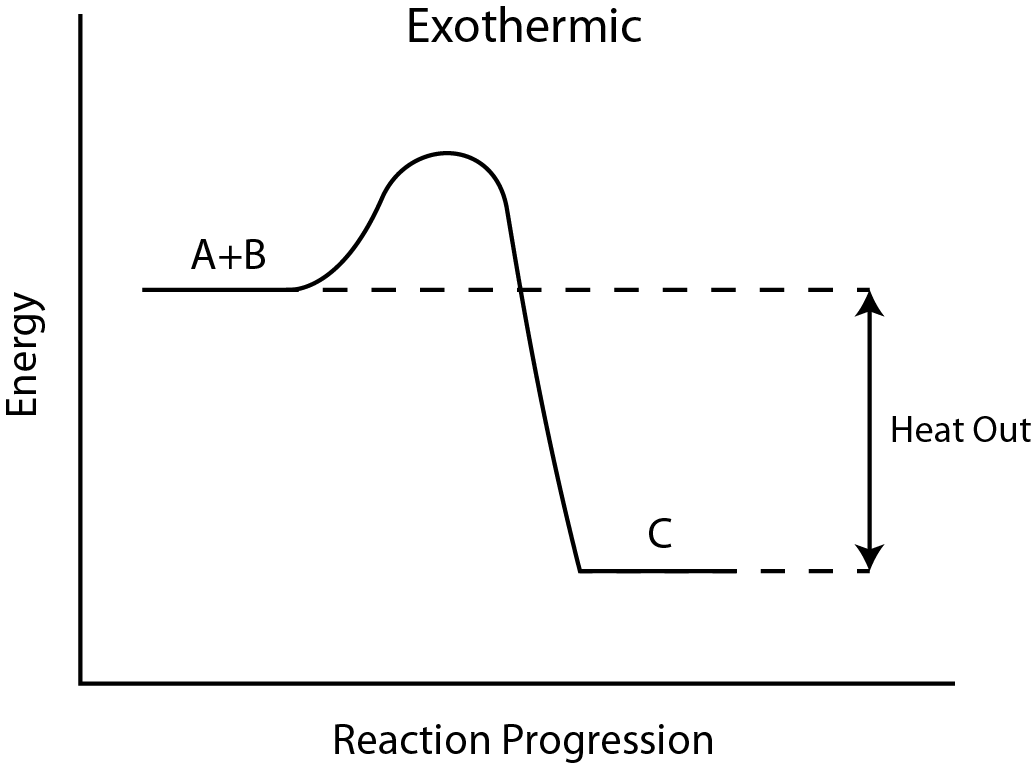
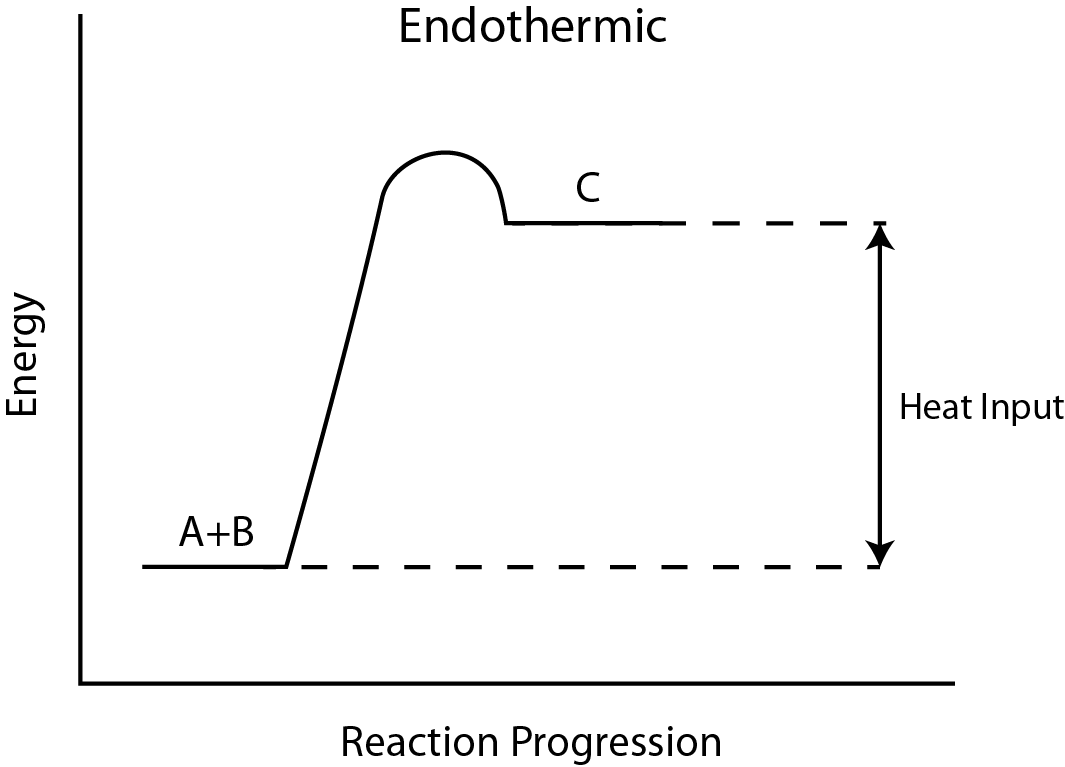
After we pass the peak, the energy falls down to that of the products. The difference in energy between the products and reactants is labeled as and represents how much heat enters the system. It is calculated using the equation below. In this case is negative. Since is how much heat enters the system, when is negative it represents how much heat leaves the system. A reaction with a negative is said to be exothermic and gives off heat, while a reaction with a positive is said to be endothermic, and it takes in heat.
Select the true statements about endothermic reactions.
You might have also heard of things called catalysts before. A catalyst is a substance that speeds up a reaction, but it is not consumed by the reaction. Without going into too much detail, a catalyst does this by decreasing the activation energy.
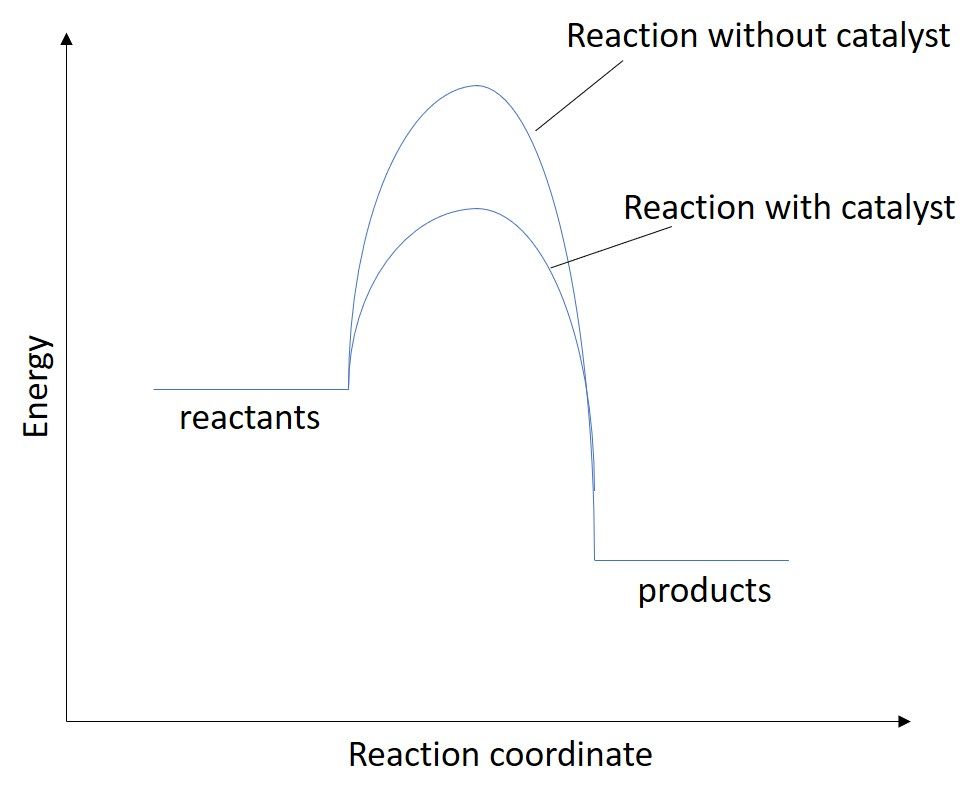
Image source: By Jasper Brown
: The minimum amount of energy needed to start a reaction : A reaction that takes in heat from the surroundings : A reaction that expels heat to the surroundings : A substance which lowers the activation energy of a reaction to speed it up, while not being consumed