What Are Energy Pyramids?
An energy pyramid is an easy way to show the energy flow in a community.
How Is It Set Up?
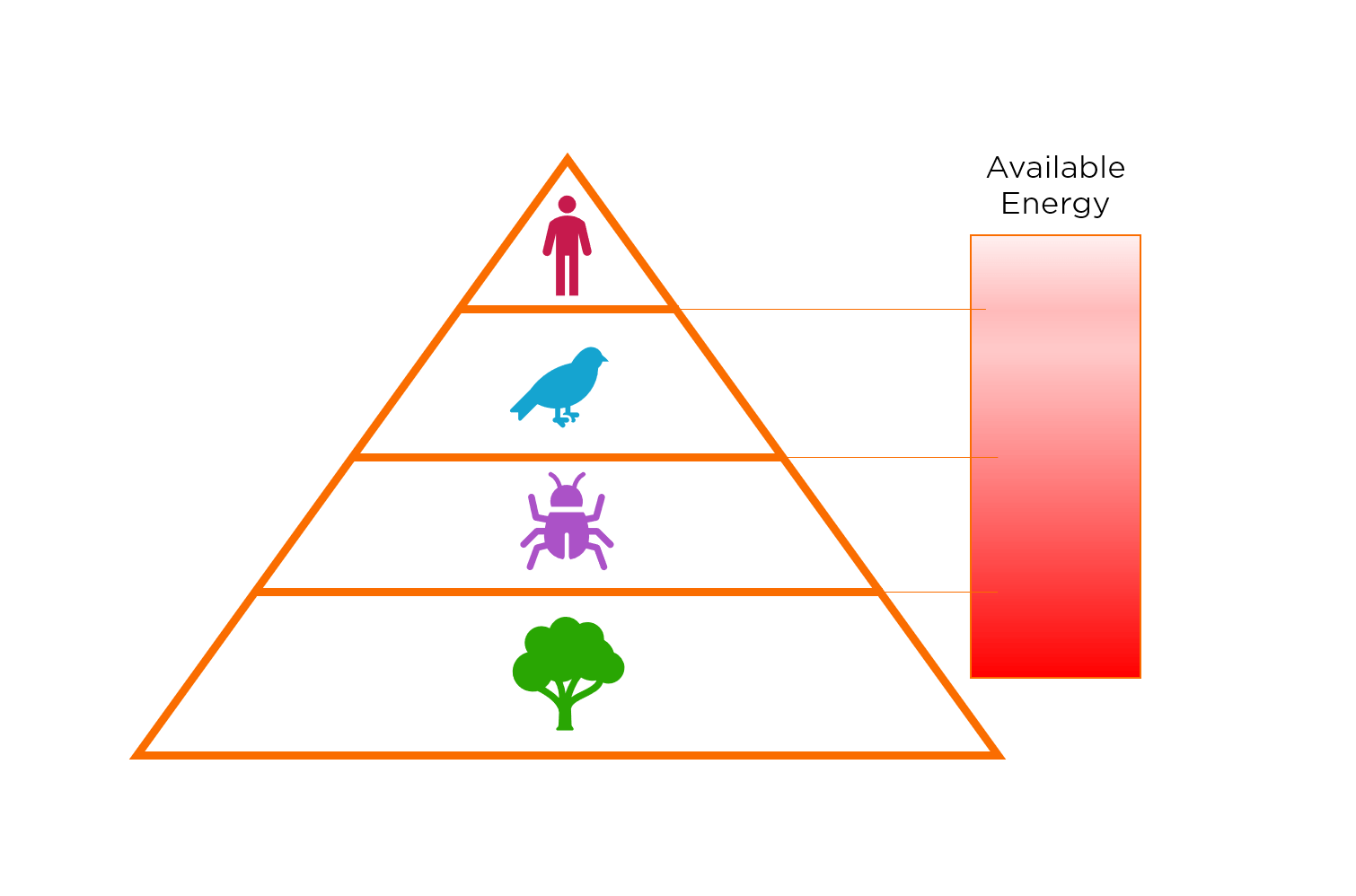
Energy pyramids always show producers at the bottom, then herbivores, omnivores, and finally carnivores. Carnivores are at the top because they eat other consumers. Plants are at the bottom because other organisms eat them, but they never eat other organisms. Decomposers eat organisms (and their waste) from any level, so they are normally on the side of the pyramid. Decomposers play the leading role in ammonification, an important part of matter recycling for an ecosystem.
What Exactly Do Energy Pyramids Have to Do With Energy?
Energy pyramids show a very cool trend: Each level only gets 10% of the energy from the level below it. So, let's say plants have 100% of the energy in an ecosystem. When the herbivores (primary consumers) eat the plants, they gain 10% of the energy the plants had.
When secondary consumers eat the herbivores, they get 10% of the herbivores' energy, or 1% of the plants' energy. The tertiary consumers get 10% of the secondary consumers' energy, which is about 0.1% of the plants' energy.
The apex predator gets about 0.01% of the plants' energy. So each level gets less and less energy per meal. This is why there are few apex predators compared to tertiary consumers and why the diagrams are pyramid shaped.
So it makes sense that the levels of the pyramid get smaller and smaller as you go up the pyramid. There is less energy available to the consumer with each level. Although the levels represent the amount of energy available, it can also be helpful to think in terms of population size. The plants are at the bottom and are able to sustain the largest population. At the top, the apex predators tend to have much smaller populations because they only get 0.01% of the available energy from their prey.
Vocabulary Review:
Food Chain : How energy passes through an ecosystem through organisms eating and being eaten
Energy Pyramid : An easy way to show the energy flow in a community
Producer : Organisms that produce their own food through photosynthesis or chemosynthesis
Consumer : Organisms that consume other organisms for energy
Decomposer : Organisms that break down waste and dead matter