Interactive · 1 question

+4 contributors




The Ideal pH Range
Enzyme activity is influenced by pH, temperature, and the substrate concentration of the solution. Depending on the type of enzyme, the pH will have a different impact on the rate of reaction.

Image source: By Stephaniegreenwood [Public domain], via Wikimedia Commons
All enzymes have specific pH dependencies. If the enzyme is typically found in the stomach, it will probably work best in an acidic environment. If this stomach enzyme is thrown into a neutral or basic pH, it will have a much slower rate of reaction because it is outside of the enzyme's ideal pH range.
Using the chart above, what is the preferred pH of enzymes that digest nucleic acids?
If the pH is either too high or too low, the rate decreases dramatically. Once the pH is too far away from the ideal range, the enzyme will become denatured and permanently change shape. This is why it is important for organisms to maintain homeostasis.
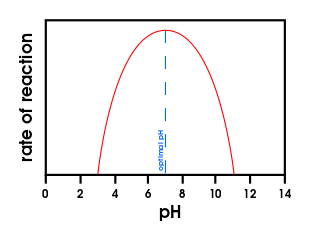
Image source: By domdomegg CC BY 4.0, via Wikimedia Commons
: A protein that acts like a catalyst. It speeds up biological reactions but is not used up during the reaction
: Minimum amount of energy needed to begin a chemical reaction
: A substance that speeds up reactions but is not used up during the reaction
: Molecules that a specific enzyme binds to and recognizes. They are transformed during the reaction