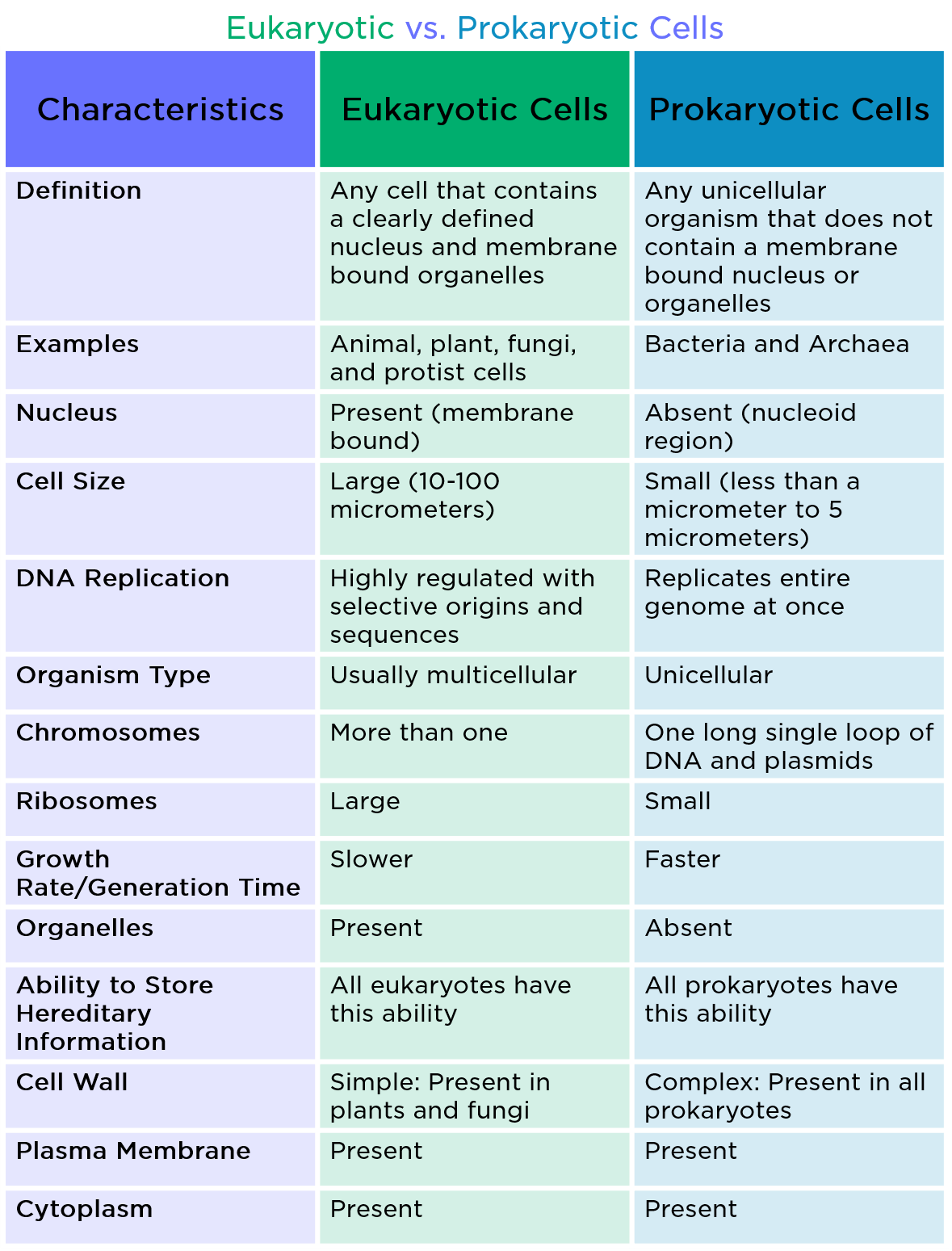
Eukaryotes are cells that have a nucleus, which contains their genetic information, and are surrounded by cell membranes. They are typically larger and much more complex than prokaryotic cells. Eukaryotes can be single-celled organisms or many cells grouped together to form multicellular organisms. They can also be specialized, such as your liver or heart cells. They tend to form new cells through sexual reproduction.
Your cells are eukaryotic. Fungi, plants, and animals are all made of many eukaryotic cells, while amoebas are the single-celled variety of eukaryote (they can sometimes be multi-cellular).
No one is quite sure about the origin of eukaryotic cells. However, it is believed that they came from prokaryotic cells (like bacteria and archaea) taking in other prokaryotes and using them to carry out certain functions within the cell. Over time, the cells evolved to have specialized compartments, like the organelles of present-day eukaryotic cells. We call this idea endosymbiotic theory.
Vocabulary Review:
Cell : The simplest form of life and the basic unit of structure and function
Eukaryote : Cells that contain a nucleus and membrane-bound organelles
Prokaryote : Cells that do not contain a nucleus or membrane-bound organelles