Illustrated · 1 min

+3 contributors



What Is Facilitated Diffusion?
Facilitated diffusion is a type of passive transport. Molecules that are polar or too big to diffuse across the plasma membrane using simple diffusion need extra help getting into or out of the cell. Transport proteins embedded in the plasma membrane allow these molecules or ions to get across the cell membrane. In other words, they help facilitate their movement.
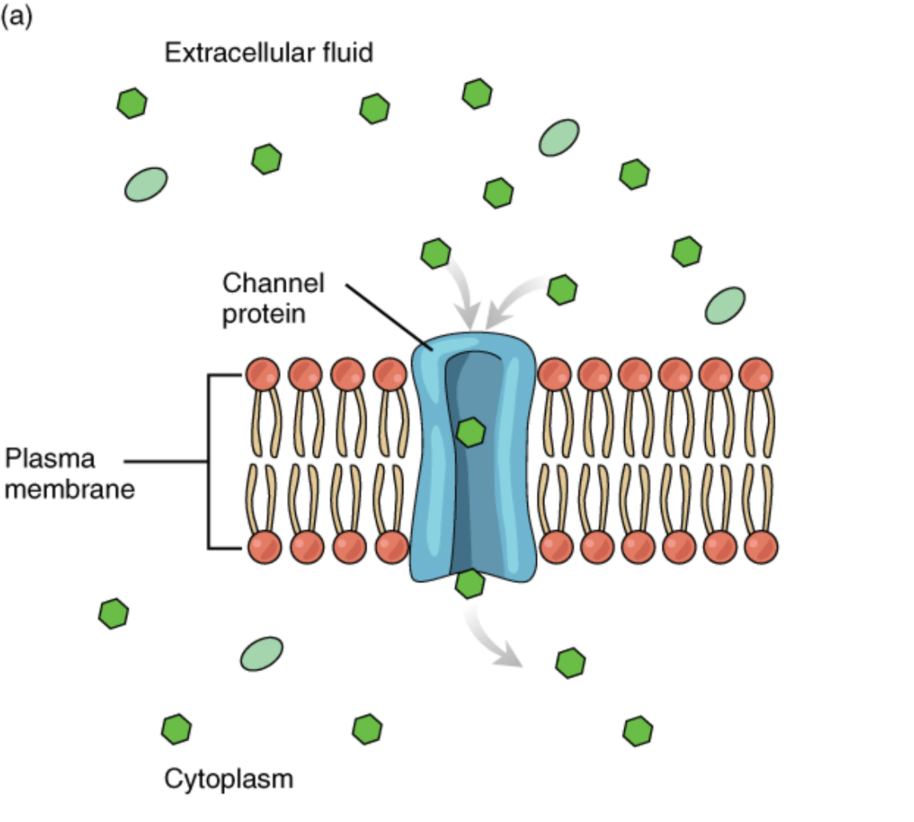
This process is spontaneous. Molecules naturally "want" to go from areas of high concentration to areas of low concentration. But sometimes the molecules need some extra help to get past the cell membrane. That's where transport proteins in the membrane come in:

Image source: By Sylvia Freeman
There are two types of membrane proteins involved: channel proteins and carrier proteins. Channel proteins are pretty much what they sound like. They allow certain molecules to pass through them in both directions. Carrier proteins bind to specific molecules and let them into or out of the cell.
In active transport, like exocytosis or endocytosis, energy is required to move substances. The transport proteins involved in facilitated diffusion don't need energy. This is because the molecules are spontaneously going down their concentration gradient.