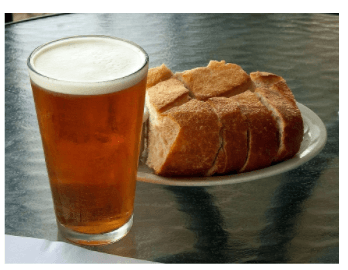
Do you like the taste of bread? Kimchi? Pickles? All of these foods (plus a lot more) are products of fermentation.
This is how organisms generate ATP when oxygen is not available. This is important when cells are performing glycolysis but have no oxygen to complete the Krebs cycle or electron transport chain. The Krebs cycle and electron transport chain are aerobic processes.
After glycolysis, there is an excess of ATP that is quickly grabbed by NAD
+
to become NADH. However, because there is no oxygen to steal the hydrogen atoms, the NADH can not become NAD
+
again. Once all of the NAD
+
is NADH, glycolysis and cellular respiration would stop completely. No more ATP can be produced. The whole process grinds to a halt.
This is where fermentation comes in.
In this process, the NADH molecules convert back into NAD+ by donating their high-energy electrons back to the pyruvic acid. Because of this, glycolysis can continue producing ATP.
Two types are common: alcoholic and lactic acid fermentation.
Alcoholic Fermentation
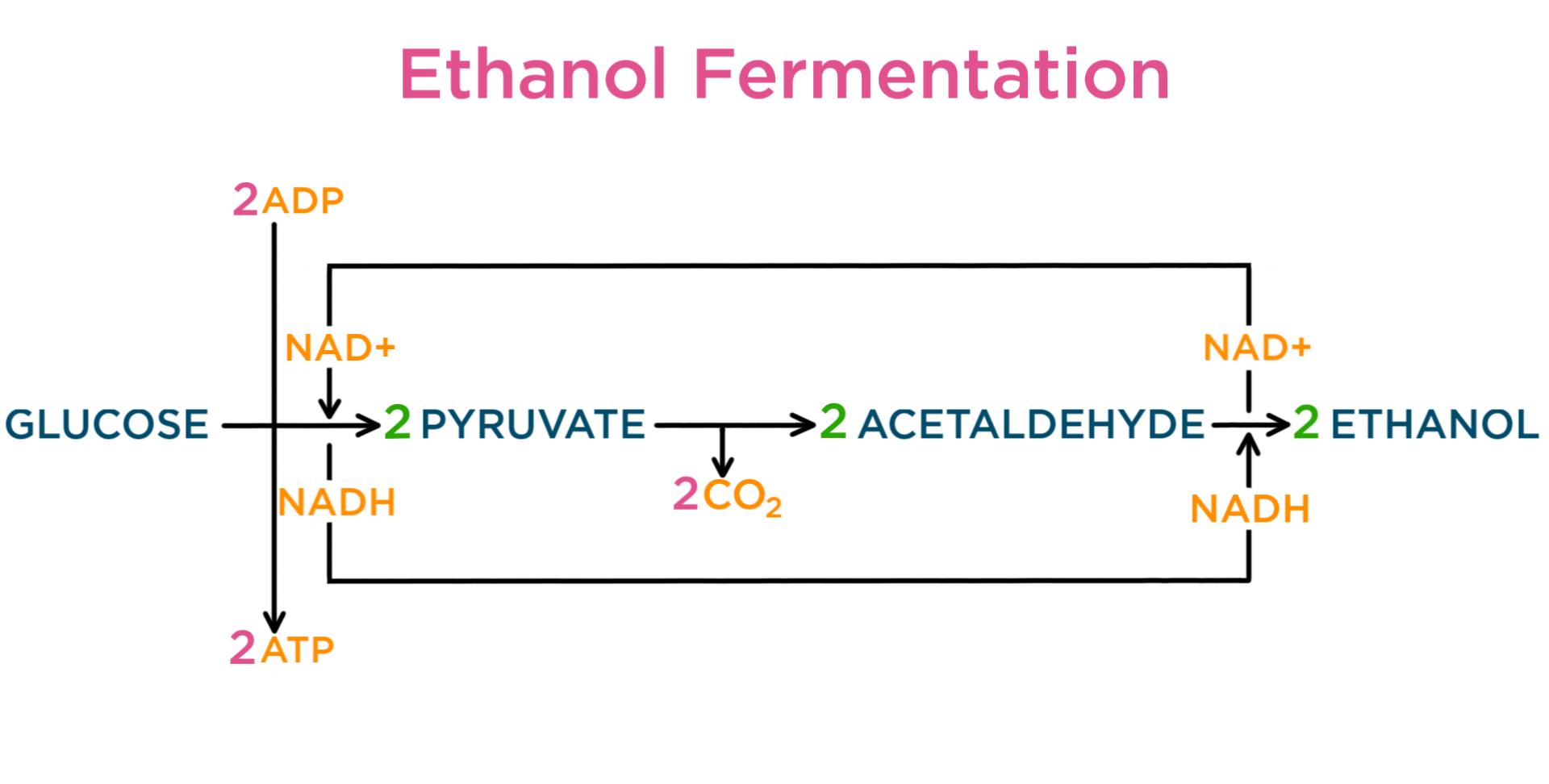
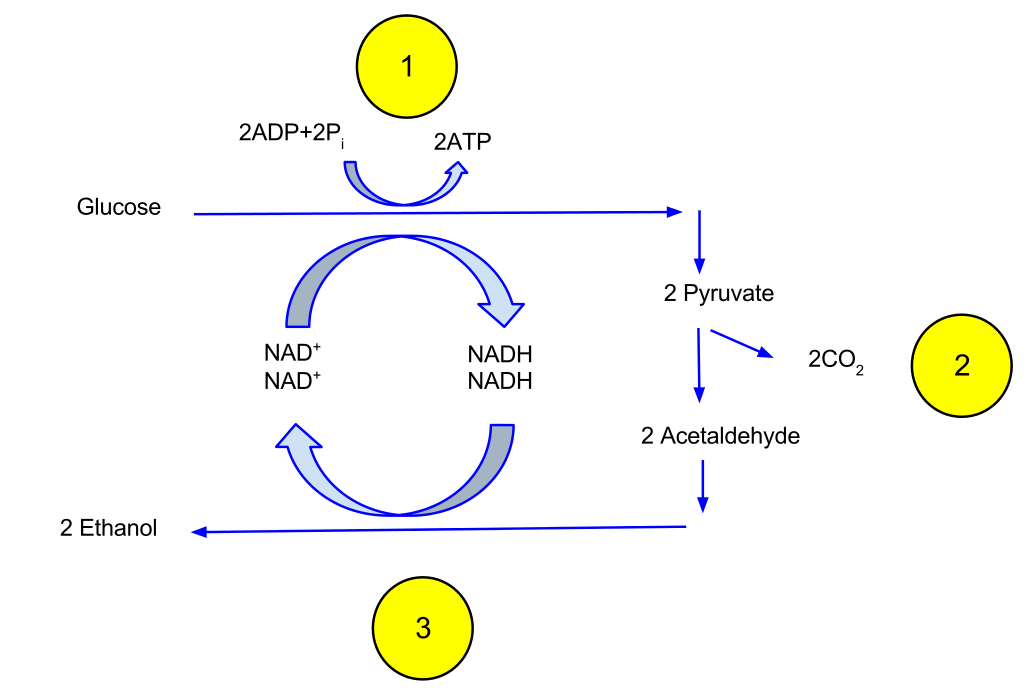
This process produces carbon dioxide and ethanol, a type of alcohol. Because of this, it's sometimes called ethanol fermentation. Yeast and a few other microorganisms can carry out this process. If you have ever seen bread dough rise, you have witnessed alcoholic fermentation. This process is:
pyruvic acid + NADH → alcohol + carbon dioxide + NAD+
Lactic Acid Fermentation
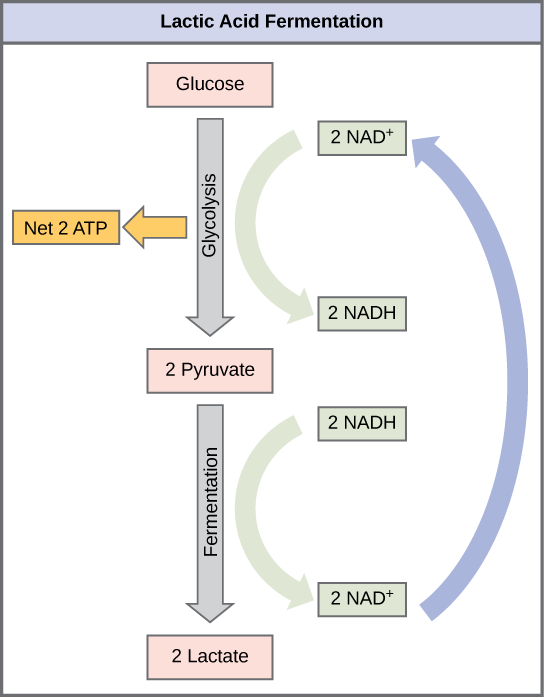
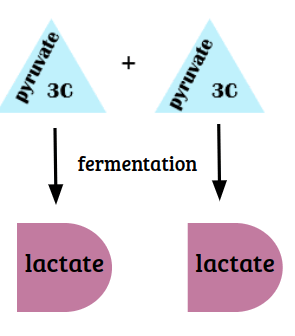
This process does not give off carbon dioxide, but it does create enough NAD+ for glycolysis to continue without interruption. Lactic acid is sometimes called lactate.
pyruvic acid + NADH → lactate + NAD+
This type of fermentation happens in cells when there is not enough oxygen present to supply the energy for activity. If the whole system is working too hard, it resorts to fermentation for that extra ATP.
After running a mile, your muscles feel weak and heavy. That's the lactic acid. Lactic acid fermentation happens in many animals, humans included.
Some bacteria create lactic acid as waste, which lets us have some delicious foods like cheese and yogurt.
Vocabulary Review:
Fermentation : How organisms create ATP when oxygen is not available after glycolysis
Cellular Respiration : A set of complex chemical reactions that provides a cell with energy
ATP : A molecule that stores energy in its bonds. The cell is able to break these bonds to release energy
Anaerobic : A reaction that does not need oxygen to occur