Illustrated · 4 min

+2 contributors


Literal equations appear everywhere in geometry. Equations describe relationships between different geometric objects, such as angles, volumes, and side lengths. We call them literal equations because they are built by taking a phrase written in words and turn it into an equation, written with variables instead of words. Formally, a literal equation is an equation containing more than one variable.
As a result of the connection between geometry and literal equations, I want to devote a bit of attention towards building literal equations used to describe geometric objects, and then using those equations, along with some algebra, to solve problems.
We're going to walk through a two-part example of solving literal equations. It's time to bundle up and make some snowballs!
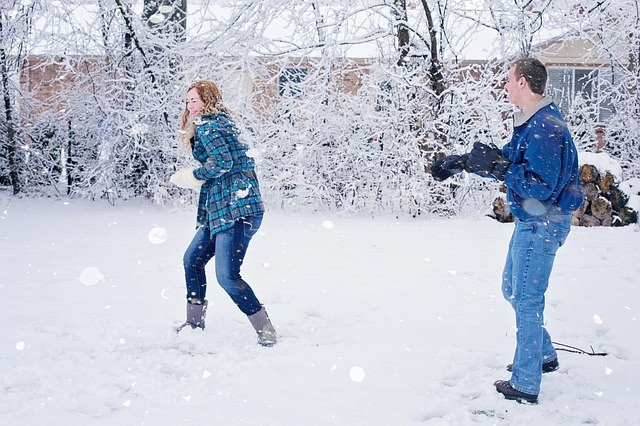
Jenni and Mike are having a snowball fight. They start by assembling blocks of snow in the shapes of rectangular prisms, from which they will create snowballs. Jenni and Mike each make a block of snow with width centimeters, length centimeters, and height centimeters. What is the volume of one of the blocks of snow?
This involves constructing a literal equation, and the first step in doing that is defining some variables. Since "width" starts with a "w" we let define the width. In general it's a good rule of thumb to use the first letter of the word describing the geometric object as a variable name (unless this would cause you to repeat letters, in which case just pick something else). Using this convention we let be the "height," be the "length" (don't use because it looks like a ), and be the "volume."
One of our formulas from geometry is that the volume of a rectangular prism equals the product of the length, width, and height. To build this equation, we use the "equals" sign to indicate how to divide the written expression into the two sides of the equation.
To reiterate, "the volume of a rectangular prism equals the product of the length, width, and height." The word "volume" appears to the left of the word "equals," so we start building our equation like
The other side is "the product of the length, width, and height," so we multiply these variables together and that becomes our right-hand side.
Ta-da! This is our literal equation, so now we switch gears to doing algebra. Remember, we are given and and want to find the volume, Our goal would be to solve for by adding, subtracting, multiplying, and dividing things from both sides of the equation, but there's no need, because is already isolated on one side of the equation. That means we can go ahead and start plugging in values. We know that and Thus to find we can multiply those numbers together:
Let's try another problem: if Jenni and Mike each use their blocks of snow to make snowballs with volume cubic centimeters, how many snowballs are made in total?
There are three quantities we care about: the total volume of snow, the number of snowballs, and the volume of each snowball, But we calculated the volume earlier and called it so why are we calling it now?
We use as the variable name because the volume we're dealing with now is not the volume we calculated earlier. The volume we calculated earlier was the volume of one block of snow, but we actually now care about the volume of both blocks of snow. In other words, we can add the volume of one block of snow to itself to get the total volume of snow:
And we take the value of we found earlier: and plug it in:
Now let's remind ourselves of what the other variables are. is the number of snowballs made, which is our "target" quantity to find, and is the volume of each snowball made. We're told that so now we construct another literal equation to find
The key is that all of the snowballs made have the same volume, so the total volume of all the snowballs equals the number of snowballs times the volume of any single snowball. Now we turn this into a literal equation.
As before, split the description of the equation into two sides based on where the word "equals" appears. One side of the equation is "the total volume of all the snowballs," which we already said equals so beginning to build the equation looks like
What about the other side? We're told that the other side of the equation is described by "the number of snowballs times the volume of any single snowball." This is just the product of and so our equation is
Now we have a complete literal equation, and have to solve it for Although you can plug in the numbers and then solve, it's easier to solve for in terms of the other variables, and then plug in its values, so we'll do that. To isolate the we divide both sides of the equation by
The s on the right-hand side cancel out, so
This is the equation we want, so we just need to plug in and We know that and so substitute these in and divide:
The units cancel, and so This means Jenni and Mike create a total of snowballs. They must have a long snowball fight coming up.