Illustrated · 1 min
+4 contributors




The Cell's Post Office
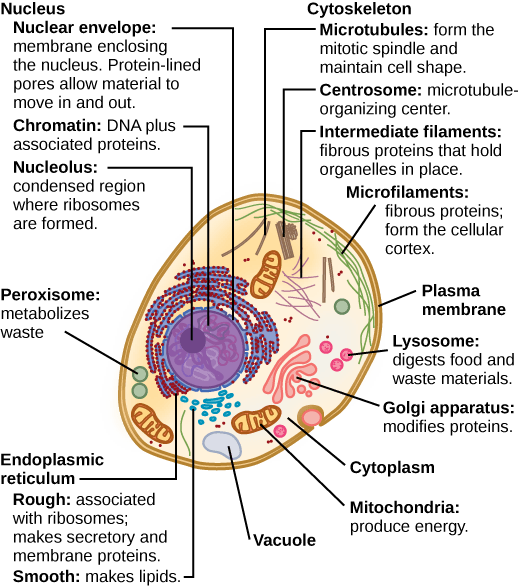
The Golgi apparatus (also called the Golgi body or complex) is an organelle in eukaryotic cells responsible for packaging and shipping substances the cell produces, especially proteins. It was discovered by and named after Camillo Golgi.
The organelle is made from many flattened sacs pushed together, kind of like a stack of pancakes. Each sac is called a cisterna (plural: cisternae). It's filled with an assortment of enzymes that collect and package proteins from the rough endoplasmic reticulum.

Image source: By Kelvinsong CC BY 3.0, via Wikimedia Commons
This organelle is very often compared to a post office. On one side, called the cis face, proteins from the endoplasmic reticulum (ER) can enter the complex, where they are modified and sorted. On the other side of the organelle, the finished protein is packaged and shipped in little bubbles called vesicles.
As you can see in the picture here, vesicles are little pieces that pinch off from the Golgi body. These vesicles are shipped throughout the cell and even to locations outside of the cell. Here's an up-close look at a vesicle. Notice that it's made from a phospholipid bilayer, just like the plasma membrane.

A vesicle that has pinched off from the Golgi body. It's carrying something the cell has produced (shown in pink) to a specific location either inside or outside the cell membrane. Image source: By SuperManu CC BY-SA 3.0, via Wikimedia Commons
Key Vocabulary:
- Golgi apparatus
- Cisternae
- Vesicle
- Organelle