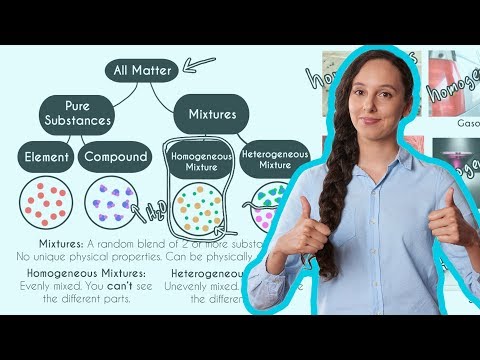
Homogeneous vs. Heterogeneous Mixtures — A Comparison

Before this, knowMatter — Definition & Overview

Illustrated · 2 min

What Is a Mixture?

When you combine two or more substances you create a mixture. Examples include soup, air, and soil. A mixture is different from a compound because its components don't combine chemically. Instead, each component keeps its unique properties.

A diagram showing the difference between molecules in a mixture and molecules of a compound. The left side shows a mixture of hydrogen and oxygen while the right side shows a compound of hydrogen and oxygen (water).

A mixture of hydrogen and oxygen includes molecules of H2_2 and molecules of O2_2. A compound combines these molecules chemically to form water. \\ Image source: By Gabi Slizewska

How Do We Classify Mixtures?

Homogeneous\color{#29A603}{\text{Homogeneous}}

You wake up in the morning and make yourself a cup of coffee. You pour the coffee in your cup, add milk, add sugar, and stir everything together. The result is a uniform cup of caffeinated goodness. Each sip should taste and look the same.

This is an example of a homogeneous mixture. In this type of mixture, the components are evenly distributed throughout and the mixture has a uniform appearance. You shouldn't be able to pick out the individual components. Additionally, you can describe a homogeneous mixture as having only one phase. A phase is any part of the mixture that has the same chemical properties and uniform distribution of the components.
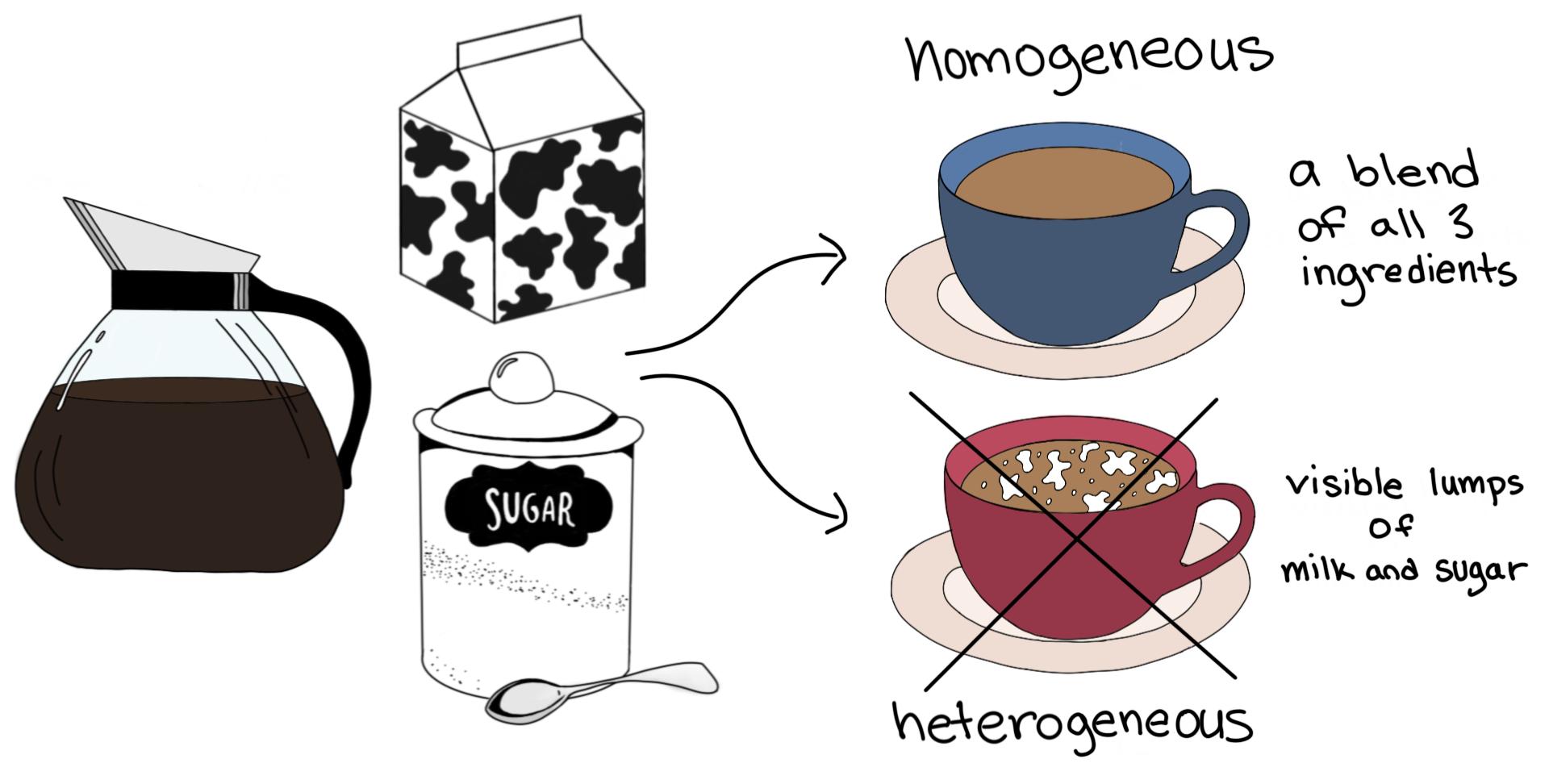
The picture shows three ingredients: coffee, milk, and sugar. Next, we see two possible mixtures of these ingredients. A homogeneous mixture is a normal cup of coffee with a uniform blend of the ingredients. A heterogeneous mixture would have visible lumps of sugar and milk in the coffee.

Tip: If your coffee looks like a heterogeneous mixture, you probably shouldn't drink it. \\ Image source: By Gabi Slizewska

Heterogeneous\color{#29A603}{\text{Heterogeneous}}

When you're eating a bowl of cereal, you are consuming a heterogeneous mixture. You can easily see the different things that make up this mixture: the milk and the cereal. Each spoonful will have different distributions of the components.

A heterogeneous mixture has components that are not evenly distributed. This means that you can easily distinguish between the different components. A heterogeneous mixture has two or more phases. This doesn't necessarily mean phases of matter, like liquid or solid. For example, a mixture of water and oil has two liquid phases. Each phase has its own distinct chemical properties.
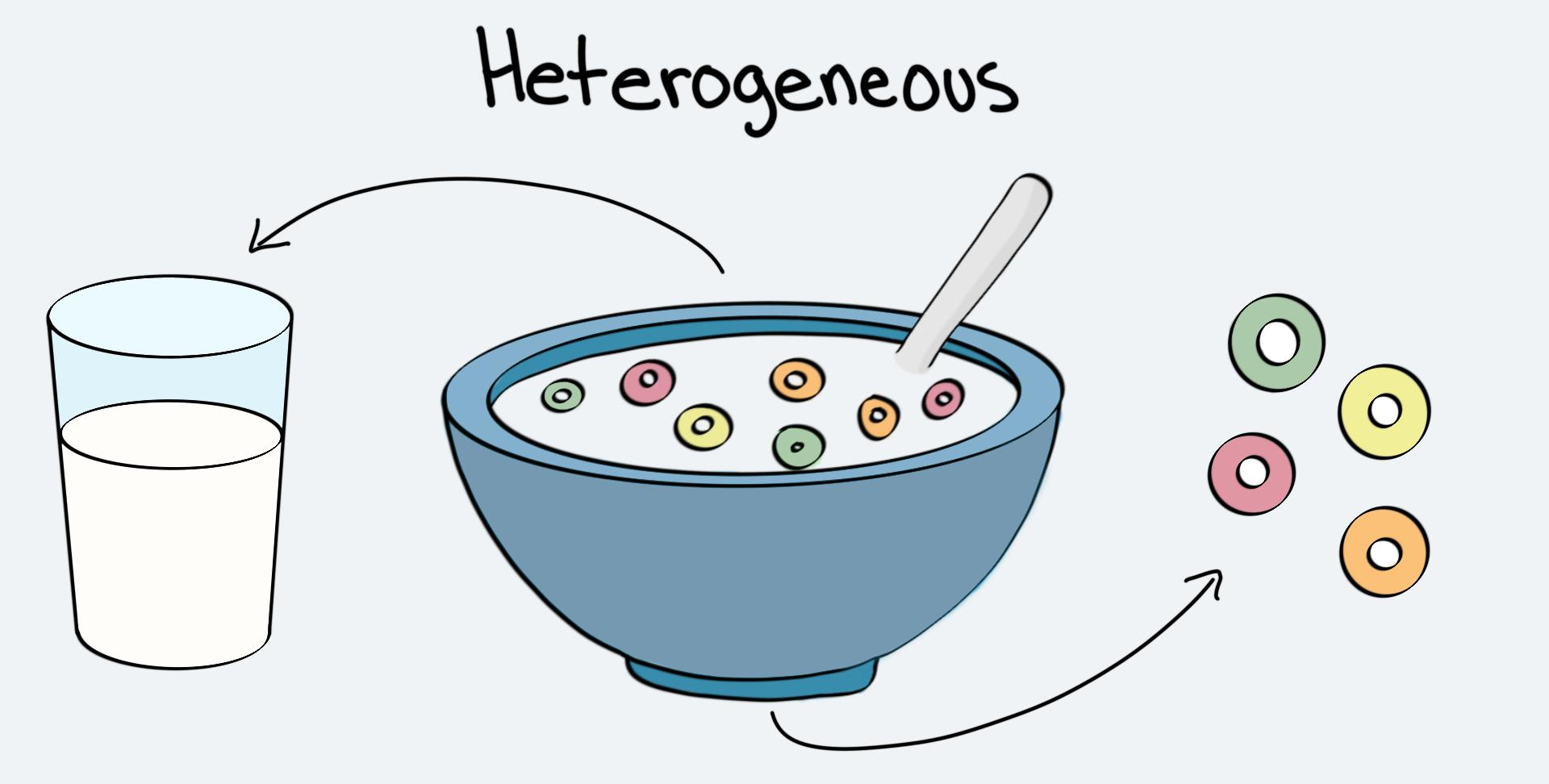
A bowl of cereal is a heterogeneous mixture. You can separate it into milk and cereal.

Image source: By Gabi Slizewska

An important thing to note is that homogeneous and heterogeneous mixtures are not constant and can change with context. For example, blood consists of several different components but appears homogeneous to the naked eye. However, when you look under a microscope, you can see the different distributions of red blood cells, platelets, and plasma. In this scenario, the blood is a heterogeneous mixture.

This picture shows a vial of blood, representing a homogeneous mixture. The vial is then magnified to show all the components of blood, including white blood cells, platelets, red blood cells, and plasma. This is now a heterogeneous mixture.

Image source: By Gabi Slizewska

Interactive · 2 questions

What Are the Types of Mixtures?

We've already talked about pure substances like atoms and soon we'll also explore elements. Pure substances like these are able to be combined into mixtures.

Pure substances are made of one specific thing. Compounds have substances mixed in specific amounts. Homogeneous mixtures have a uniform particle distribution, and heterogeneous mixtures are randomly mixed.

The difference between homogeneous and heterogeneous mixtures. Pay attention to how the two different substances are blended together.

Image source: By John Trombley CC BY 4.0, via Wikimedia Commons

A mixture is a material made of two or more types of molecules or substances that are not chemically combined. In other words, they're just mixed together, but in most cases, can be separated again. "Not chemically combined" means that no chemical reaction happens when the substances are mixed.

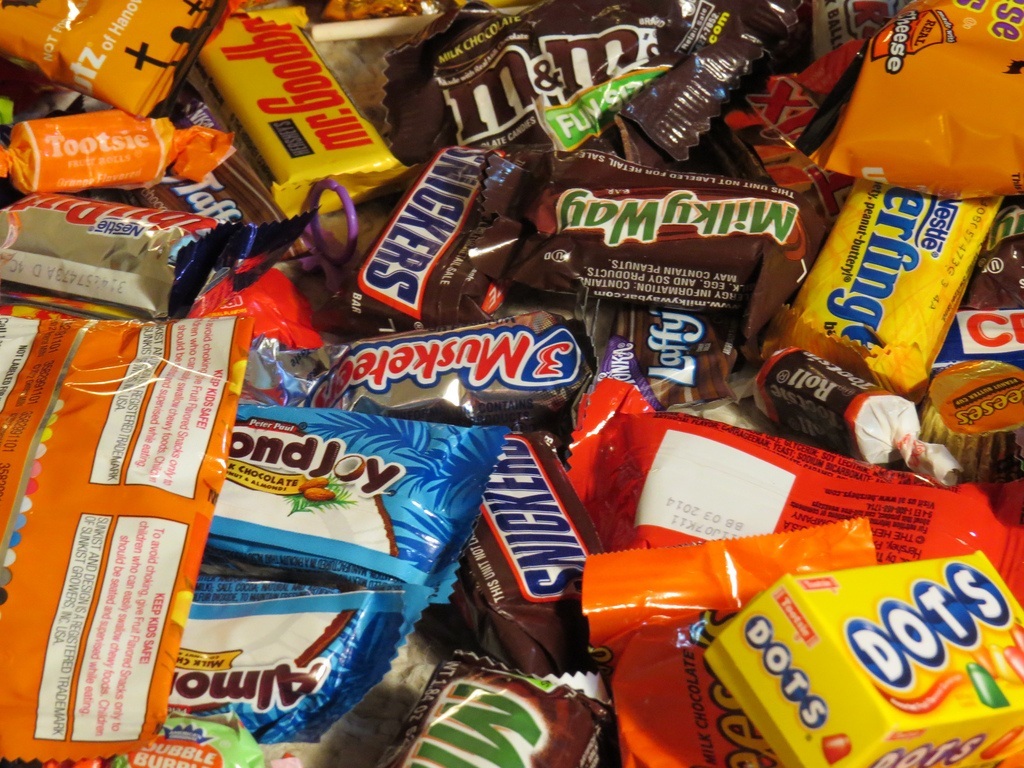
Think of this as a bag of mixed candy bars. Just because the candies are mixed together in the bag does not mean that the Kit-Kats and Snickers fuse together to become some absurd new candy. They keep their own properties (flavors, ingredients) because they are not chemically combined.

What is not a mixture?

Choose one answer

Illustrated · 1 min

What Is a Mixture?

A mixture is formed when two or more substances are combined in such a way that no chemical reaction occurs.

The whole idea with a mixture is that its components keep the properties they had when they were on their own.

For example, imagine a mixture of M&Ms and Skittles. (There are some mean people out there that actually do this on purpose.)

On their own, M&Ms and Skittles both have specific characteristics:

Mixtures can be homogeneous or heterogeneous.

Image source: By Evan-Amos [Public domain], via Wikimedia Commons \\ Image source: By skeeze CC0, via pixabay.com

When we create a mixture of M&Ms and Skittles, these characteristics do not change. The M&Ms stay the same six colors, keep their crunchy shell, and still have chocolate inside. The same is true with Skittles. They are still the same five colors, they are chewy inside, and they have a fruity flavor.

This is an important concept; being in a mixture generally doesn't change the components' properties. This is because the components of a mixture aren't chemically combined. They are just physically mixed together and can often be separated again.

A bag of M&M's is an example of a heterogeneous mixture.

Image source: By David Adam Kess CC BY-SA 4.0, via Wikimedia Commons

What Kinds of Mixtures Are There?

There are two main types of mixtures: homogeneous and heterogeneous.

Kool-Aid powder dissolved in water is an example of a homogeneous mixture.

Image source: By theimpulsivebuy CC BY-SA 2.0, via Flickr

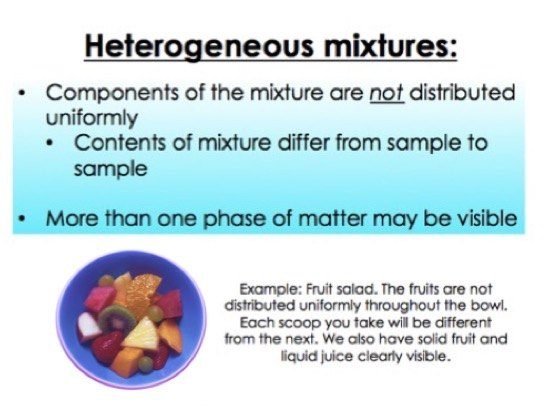
A fruit salad is an example of a heterogeneous mixture.

Image source: By Renee Comet (Photographer) [Public domain], via Wikimedia Commons

Key Vocabulary:

  1. Mixture
  2. Homogeneous
  3. Heterogeneous
  4. Phase
  5. Solution

Illustrated · 1 min

Types of Mixtures

Homogeneous

A homogeneous mixture forms when two or more substances are combined to make something uniform. In this type of mixture, the components must be evenly distributed throughout. Only one state of matter can be present and you can't see individual ingredients.

Examples:

  1. No-pulp orange juice has different sugars, water, and minerals but looks like a uniform orange liquid.
  2. Air is composed of different gas molecules, but they are all the same phase and uniformly mixed.
  3. Sugar water is a mixture of two different states of matter. But, when the sugar dissolves, it blends in with the water and forms a homogeneous mixture.
Tea is made of many things like sugar, water, and tea leaves, but it is a homogeneous mixture because you can't see the individual components in it.

This tea contains caffeine, sugar and tea aromatics, but it appears uniform.

Image source: By OpenClipart-Vectors CC0, via pixabay.com

Heterogeneous

A heterogeneous mixture is a non-uniform mixture of two substances. There are visibly different components and often at least two separate phases of matter. You can easily identify the different things that make up a heterogeneous mixture.

Examples:

  • Cereal and Milk: Two different states of matter that remain separate.

  • Oil and Water: An instance where both substances are of the same phase of matter (liquid), but due to different polarities, they do not mix and remain heterogeneous.

  • Trail mix: Composed of nuts, raisins, and M&Ms, and is able to be easily picked apart.

A bowl of cereal is shown. A clear division can be seen between the cereal and the milk, which has sunk to the bottom.

This cereal has two different states of matter and a clear distinction between the different pieces of cereal.

Image source: By Evan-Amos [CC0], via Wikimedia Commons

Illustrated · 1 min

Homogeneous and Heterogeneous Mixtures

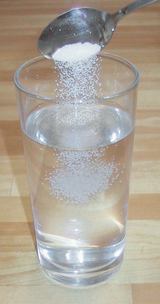
A homogeneous mixture is a mixture that appears as one uniform substance. The mixture pictured below is a homogeneous mixture because once the salt is added to the water and stirred around, all the salt dissolves.

Salt being poured into water

When salt dissolves in water, it forms a homogeneous solution.

Image source: By Chris 73 / Wikimedia Commons CC BY-SA 3.0, via Wikimedia Commons

Examples of Mixtures

Some examples of a homogenous mixture are:

  • Water: There are many different minerals and gases dissolved throughout water.

  • Air: Air is a homogeneous mixture of many different gasses, all necessary for survival.

  • Steel: Steel is an alloy of multiple metals.

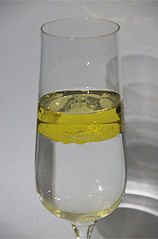
A heterogeneous mixture is a substance that when mixed doesn't form a completely uniform solution. The picture below is a heterogeneous mixture of oil and water. This is considered heterogeneous because the water and oil don't mix together completely.

A glass filled with oil and water. The oil rises to the top of the glass.

Oil and water form a heterogeneous mixture.

Image source: By User:Bitjungle CC BY-SA 2.0, via Wikimedia Commons

Some examples of a heterogeneous mixture are:

  • Sand: Often there are larger rocks or shells in the sand at the beach causing it to be a heterogeneous mixture.

  • Cookies and Cream ice cream: The vanilla ice cream with pieces of cookies dispersed through it results in a heterogeneous mixture.

  • Orange juice with pulp: The pulp in orange juice can't dissolve, causing a heterogeneous mixture.

Video

(Video) Homogeneous and Heterogeneous Mixtures

By Robin Reaction

This video explains the difference between pure substances and mixtures. Then, it explains the difference between the different types of mixtures, heterogeneous and homogeneous. We also see several examples of each type of mixture for comparison.

Video

(Video) Mixtures and Mastered

by Avi Silber

Here's a ridiculous and weirdly catchy song that explains mixtures. You're welcome.

Type a concept, like “slope” or “photosynthesis”.

↑ ↓ to choose · Enter to openSearch explanations and problems