Read · 1 min
Intermolecular Hydrogen Bonding
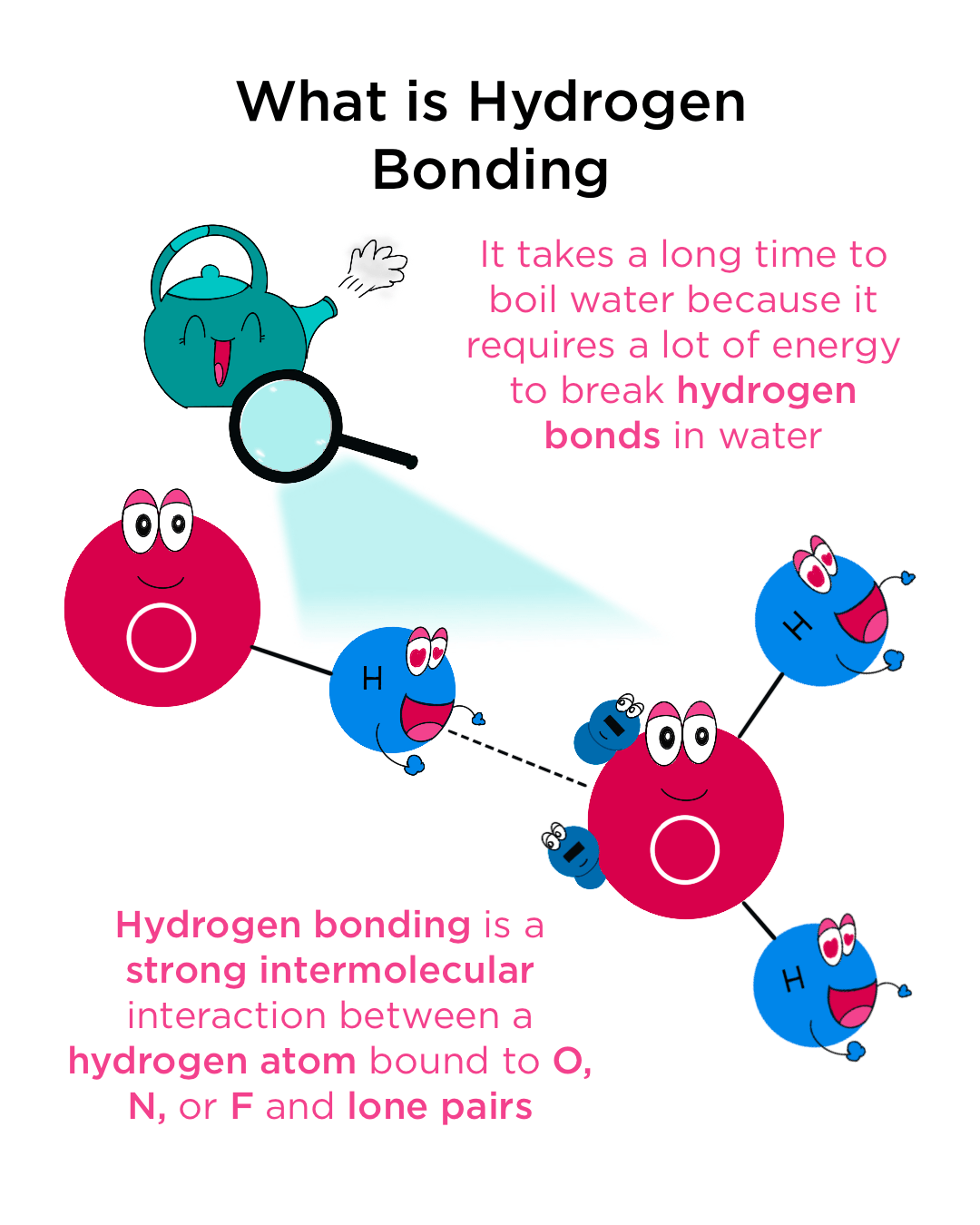
Hydrogen bonding or H-bonding is a type of intermolecular interaction. Intermolecular interactions occur between molecules. Hydrogen bonding occurs when hydrogen is bound to the atoms: , , or . The hydrogen forms an interaction with another molecule's , , or atom. The bound hydrogen can also interact with lone pair electrons on other atoms. This interaction happens with , , and atoms because they are very electronegative. The atom bound to the hydrogen is called a proton donor and the atom which forms a hydrogen bond is called a proton acceptor. The way to denote the interaction is --- . H-bonding is considered a moderately strong intermolecular interaction.
Hydrogen Bonding and Water
A good example of hydrogen bonding is interactions between water () molecules. One molecule can form three hydrogen bonds with three other molecules. Each hydrogen forms an interaction with the oxygen on another molecule. The oxygen forms an interaction with hydrogen on another water molecule. Hydrogen bonding plays a role in the properties of water. The solid structure of ice occurs because of the way hydrogen bonds are formed. The molecules arrange themselves in line with the hydrogen bonds. So, ice has a crystalline structure that is less dense than liquid water. Water also has a high boiling temperature because of hydrogen bonding. It takes more energy to boil water because the hydrogen bonds must be broken.