Rational expressions combine skills from fractions and solving equations
A fraction is a number with a top part and a bottom part. The top number is called the numerator, and the bottom number is called the denominator.
A rational number is any number that can be written as a fraction where both the numerator and denominator are integers.
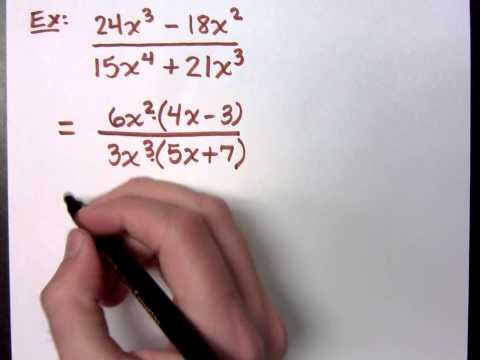
A rational expression is similar to a fraction, but it includes at least one variable in the numerator or denominator. Sometimes there may also be addition or subtraction in the top or bottom.
Working with rational expressions is a lot like simplifying regular fractions. You follow similar steps, but there is a little more algebra involved.
Rational equations are just slightly different - rational equations have an equal sign, but expressions do not.
Fractions: −32,5−x,x−25,1003y,x2+y
Rational numbers: 12,98,−255,522,1000212
Rational expressions: x22x+3,9x,−2x55x2+2xy+17,5−xy22−x+y,200+8x200
You can do arithmetic on rational expressions the same way you do arithmetic on fractions. Let's work through an example together:
3x−42=7
Here’s a rewrite at a 12-year-old reading level, with clear steps and simple wording:
Since the variable is in the denominator, we need to remove it from there first.
The easiest way to do this is to multiply both sides of the equation by the entire denominator. This step helps cancel out the fraction.
Once the denominator is gone, the equation becomes simpler and easier to solve.
Right, they cancel each other out no matter how complicated the factor is. So when we multiply both sides of our equation by 3x−4, the denominator on the side with the rational expression gets cancelled out.
3x−42(3x−42)×(3x−4)3x−42×(3x−4)2=7=7×(3x−4)=7×3x+7×−4=21x−28
Above, we multiplied both sides of the equation by the rational expression's denominator. That made the denominator of the rational expression cancel out, just leaving us with 2. On the other side of the equation, we used the distributive property to simplify the expression.
We can use addition to move the 28 to the other side of the equation so that the 21x is just a little more on its own by just adding 28 to both sides:
2 2+28 30=21x−28=21x−28+28=21x
Using the inverse property, we know that −28 and +28 cancel each other out, so we've moved the number over.
To finish solving the rational expression, we just divide both sides by 21 and then simplify:
30213021÷330÷3710=21x=2121x=x=x
Dividing by 21 means that the 21 on the right of the equation canceled out, and then we removed the common factor (3) from the new fraction on the left, and we're done!
Looking Further
In later lessons, we will make common denominators for multiplying and dividing rational expressions.