Illustrated · 2 min

+2 contributors


How Does the Body Regulate Ion Levels?
An important part of homeostasis is ion regulation. The concentrations of certain ions designate pH in the extracellular fluid, including things like blood and bile.
Let's review:
The pH scale runs from to and tells us if something is acidic or basic, and to what degree.

Image source: By Gabi Slizewska
Maintaining a stable internal pH is crucial. If the pH inside the body changes drastically, our enzymes will stop working, cells will likely be damaged, and proteins will degrade.
To make things more confusing, different parts of the body can have a different pH. The body has several mechanisms in place to maintain the pH in each part.

Image source: By Gabi Slizewska
How Does the Body Maintain Ion Balance?

Image source: By Gabi Slizewska
Buffers
When certain chemicals are mixed together, they can create a buffer solution. Buffers can resist or minimize pH changes to a solution, even when ion concentrations change quickly.

Image source: By Gabi Slizewska
Urinary System
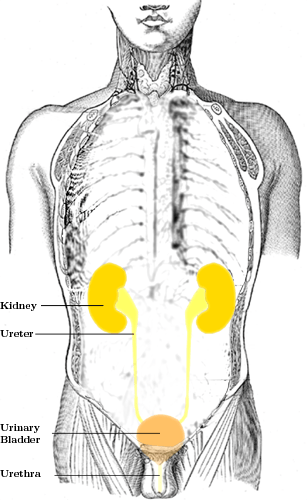
The urinary system, or excretory system, plays a pretty big role in pH balance. The star player is the kidney. Our kidneys filter out excess ions from our blood so that they can be excreted through urine.
If the concentration of ions is too high, the kidneys make sure to filter as much of them as they can out of the body. If there are not enough ions, the kidneys will filter them back into the system.
Respiratory System
We know that cellular respiration releases carbon dioxide into the blood.
It turns out that carbon dioxide often exists in our blood as carbonic acid. It makes our blood more acidic. When you breathe out, you are expelling carbon dioxide from your body and actually lowering the pH of your blood. The rate of your breathing controls this mechanism of ion regulation.
The combination of all of the above mechanisms keeps ion concentrations in check. Without them, our cells would not be able to function.