Isolating Mechanisms — Definition & Examples

Interactive · 1 question

What Are Isolating Mechanisms in Evolution?

Isolating mechanisms are types of isolation, like behavioral and geographic, that can lead to the formation of new species. Don't forget that biologists define species as populations that can breed and produce fertile offspring. One species becoming two is called speciation. So basically, mechanisms of isolation can lead to speciation.

Like the name suggests, isolation happens when part of a population becomes separated and stops breeding with the other part. After a long enough time being separated, the two populations might not be able to produce offspring with each other, called reproductive isolation. At this point, both parts of the populations evolve towards being two completely separate species.

Isolating mechanisms, like geographic isolation, separate populations from each other. Over time, these populations can become different species.

Image source: By Andrew Z. Colvin CC BY-SA 4.0, via Wikimedia Commons

How can you tell when speciation has occurred?

Choose one answer

Illustrated · 1 min

How do isolating mechanisms change allele frequencies within a population? Isolating mechanisms are things that prevent some members of a population from mating with others. This could be a geographical barrier like a natural disaster, a behavioral barrier like a difference in mating calls, or a temporal barrier like a difference in when some organisms look for mates. Example: In the original population there are circles that represent two different alleles of a certain gene in a population. The allele frequencies are 0.44 for the orange allele and 0.56 for the blue allele. After an isolating event, the population is split up randomly. In group 1, the allele frequencies are now 0.31 for orange and 0.69 for blue. The group has a much higher ratio of blue alleles compared to the original population. In group 2, the allele frequencies are 0.57 for orange and 0.43 for blue. There is a higher ratio of orange alleles compared to the original population.

Image source: By Gabi Slizewska

Illustrated · 1 min

What Causes Isolation?

There is a wide range of factors that can isolate species from one another. Isolating mechanisms, in the end, cause speciation by preventing two species from mating with one another. Speciation occurs when two species can no longer mate and produce a viable offspring.

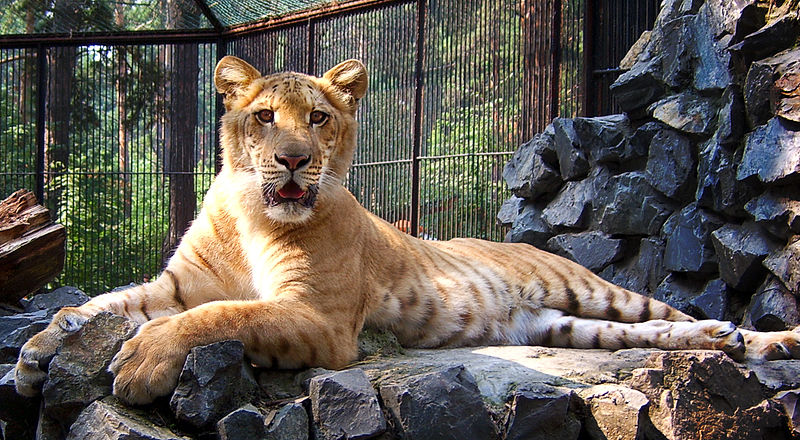
A female liger. She looks like a lion with some stripes.

This is a picture of a liger, the offspring of a lion and tiger. These two species would not typically mate because they do not live in the same location. Although the lion and tiger can produce an offspring, a liger is unable to mate, and therefore lions and tigers are considered different species.

Image source: By Алексей Шилин [Public domain], via Wikimedia Commons

Isolating mechanisms come in two main types: separation due to geographic isolation and separation which occurs in the same location.

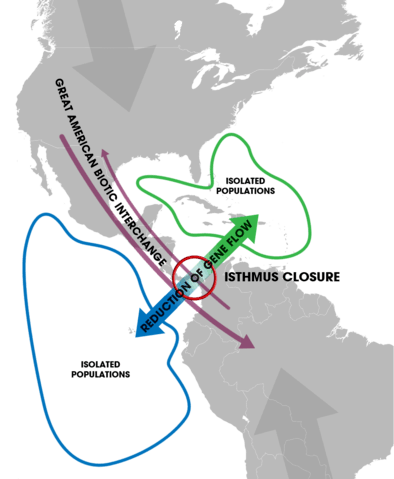
Geographically separated species are more common. For example, a single shrimp population used to live where Panama now resides. After the formation of the land bridge that separates the Caribbean Sea and the North Pacific Ocean, different species of shrimp descended from the original shrimp species as each adapted to its unique environment.

Two populations of shrimp are geographically isolated. They become separate species.

Image source: By Andrew Z. Colvin CC BY-SA 4.0, via Wikimedia Commons

Although less common, it is possible for the divergence between populations to occur when they still reside in the same location.

An example of this is between the Hawthorne and Apple Maggot Flies. Although they live in the same location, certain individuals of the original species preferred feeding on the Hawthorne tree while others preferred the apple tree. Therefore, there was a divergence of species as the life cycles of some flies began to line up more with the Hawthorne tree while others began to line up more with the life cycle of the apple tree.

Eventually, these two species were separated both by time and behavior, since one's life cycle depended on when the Hawthorne tree's fruit matured, while the other's life cycle depended on when the apples matured. After a while, gene flow between the two groups stopped, and they became separate species.

Illustrated · 1 min

Types of Isolating Mechanisms

Isolation is what keeps species separated. This can include things like their geographic location, their mating seasons, their behaviors, and the biochemical properties of their reproductive process. These factors are called prezygotic isolation mechanisms because they happen before an organism is born.

Basically, if a sperm cell and an egg cell are able to fuse, fertilize, and result in a living offspring, the parents are of the same species.

The image shows two fish. One is orange while the other is green. Around each fish is a thick circle barrier that reads: Behavior, mating season, location, zygote.

Image source: By Sarah Morgan

As you may have guessed, we can also have postzygotic isolation. An example is when horses and donkeys mate and create a mule. This hybrid species is sterile, meaning that it can't reproduce. This isolates the mule from interacting (reproducing) with other species.

Isolation is a driving force behind evolution because the changes that build up in different populations over time is what causes the evolution of new species. When two populations are isolated by enough mechanisms, they can be considered different species. This process is called speciation.

Illustrated · 1 min

How Do We Get New Biological Species?

Isolating mechanisms are the ways in which groups of organisms become separated for long enough to develop into different species. They help cause speciation. Some examples include geographic, temporal, reproductive, and behavioral isolation.

For two groups of organisms to be considered separate species, they must not be able to produce viable offspring. This means that they can't have children that can also have children.

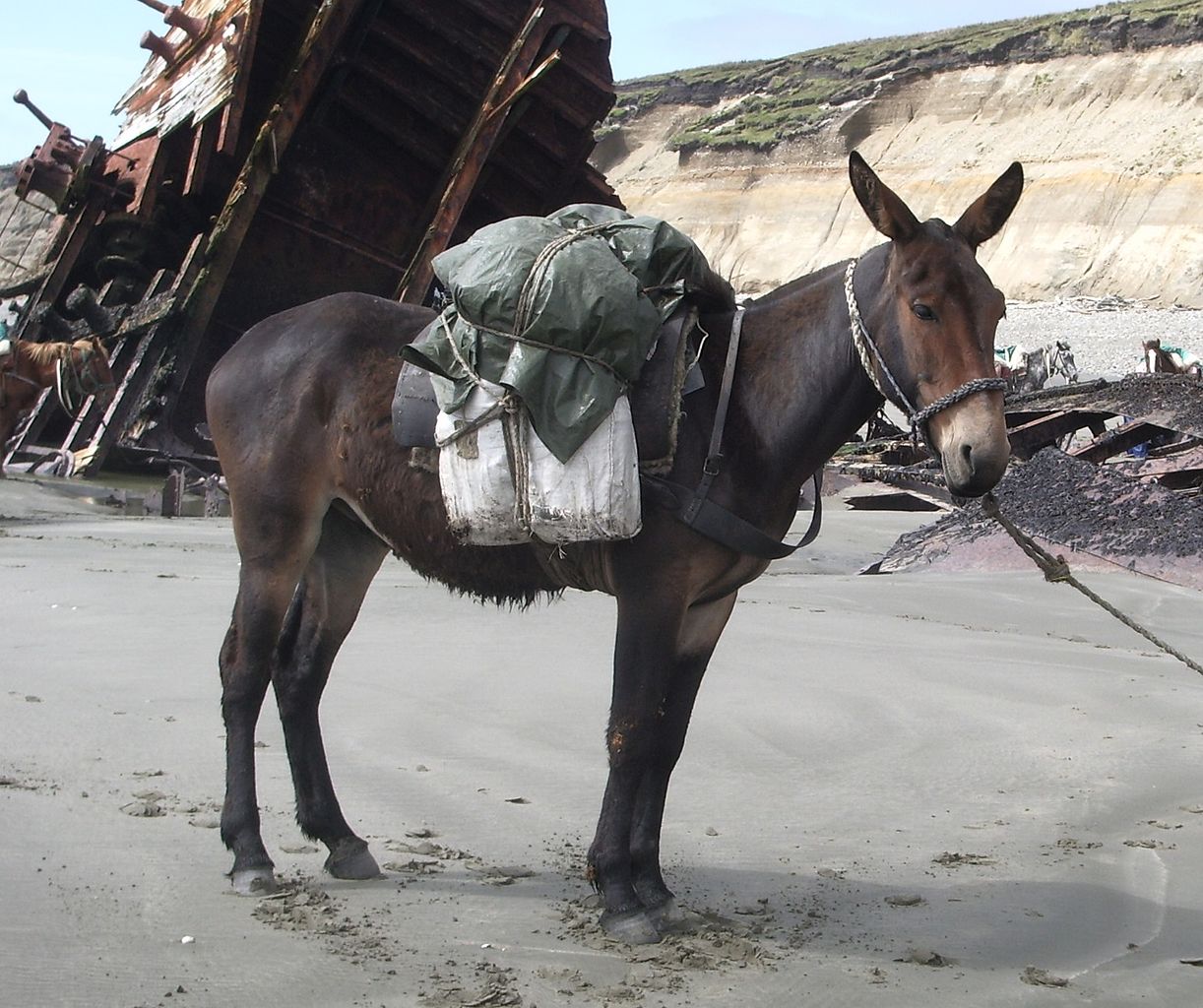
A donkey carrying a load of equipment

Image source: By Dario urruty [Public domain], via Wikimedia Commons

Hybrid Offspring

For example, horses and donkeys produce mules, but mules are unable to reproduce. This is called hybrid sterility. Therefore, horses and donkeys are different species. For horses and donkeys to have evolved into separate species, they must have become separated by an isolating mechanism at some point in their evolutionary past.

Type a concept, like “slope” or “photosynthesis”.

↑ ↓ to choose · Enter to openSearch explanations and problems