
Illustrated · 2 min

+3 contributors



Who Was Lamarck?
When we talk about evolution, most people immediately think of Charles Darwin. However, he was not the first person to come up with the idea of evolution.
One of the first people who attempted to explain evolution was Jean-Baptiste Lamarck. To be fair, he was completely wrong, but A for effort.
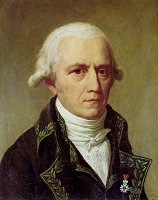
Image source: By Charles Thévenin [Public domain], via Wikimedia Commons
What Did He Say About Evolution?
According to Lamarck, every organism strives to be great. He proposed that an animal can change the shape and ability of its body to do better in its environment. Therefore, evolution makes animals more "perfect".
Let's consider this hypothesis. A classic example analyzes the neck of a giraffe. Thinking like Lamarck, we would say that a giraffe will stretch its neck every day to reach higher branches of trees. If the giraffe continues to stretch towards higher branches every day, it will eventually develop its characteristic long neck.
Lamarck called traits that can change during an organism's lifetime acquired characteristics (or "acquired characters"). He also proposed that acquired characteristics can be passed on to offspring, an idea he called inheritance of acquired characteristics.

Image source: By Gabi Slizewska
How Was Lamarck Wrong?
Today, we know that this idea was way off. Most animals do not have the desire to be perfect. We now know that survival and reproduction are the main driving forces for all organisms. We also know that evolution has no concept of a "perfect" organism.
If evolution creates perfect organisms, then why didn't it give seals legs?

Check out the full video on YouTube.
We also know that acquired traits cannot be inherited. Things we learn when we're alive don't get ingrained in our DNA, so they can't be passed on genetically.
So why do we learn about Lamarck? Well, mostly it's because he pointed Darwin in the right direction, leading to a better theory of evolution.
Lamarck was the first person to notice that the environment plays a role in the development of an organism. He was also first to suggest that organisms change over time (an idea we often attribute to Darwin).


