Jean-Baptiste Lamarck — Early Ideas of Evolution

Before this, knowWhat Is Evolution? — Definition & Overview

Illustrated · 2 min

Who Was Lamarck?

When we talk about evolution, most people immediately think of Charles Darwin. However, he was not the first person to come up with the idea of evolution.

One of the first people who attempted to explain evolution was Jean-Baptiste Lamarck. To be fair, he was completely wrong, but A for effort.
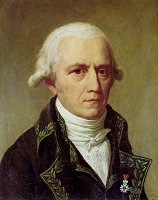
A portrait of Jean-Baptiste Lamarck

Image source: By Charles Thévenin [Public domain], via Wikimedia Commons

What Did He Say About Evolution?

According to Lamarck, every organism strives to be great. He proposed that an animal can change the shape and ability of its body to do better in its environment. Therefore, evolution makes animals more "perfect".

Let's consider this hypothesis. A classic example analyzes the neck of a giraffe. Thinking like Lamarck, we would say that a giraffe will stretch its neck every day to reach higher branches of trees. If the giraffe continues to stretch towards higher branches every day, it will eventually develop its characteristic long neck.

Lamarck called traits that can change during an organism's lifetime acquired characteristics (or "acquired characters"). He also proposed that acquired characteristics can be passed on to offspring, an idea he called inheritance of acquired characteristics.

A giraffe with a short neck, struggling to reach leaves on a tree. After some time passes, the giraffe has a longer neck and can easily reach the leaves.

Image source: By Gabi Slizewska

How Was Lamarck Wrong?

Today, we know that this idea was way off. Most animals do not have the desire to be perfect. We now know that survival and reproduction are the main driving forces for all organisms. We also know that evolution has no concept of a "perfect" organism.

If evolution creates perfect organisms, then why didn't it give seals legs?

A video of a seal moving on land

Check out the full video on YouTube.

We also know that acquired traits cannot be inherited. Things we learn when we're alive don't get ingrained in our DNA, so they can't be passed on genetically.

So why do we learn about Lamarck? Well, mostly it's because he pointed Darwin in the right direction, leading to a better theory of evolution.

Lamarck was the first person to notice that the environment plays a role in the development of an organism. He was also first to suggest that organisms change over time (an idea we often attribute to Darwin).


Illustrated · 1 min

What Did Jean-Baptiste Lamarck Have to Say About Evolution?

Jean-Baptiste Lamarck was one of the first scientists to observe that living things change over time and that they descended from common ancestors. He formed a hypothesis about how evolution happens, known as Lamarckism, but his ideas were way off.

A portrait of Jean-Baptiste Lamarck

Image source: By Popular Science Monthly Volume 24 [Public domain], via Wikimedia Commons

What Were the Key Ideas of Lamarckism?

Lamarck hypothesized that organisms could choose to use or disuse parts of their bodies, which would cause those parts to change over their lifetime. They would pass these self-made traits on to their children, causing the species to change over time.

He believed that an animal's selective use of its body was because of a built-in urge to become a perfect being.

To summarize, the three main hypotheses of Lamarckism are:

  1. Organisms tend toward perfection or greater complexity.
  2. Organisms use or disuse parts of their bodies.
  3. Acquired traits are passed down from parents to their offspring.

We know now that these hypotheses aren't really accurate, but his ideas helped Darwin develop the current theory of natural selection and other ideas in Darwin's book On the Origin of Species.

Vocabulary Review:\color{#8925AE}{\text{Vocabulary Review:}}

Evolution\color{#8925AE}{\text{Evolution}} : The gene pool of a population changes over time

Natural Selection\color{#8925AE}{\text{Natural Selection}} : Organisms with traits beneficial to their environment are more likely to survive and produce offspring

Read · 1 min

Lamarckian Evolution

French naturalist Jean-Baptiste Pierre Antoine de Monet, chevalier de Lamarck (let's just call him Lamarck) was another key player in the theories of evolution and natural selection. He was very interested in natural history. Similar to Charles Darwin, Lamarck and his ideas were essential to what we currently know about evolution. However, many of his ideas have since been disproven.

Lamarck proposed the idea of "use and disuse" as a mechanism for evolution. He hypothesized that an organ or structure that was unnecessary to an animal would gradually disappear. He also believed that acquired characteristics could be passed from parent to offspring. He called this "soft inheritance". (It's sometimes called Lamarckian inheritance.) This idea has now been disproven.

Lamarck's theories on evolution suggested that organisms would evolve into more perfect organisms with increasing complexity. Although these ideas were ultimately inaccurate, Lamarck is still credited with furthering the ideas of evolution and biology in general.

Video

(Video) Darwin vs. Lamarck

by David Herbst

In this video, David Herbst describes the theory of evolution as proposed by Lamarck during the 19th century.

He hypothesized that an organism can acquire new traits during its lifetime, and then those traits can be passed on to its offspring. David Herbst then explains why this theory has been rejected.

Type a concept, like “slope” or “photosynthesis”.

↑ ↓ to choose · Enter to openSearch explanations and problems

