Read · 1 min
Lanthanides and Actinides of the Periodic Table
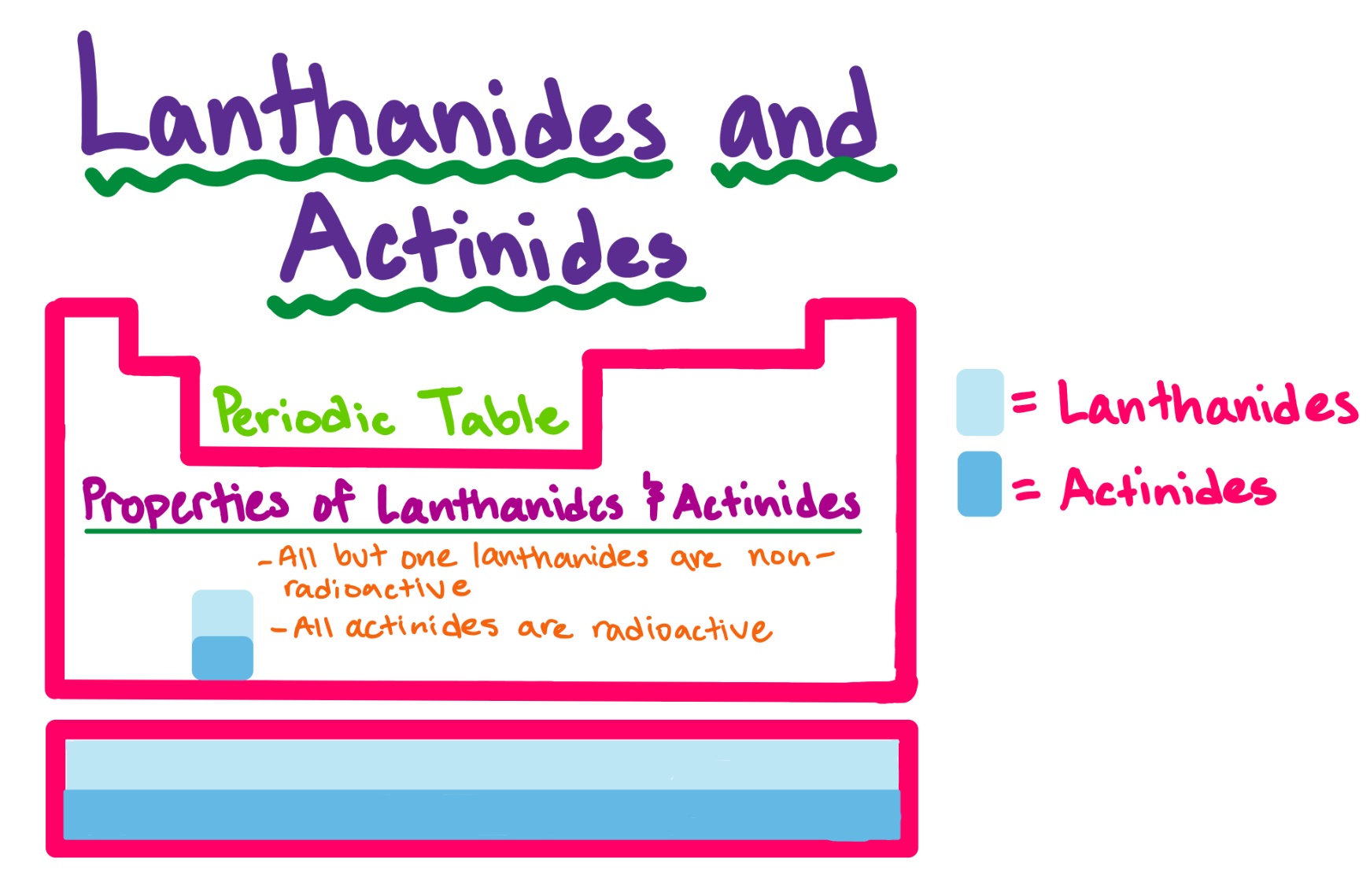
Lanthanides and Actinides make up two different groups on the periodic table. They are typically displayed below the main table area in two rows. The lanthanides consist of elements 57-71 and the actinides consist of elements 89-103. They have many of the same properties as other metals and are found in various colored compounds like the transition metals.
Lanthanides and Properties
Lanthanides have similar properties that other metals do. They are silvery in appearance but are soft enough that they can be cut. Most are very reactive, especially with some nonmetals like oxygen and the halogens. So, they must be stored in oil. This is similar to alkali and alkaline earth metals.
Lanthanides are also known as rare earth elements. Some are more common that other elements, but they are difficult to isolate. Most are naturally occurring whereas many actinides are made synthetically.
Actinides and Properties
Actinides share similar characteristics with lanthanides. They are silvery, have harder densities, and are reactive. What sets them apart is that only four actinides are found naturally. The others are made in a laboratory! All actinides are radioactive meaning that they are unstable and lose energy. Thorium, plutonium, and uranium are commonly found in nuclear reactors and other nuclear devices.