Maintain Internal Environment — Characteristics of Life

Illustrated · 2 min

The Great Balancing Act

Homeostasis can be thought of as a state of balance. Every living thing has ways to maintain stable mechanisms and levels of different chemicals.

Some examples of homeostasis in the human body include temperature, pH, osmoregulation, and blood glucose regulation.

Why Is Homeostasis Such a Big Deal?

Let's think about it.

The pH within your body is closely monitored. That's because the enzymes and other molecules found in our bodies have very specific pH values at which they work best to carry out essential functions. However, different parts of the body need to have different pH values. As you can imagine, essential molecules in the bloodstream are much different than those in your stomach. In order to accommodate molecules like hemoglobin, your blood needs to have a slightly basic pH. If the pH changes even a tiny bit, hemoglobin will not be able to efficiently deliver oxygen to different parts of the body. On the other hand, your stomach needs to be super acidic to support digestive enzymes such as pepsin.

A graph showing optimal pH levels for pepsin and hemoglobin

The digestive enzyme pepsin works best at the pH of stomach acid, about 1.5 to 3.5. The molecule hemoglobin binds to oxygen at the pH of blood, between 7.35 and 7.45.

Image source: By Gabi Slizewska

What Happens If Homeostasis Is out of Balance?

A great real-life example of why homeostasis is important involves blood glucose. In a healthy person, the amount of glucose in blood is tightly regulated. When you eat, glucose enters the blood stream. In response, the pancreas will release insulin. This chemical lets fat cells absorb extra glucose molecules and store them for later use. On the other hand, if you haven't eaten in a long time, your pancreas releases glucagon. This chemical releases glucose from fat cells so that it can be used as a source of energy by the body.

Diagram showing how blood glucose homeostasis works

A diagram of how blood glucose homeostasis works. When you eat, glucose from food enters the bloodstream. The pancreas releases insulin which allows fat cells to absorb glucose out of the bloodstream. Over time, blood glucose will decrease and the pancreas will release glucagon. Glucagon causes fat cells to release glucose into the bloodstream. Eventually, you eat again and restart the cycle.

Image source: By Gabi Slizewska

You might already know that when there is an issue in blood glucose regulation, a person can develop diabetes. This disease can be very debilitating. When the concentration of glucose in blood is too high or too low, a person can develop blurred vision, nausea and vomiting, confusion, weakness, and many other serious symptoms. This is why controlling diabetes through medicine and diet is extremely important as a way to help the body maintain homeostasis.

Illustrated · 1 min

What Is Homeostasis?

All organisms are able to maintain homeostasis. Let's take a look at what that means.

Homeostasis is a tenancy towards stability or equilibrium despite changes in environment.

Image source: By Hannah Bonville

When a body or cell maintains homeostasis, it is trying to keep its internal conditions steady. This is a form of regulation (control) carried out by an organism in response to its environment.

Now that we have the scientific specifics out of the way, let's talk about what homeostasis looks like.

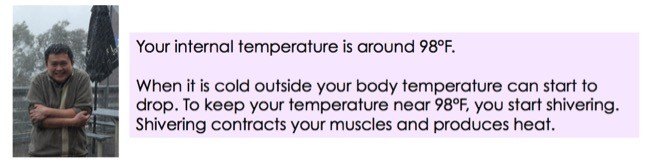
Your internal temperature is around 98°F.  When it's cold outside your body temperature can start to drop.  To keep your temperature near 98°F, you start shivering. Shivering contracts your muscles and produces heat.

Image source: By Alpha CC BY-SA 2.0, via flickr.com

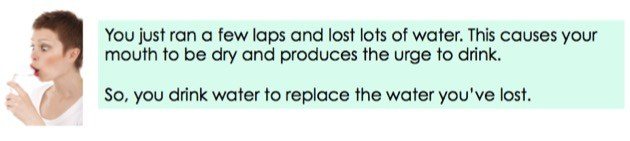
You just ran a few laps and lost lots of water. This causes your mouth to be dry and produces the urge to drink. So, you drink water to replace the water you've lost.

Image source: By Petr Kratochvil CC0, via publicdomainpictures.net

Salmon can swim in saltwater and freshwater. Their bodies can increase and decrease how much salt they filter out of the water. This keeps the amount of salt in their bodies stable.

Image source: By Timothy Knepp [Public domain], via Wikimedia Commons

Key Vocabulary:

  1. Homeostasis
  2. Regulate
  3. Organism

Illustrated · 1 min

How Does Homeostasis Help Us?

Living things share seven important features: they undergo growth and development, reproduce, respond to their environments, are made of cells, maintain homeostasis, inherit traits, and have a metabolism

Image source: By Chris Packard (modified by expii) CC BY-SA 4.0, via Wikimedia Commons

Picture this: you're making hot chocolate on a cold winter night. Right as you add the chocolate syrup your dog barks and surprises you, causing you to squirt a little too much into the mug. Well, now your hot chocolate is ruined–or is it? If you add just a bit more milk, it'll be exactly how you wanted it: the perfect balance of chocolate and warm milk.

This is homeostasis, the act of balancing different factors to keep the overall environment the same.

Every cell and system in your body is actively maintaining homeostasis. If it becomes very warm out, your body will start to sweat so you cool down to your ideal body temperature. Similarly, if you get very cold, your body will shiver to produce heat and maintain your ideal body temperature. Internal stimuli are very helpful in keeping your body in balance.

Vocabulary Review:\color{#8925AE}{\text{Vocabulary Review:}}

Cell\color{#8925AE}{\text{Cell}} : Smallest unit of life

Stimulus\color{#8925AE}{\text{Stimulus}} : Something that causes a response

Homeostasis\color{#8925AE}{\text{Homeostasis}} : A regulatory mechanism that maintains a state of equilibrium

Illustrated · 1 min

Summary of Homeostatic Responses

An organism must be able to maintain internal body conditions even when the external environment changes. Examples of changes include pH, temperature, salt levels, water levels, and glucose levels.

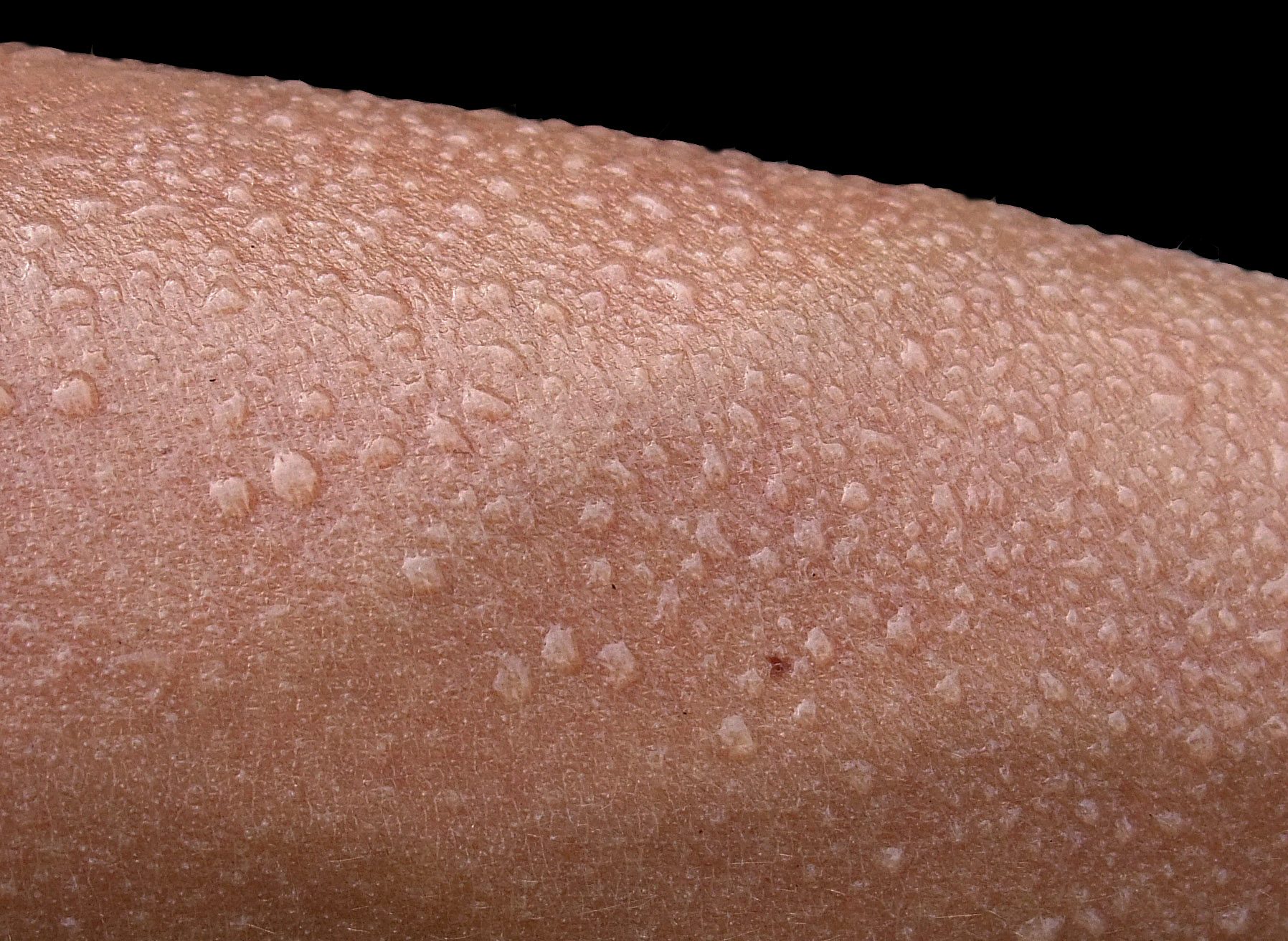
For example, humans maintain an internal temperature of 98.6°F through sweating in warm temperatures and shivering in cold temperatures. These responses are homeostatic responses.

Image of a human arm with beads of sweat forming

Image source: By Minghong CC BY-SA 3.0, via WIkimedia Commons

Connection Between Feedback and Homeostasis

Humans sweat and get thirsty when they get hot.

Image Source: by Valeri Natole

Since humans want to maintain that internal temperature of 98.6 degrees, our bodies need to react when that temperature changes. That's called feedback. Feedback is why you sweat and get thirsty when you're out in the hot sun for a long time!

Drinking water and sweating it out cool your body back down to the right temperature.

Video

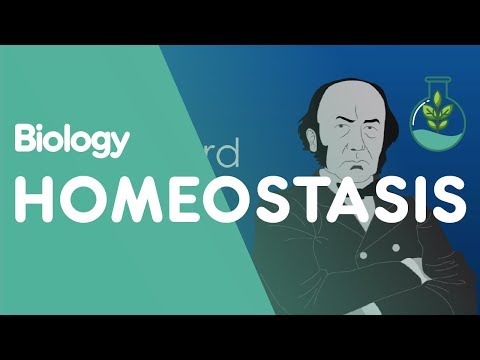
(Video) What is Homeostasis?

by FuseSchool - Global Education

Homeostasis helps keep our bodies in check when something isn't right. One example of how the body regulates itself is with a negative feedback loop. In the video above, you'll learn how your brain sends signals to other parts of your body to make sure your blood sugar levels are stable. This is one example of homeostasis in action.

Type a concept, like “slope” or “photosynthesis”.

↑ ↓ to choose · Enter to openSearch explanations and problems