Illustrated · 1 min
+4 contributors




What Are Mitochondria?
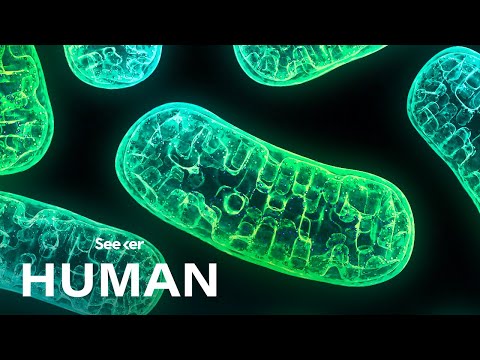
Mitochondria (singular: mitochondrion) are the powerhouses of the cell. They produce energy for plant and animal cells. Cells that require a lot of energy, like muscle cells, can have thousands of them per cell.
These organelles take glucose (sugar) in the cell and break it down to release energy in little usable chunks. This process is called cellular respiration and the usable form of energy is called ATP.

The little, red jellybean shapes are mitochondria. They're smooth on the outside but have a highly folded internal membrane.
Image source: By NIH [Public domain], via Wikimedia Commons Image source: By OpenClipart-Vectors CC0, via pixabay.com
Mitochondria honestly look like little potatoes in the cell. They're pretty plain on the outside, but inside, they have a second membrane that is highly folded. This inner membrane is very selective to even small molecules and ions.

Image source: By LadyofHats [Public domain], via Wikimedia Commons
The inner membrane folds back and forth inside the mitochondrion. These folds are called cristae.
The folds are also filled with a water-based goop (kind of like cytosol) called the mitochondrial matrix.
: Organelle that contains water and nutrients. Refrigerator of the cell
: Stores, sorts, and modifies proteins and lipids. Post office of the cell
: Helps the cell maintain its shape and assists with movement. Skeleton of the cell
: Makes ATP (a source of energy). Powerhouse of the cell
: Creates polypeptide chains and proteins. Factory of the cell
: The smooth ER makes lipids for the cellular membrane. The rough ER assembles proteins and transports them into and out of the cell
: Contains the genetic material, DNA, of the cell. Brain of the cell