There are slightly different rules for multiplying positive and negative numbers together. It depends whether you have two of one type of number, or one of each. Here we'll focus on when we multiply two negative numbers.
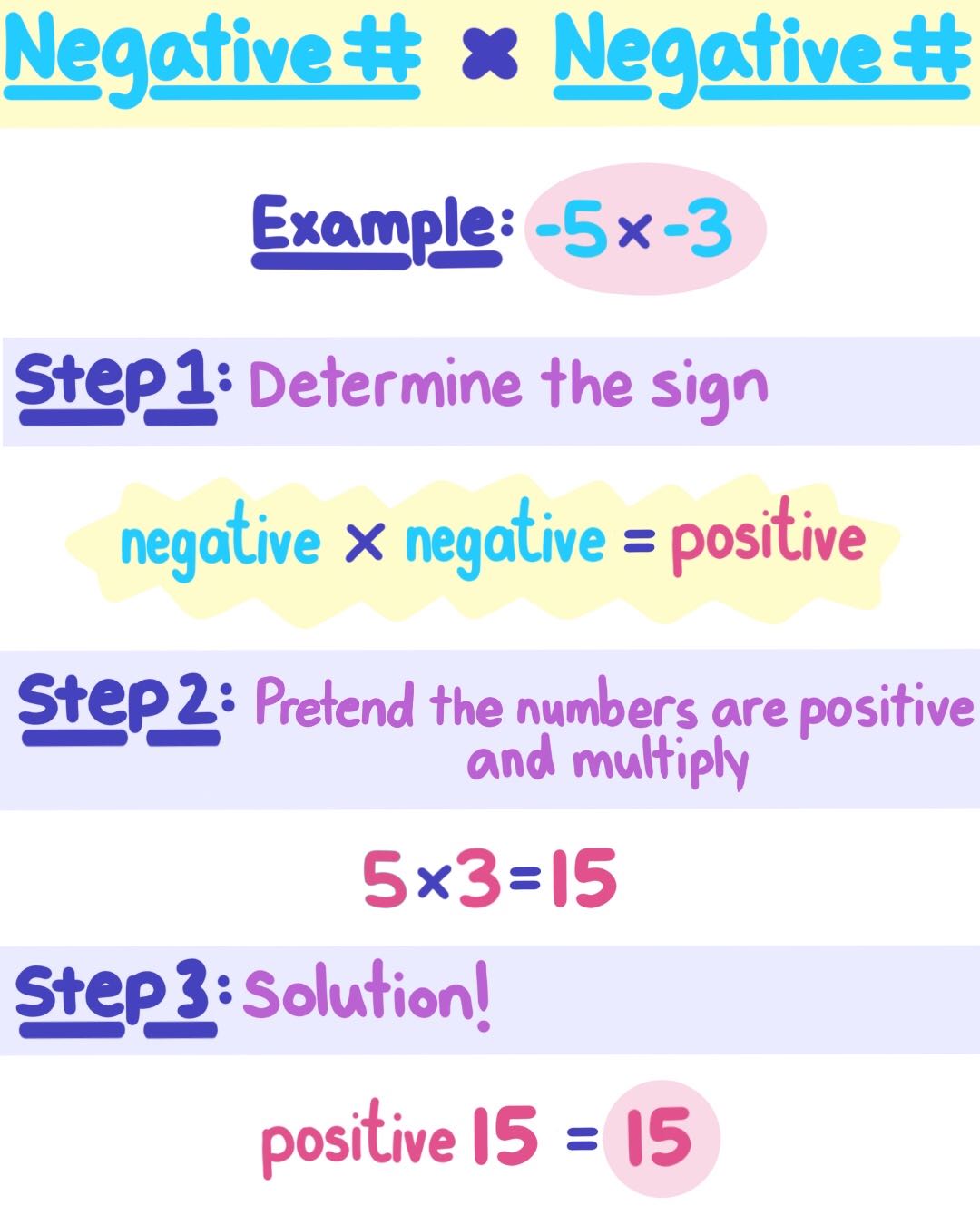
Multiplying two negative numbers will result in a positive number. This is because the negative numbers cancel each other out through factoring.
−4×−3−4×−3=−1(4)×−1(3)=12
Negative signs change the sign. If we only see one negative sign in the problem, our answer will be changed from a positive number to a negative number. If we see two negative signs in the problem, we start with a negative number and change it into a positive number.
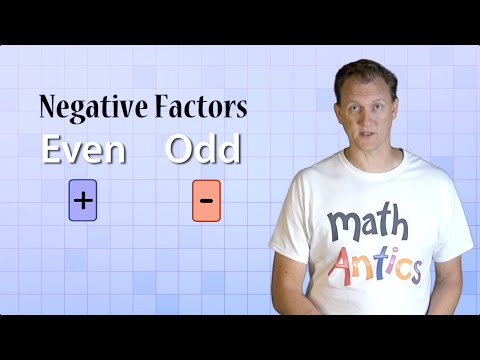
He uses the example 3×5 with all of its positive and negative variants. −3×−5=15
We start by multiplying 3×5, which is the same as adding 5 groups of 3. There are two negatives, so we turn a negative number into a positive number. We end up on the right half of the number line.
This is different from multiplying a positive times a negative. That scenario gives you a negative, resulting in a different outcome. We end up on the left half of the number line.
Negative numbers like to flip things around. When you multiply a negative number by a positive number, the negative number flips the sign around and your result will be a negative number. When you multiply two negative numbers together, though, the first one flips the sign from positive to negative, and the second one flips it back. In other words, negative numbers cancel each other out: when you multiply a negative number by a negative number, you get a positive number.
Step 2: Deal with the signs. In this case, with two negative numbers, the result will always be positive.
For example, with an expression like −3×−3, we would first multiply 3×3 (by adding 3 to itself 3 times), and then we would look at the signs.
Step 1: Multiply the numbers together.
What is 3×3?
Remember, multiplying numbers is just like adding the same number together a bunch of times.
3×3=3+3+3=9
Awesome!
Step 2: Deal with the signs.
You can picture the sign (whether it's positive or negative) of a number as a light: when the light is on, the number is positive; when it's off, the number is negative. By default, the light is on (numbers are positive). But, whenever you see a negative sign when you're multiplying, you flick the light switch and the light changes.
So, when there's only one negative number, you flick the switch once and the light turns off (the answer is negative). When there are two negative numbers, you flick the switch twice. The light turns off, and then it turns back on again--so the answer is positive.
So, in −3×−3, is the answer positive or negative?
In −3×−3, there are two positive numbers, so we'd flip the switch twice. Since when you flick a light switch twice it ends up wherever it started, the answer will be positive.