Naming Binary Ionic Compounds — Rules & Examples

Before this, knowChemical Formulas

Video

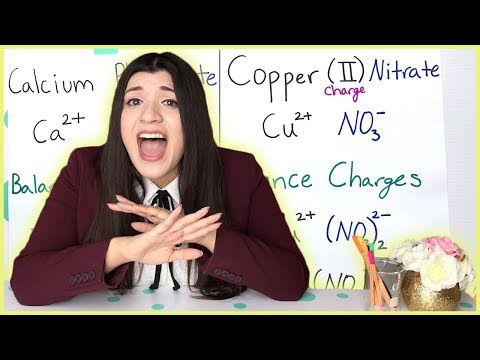
(Video) Naming Ionic and Molecular Compounds | How to Pass Chemistry

by Melissa Maribel

In this video, you will learn how to write a formula based on the compound name and also write the name based on the formula. Melissa goes over a few different types of ionic compounds. First, she talks about a metal with a nonmetal. Then, she does a transition metal with a nonmetal. Finally, she does a metal with a polyatomic ion.

Interactive · 1 question

Naming Binary Ionic Compounds

We've started to study chemical nomenclature. If we can determine the molecular formula, we can use it to name a compound or molecule. In this lesson, we'll investigate naming ionic compounds. But, we also have lessons on naming covalent compounds and naming acids and bases.

What are Ionic Compounds?

  • Ionic compounds are composed of ions. Ions are atoms that have gained or lost electrons. But, they still have the same number of protons. The positive ion(s) is called the cation. The negative ion(s) is the anion.

  • Ionic compounds are neutral. They have a neutral overall charge. So, the charges of the cations and anions are balanced.

  • Ionic compounds form ionic bonds. They are held together by the electrostatic attraction between the cation and anion.

Image visualizing ionic compounds and how they are made up of ions (more specifically cations (+ charged) and anions (- charged)

Image source: Caroline Monahan

Rules For Naming Ionic Compounds

  1. Name the metal ion (cation) first by its regular metal name.
  1. Name the nonmetal ion (anion) second, but substitute the ending with -ide.
  • Example: Cl = Chlorine = Chloride.
  1. If a polyatomic ion is present, use the polyatomic ions name. Do not add the -ide ending!
  • Example: MgSO4MgSO_{4} = Magnesium Sulfate.
  1. What if the metal is a transition metal? Remember, transition metals have access to the d-orbitals. So they have multiple oxidation states. You denote the oxidation number using roman numerals.
  • Example: Fe2+Fe^{2+} or Fe3+Fe^{3+} = Iron (II) or Iron (III)

Naming Ionic Compounds Walkthrough:

Name the following ionic compound: Fe(OH)3Fe(OH)_{3}

1) First is to identify and name the metal

In this case, the metal is iron (Fe). But it is a transition metal. So, we need to identify its oxidation state.

To do this, we need to figure out the charge of the nonmetal. Remember, the positive and negative charges will balance. In the end, we'll have a neutral ionic compound.

  • The hydroxide ion (OH−OH^{-}) has a charge of -1. In this formula, we have 3 hydroxide ions. So, the total negative charge is -3.

  • To form a neutral ionic compound, iron must have a charge of +3. So, the name for this metal is iron (III).

2) Now identify and name the nonmetal

In this case, the nonmetal is the polyatomic oxoanion, hydroxide (OH−OH^{-}). Wait a second, hydroxide has the -ide ending. That's true! But, that's because this polyatomic ion's name is hydroxide. The -ide ending was not added.

3) Put the names together

Fe(OH)3Fe(OH)_{3} is Iron (III) hydroxide

Examples of Ionic Compound Names:

Here are some more examples of names of ionic compounds!

  • Hg2Cl2Hg_{2}Cl_{2} = Mercury (I) chloride
  • NaClNaCl = Sodium chloride
  • AgIAgI = Silver Iodide
  • SnF4SnF_{4} = Tin (IV) fluoride

Now Try a Practice Problem!

Name the following ionic compound: PbOPbO

Choose one answer

Type a concept, like “slope” or “photosynthesis”.

↑ ↓ to choose · Enter to openSearch explanations and problems