
Non-Native Species (Invasive Species) — Overview & Impact

Illustrated · 2 min

What Are Non-native Species, Anyway?

Non-native species are species that get introduced to a new environment, usually as a result of various human activities. This isn't necessarily an issue, because these species aren't always able to survive in their new environment. The problem is when these species thrive in their new environment to the point where they affect the ecosystem.

When a new species does too well and starts to harm the environment, it becomes an invasive species. Non-native species are simply in a new environment (where they may not even survive), while invasive species harm their new environment. This can have disastrous effects on the native wildlife species. These harmful species have even destroyed whole ecosystems and driven local species to extinction.

How Do These New Species Get Introduced?

The introduction of non-native, or alien, species into a new environment is often accidental, but it is usually due to humans. Shipping things internationally is a common way that new species get introduced. Plants get transplanted to make gardens look exotic, and animals (like zebra mussels) hitch rides in the ballast tanks of ships.

Often with invasive plant species, people have decorative plants that accidentally get released into the wild. This also happens with exotic pets, like the green iguana. The iguana is native to Central and South America but is considered invasive in Puerto Rico and South Florida in the United States.

This is an illustration of a green iguana, which is considered an invasive species in some parts of the US and Caribbean.

Image source: By Sylvia Freeman

The population of green iguanas in Anguilla in the Caribbean have a rather unique story behind their arrival on the island.

In the aftermath of a series of hurricanes in 1995, green iguanas, which were not previously found on Anguilla, were seen arriving on the island. Scientists interviewed witnesses to the iguana landing, tagged the iguanas they could find, and analyzed the ocean currents. They concluded that at least 15 iguanas must have floated on uprooted trees over the ocean from Guadeloupe, 200 miles away.

This image shows some cartoon iguanas floating on a raft. This is an example of how invasive species can arrive in a new habitat.

If you don't think this is the coolest example of the introduction of a non-native species ever, then I don't know if anything can impress you.

Image source: By Sylvia Freeman

This is an example of an invasive species being naturally introduced (not by human interference), and is also a great example of the founder effect.
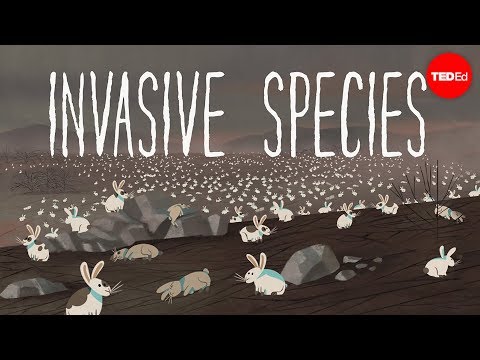
Video

(Video) The Threat of Invasive Species

by Jennifer Klos on TED-Ed

Invasive species can wreak havoc on foreign ecosystems. This TED-Ed video explores the who, the how, and the why of non-native species.

Read · 2 min

Introduction of New Species

Non-native species are plants and animals that were introduced to different environments than their own.

At first, that doesn't seem too bad. The species might be cute, like rabbits, or even pets, like cats. But when these organisms are put into a new environment, they might have impacts we didn't expect. A decent amount of the time, the new species will not be able to adapt to their new environment and will quickly die off.

What Is an Example of a Non-native Species?

As an example, here in Pittsburgh, we get a few non-native alligators each year. They're typically pets that get released. The alligators can't cope with the cold, so they die during the winter months. Their impact on the Pittsburgh ecosystem isn't very large because they don't last long enough to really mess anything up.

What about Invasive Species?

Sometimes, though, the new species might find themselves better suited for their new environment than they were for their original one. The new species might lack predators and become overpopulated, driving out the native plants and animals. They may be predators and kill more animals than is healthy for the ecosystem. Or, they might share a similar niche with another species and compete for resources. This type of non-native species, one that negatively impacts its new ecosystem, is called an invasive species.

What Are Examples of Invasive Species?

In Australia, rabbits are considered to be invasive. Rabbits were introduced in the 1800s by one man, but now there are so many of them that they have destroyed ecosystems, crops, and communities. The sheer number of rabbits causes their populations to be called "rabbit plagues".

Have you ever visited the Everglades in Florida? If you have, you may have come across a Burmese python. Contrary to popular belief, these pythons are not native to Florida. They start off as exotic pets and when they become too large, the owners release them into the wild.

In North America, a fish species has been rampant in its invasion, the Asian carp. This fish has been found in most major bodies of water across the U.S. and Canada. In some areas, the amount of carp is so pronounced that a boat ride through their watery habitat can cause them to leap out of the water in droves. What a sight to see.

Other well-known examples include zebra mussels and water hyacinth.

Vocabulary Review:\color{#8925AE}{\text{Vocabulary Review:}}

Non-native Species\color{#8925AE}{\text{Non-native Species}} : A species that is introduced to a new ecosystem

Type a concept, like “slope” or “photosynthesis”.

↑ ↓ to choose · Enter to openSearch explanations and problems

