How do we generate electricity? Mostly, we don't think about it. We plug in our devices, let them charge, use them, and repeat. But, our electric grid is a complicated system. It's the main application of nuclear chemistry. Everything we've learned about radioactivity and nuclear reactions gets used in nuclear power plants. Let's study how they work!
Powerplant Design
When I was young, I remember driving past our city's powerplant. It had massive towers with steam spewing out the top. I remember asking my mom about it. She told me it was how we make clouds. I still wonder if she didn't know, wanted me to move on, or was trying to capture my imagination. Anyway, I forgot about it and moved on. When I was older, I went to college and studied chemistry and engineering. I finally learned about powerplants!
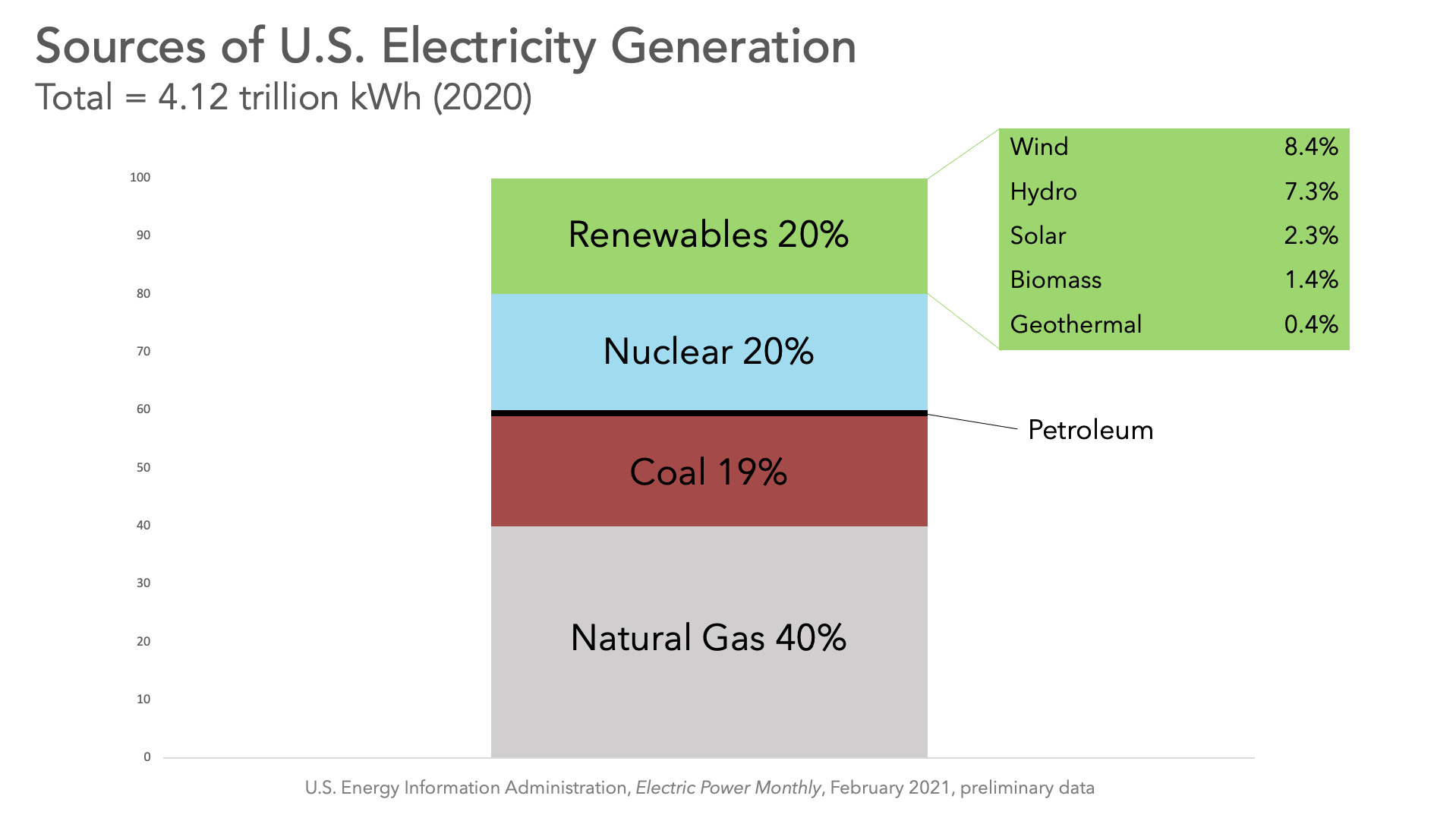
The heart of any powerplant is the reactor. The reactor's goal is to produce heat. In a conventional powerplant, we combust fossil fuels. Most commonly, we use coal or natural gas. The benefit is that combustion reactions are always very exothermic. We recognize them by their heat! And we have ways to convert heat to work. So, what is the problem? The downside is that they produce carbon dioxide. It's a potent greenhouse gas. So, an alternative is using nuclear fission. Nuclear reactions also generate a lot of heat! And they don't release pollution!
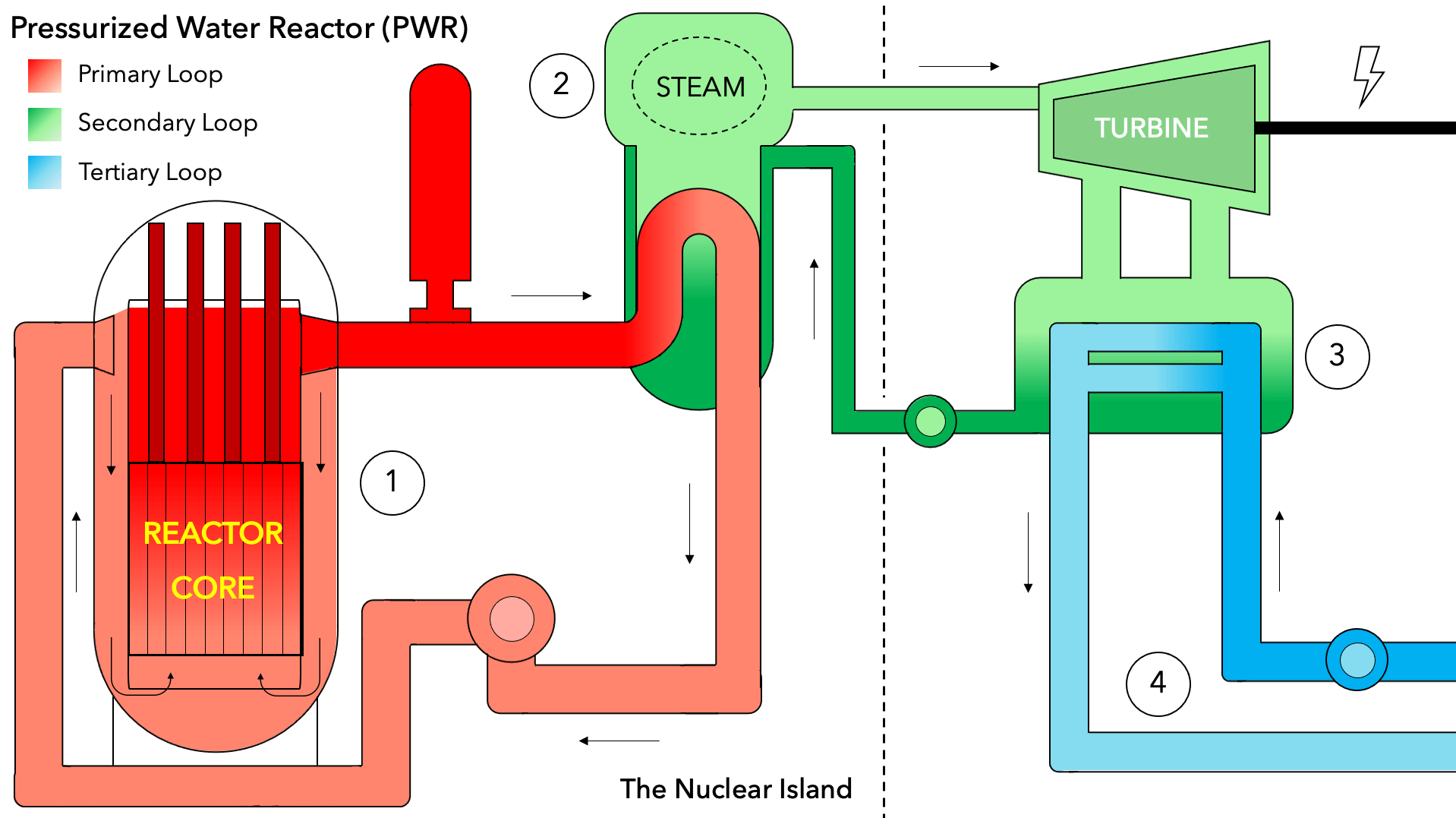
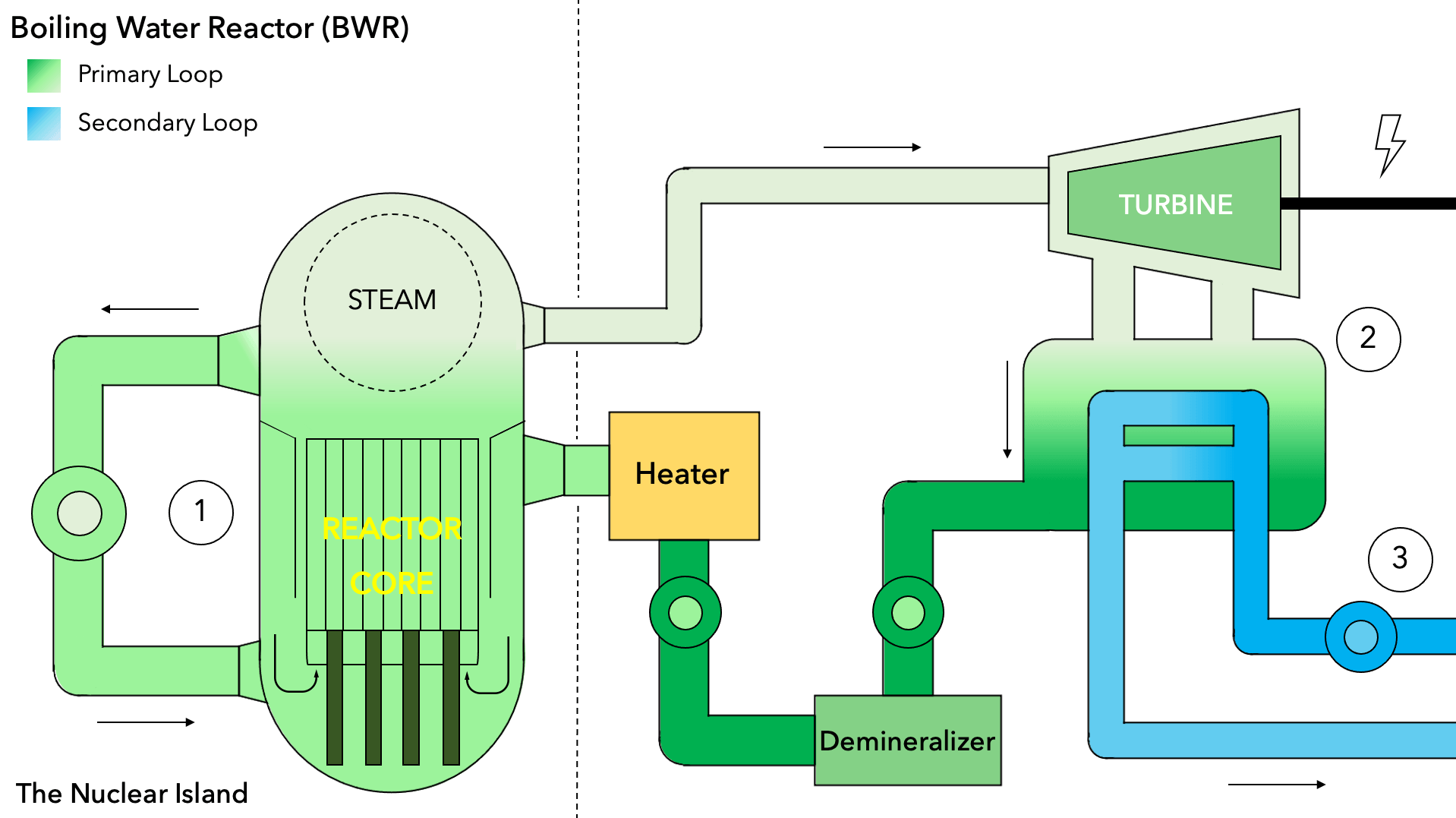
But, how do we convert heat to electricity? We start by transferring the heat to a coolant. The coolant keeps the reactor at the correct operating temperature. It also helps us move the energy from one place to another. The coolant is a liquid that we pump through a pipe system. Current nuclear power plants use water. But, new prototypes are proposing liquid metals, like sodium or lead. As the coolant passes the reactor, it absorbs heat. Next, we pump it through a pool of water. The heat gets transferred to the water. What's the result? We vaporize the water. So, we've produced steam. We use the steam to rotate a gigantic turbine. As the vapor diffuses, it collides with the turbine. The collisions transfer momentum. But, there's a trick. We've attached the turbine to a generator. So, as it spins, it generates electricity!
So, what happens to the steam? We condense most of it by passing it through a condenser. The condenser uses more water to absorb any excess heat. The original water is then pumped back through the reactor. And, the whole cycle repeats. So, what is the steam that comes out of the towers? That's water vapor from the condenser. We keep the coolant in a closed system to avoid contamination.
Nuclear Reactors
I said that the heart of any powerplant is the reactor. So, how do nuclear reactors work? They take advantage of fission reactions. The most common fuel is Uranium-235. When it gets hit by a neutron, it becomes U-236. But, U-236 is unstable! So, it undergoes fission and releases more neutrons. As more atoms get hit, we develop a chain reaction.
But, before we can do any reactions, there's a problem. The natural abundance of U-235 is minuscule. It's about 0.7 percent. To sustain a chain reaction, we need between 3.0 and 5.0 percent. So, we need to increase the concentration. A common technique is gaseous diffusion. It takes advantage of Graham's Law. Do you remember it? It taught us that a gas's effusion rate is proportional to the molar mass. So, if we had a gaseous uranium compound, the heavier isotope would effuse slower. It turns out we can use uranium hexafluoride gas. We pass it through a series of membranes. The heavier U-238 travels slower than U-235. So, we can separate it!
So, we have our fuel. How do we design a reactor? First, we convert our uranium into uranium dioxide. It starts as a powder. But, we compress and heat it into small pellets. Then, we form them into rods. They get stacked inside a metal tube made of a zirconium alloy. Zirconium does not absorb neutrons very well. So, it contains the fuel and transfers heat to the coolant. The completed package is the fuel rod.
Finally, we also need to control the chain reaction. U-235 has a neutron propagation factor of about 2.5. So, each fission reaction propagates an average of 2.5 more fissions! Without a control method, the energy output would increase exponentially. So, we have control rods that insert between the fuel rods. The control rods absorb neutrons. So, they decrease the propagation factor. The most common material is graphite. The control rods are manually raised and lowered by the operator. When they are completely down, the reaction gets terminated. All the neutrons get absorbed by the control rods. Raising the control rods exposes some of the fuel. So, the reaction can propagate.
Nuclear Waste
What's the biggest challenge with nuclear energy? The waste! Eventually, a fuel rod becomes unusable. The decay series products are neutron absorbers. So, they begin to terminate the chain reaction. What do we do with a spent fuel rod? First, we have to stop the reactor. Why? So we can remove and replace the fuel rod. We replace about a third of the fuel rods every 18 months. But, replacement is a serious challenge. The fuel and control rod assembly looks like a honeycomb. Different areas of the honeycomb get consumed faster. So, you cannot just replace a spent rod with a new one. You have to account for the half-used rods. You have to rearrange the whole puzzle. The goal is to maximize safety and yield.
What do we do with a spent fuel rod? There are still radioactive elements in the fuel rod. For example, there are several radioactive actinides. And they're unbelievably hot! So, we have to submerge it in a pool of water. But, the reservoir is intricate. It has shelves made of boron compounds. The boron captures any neutrons. The water absorbs other residual radiation and heat. So, between the two, the radiation is neutralized. The fuel rods remain in the pool for over six years! It takes that long to cool.
What happens after the pool? It depends on your country. For example, the United Kingdom and Japan have reprocessing facilities. The rods still have usable U-235. Its half-life is 700 million years. So, you haven't lost much over six years. Also, some of the actinides are used medically as radiotracers. If you live in the United States, the waste gets stowed in massive underground facilities. Unfortunately, most of the products have massive half-lives. So, we'll have to store the waste for thousands of years.
The Future of Nuclear Energy
The principal detriment of nuclear energy is waste. So, scientists are working on rector designs that minimize it. The future of nuclear power depends on these generation 4 reactors. What are some of the benefits? The most prominent is the use of various fuels. The premise is that the reactor could use the decay products. So, the produced actinides continue to the reaction. The same fuel mass may generate three to four-fold times the energy output. It might even be possible to use unconfined fuel. So, we don't need the zirconium rods. The reactor would use much less material. So it becomes more cost-effective. Right now, generation 4 reactors are prototypes. But, maybe someday, we'll see them become a staple of energy production.