Background
In the previous lessons, we learned about the importance of sampling in experiments and statistics. We dove into types of sampling. We also learned about different types of sampling biases, including self-selection and observer bias. We also learned about different methods of avoiding sampling bias in our research, including blinding and random sampling.
This lesson will cover another type of sampling bias, called omitted variable bias.
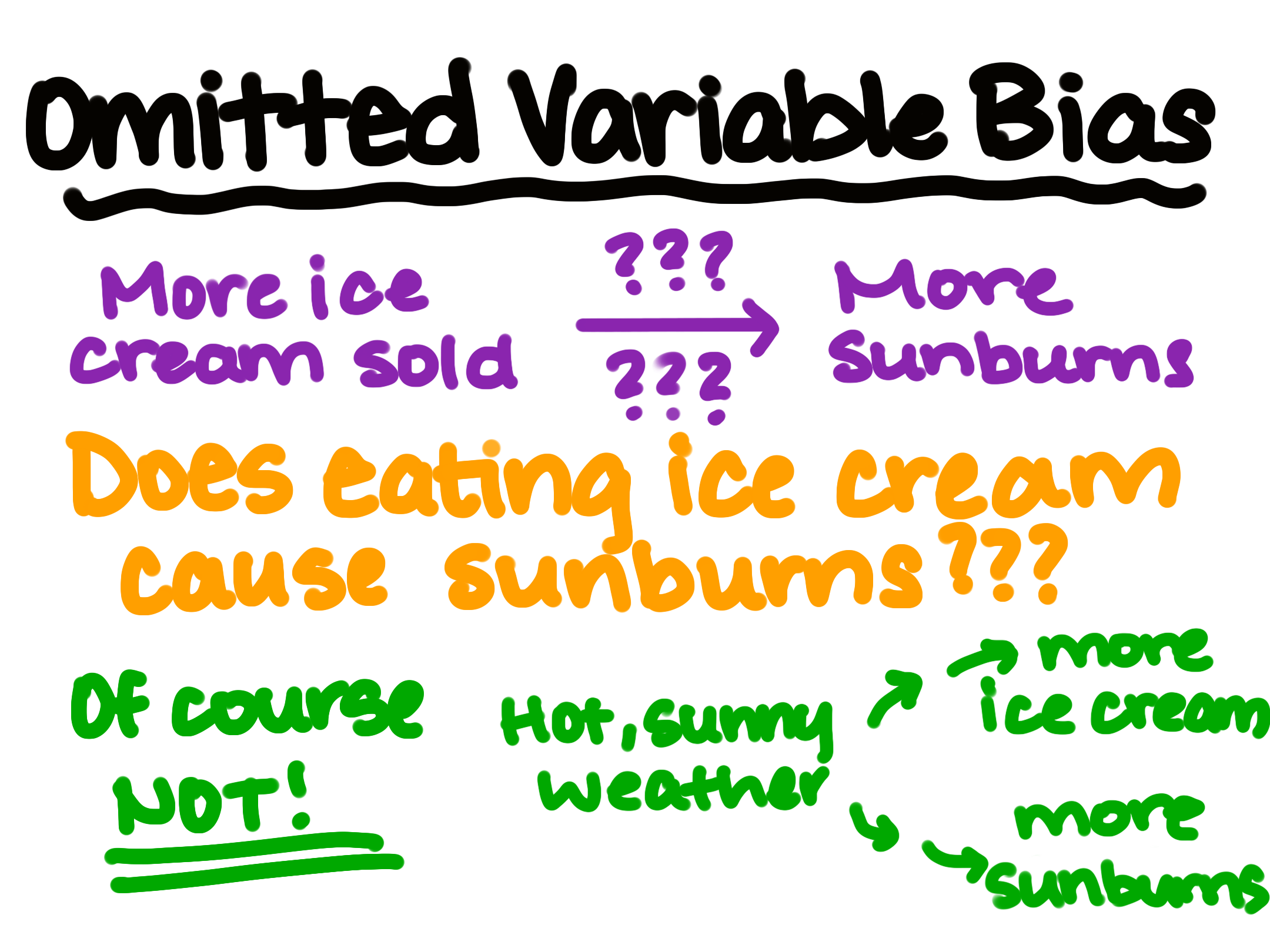
Omitted Variable Bias
This type of bias is when a statistical analysis leaves out specific variables from the analysis. The result is a potentially invalid statistical analysis, as there may be relevant variables that are not included within the analysis.
We often see this bias when we are dealing with regression analysis, looking at multiple factors' variability with each other, specifically cause and effect. If there were some third variable we didn't consider, it could be affecting our results (i.e., the dependent variable). This third variable may be an omitted variable.
It may be easier to understand with an example.
Example
You want to understand the relationship between drinking orange juice and feeling energized. You notice that on the mornings that you drink orange juice, you feel like you have more energy throughout the day. This increased energy makes you feel more productive!
drinking orange juice→more energy→more productive
You tell everyone about your new secret weapon for increasing your productivity! When you tell your mom, she asks how you know it is the orange juice. You say that you noticed that when you wake up on time in the morning, you have time to drink orange juice.
But maybe waking up on time is also affecting your energy. Having more energy could then affect your productivity. This means that drinking orange juice and having more energy may be correlated, but that does not mean orange juice caused you to have more energy.
Waking up on time is an example of an omitted variable. You did not originally consider it when looking at your energy throughout the day, but it may be affecting your energy levels and your productivity. Leaving out an important variable can create bias in your analysis. This idea can also be called an error term.
That is why, in statistics, you should not only consider the variables that seem relevant at first. You may not know which variables are important until you complete a full analysis. Always consider as many possible variables and conditions as you can.