
Illustrated · 1 min
+1 contributors

One-Tailed and Two-Tailed Tests
Let’s start with Two-Tailed Tests.
Two-Tailed tests are often used when testing for a difference in some parameter (i.e. mean) between two groups in which we don’t care whether one parameter is bigger or smaller than the other.
For example, if we wanted to see if there was a difference between the average number of students over time between School #1 and School #1, we wouldn’t really care if School #1 had a higher mean than School #2, or vice versa, only that they are different.
Two-Tailed Hypothesis Tests often look like this in structure:
Such that is the difference we are testing the significance of.
Graphically, Two-Tailed Tests look like this:
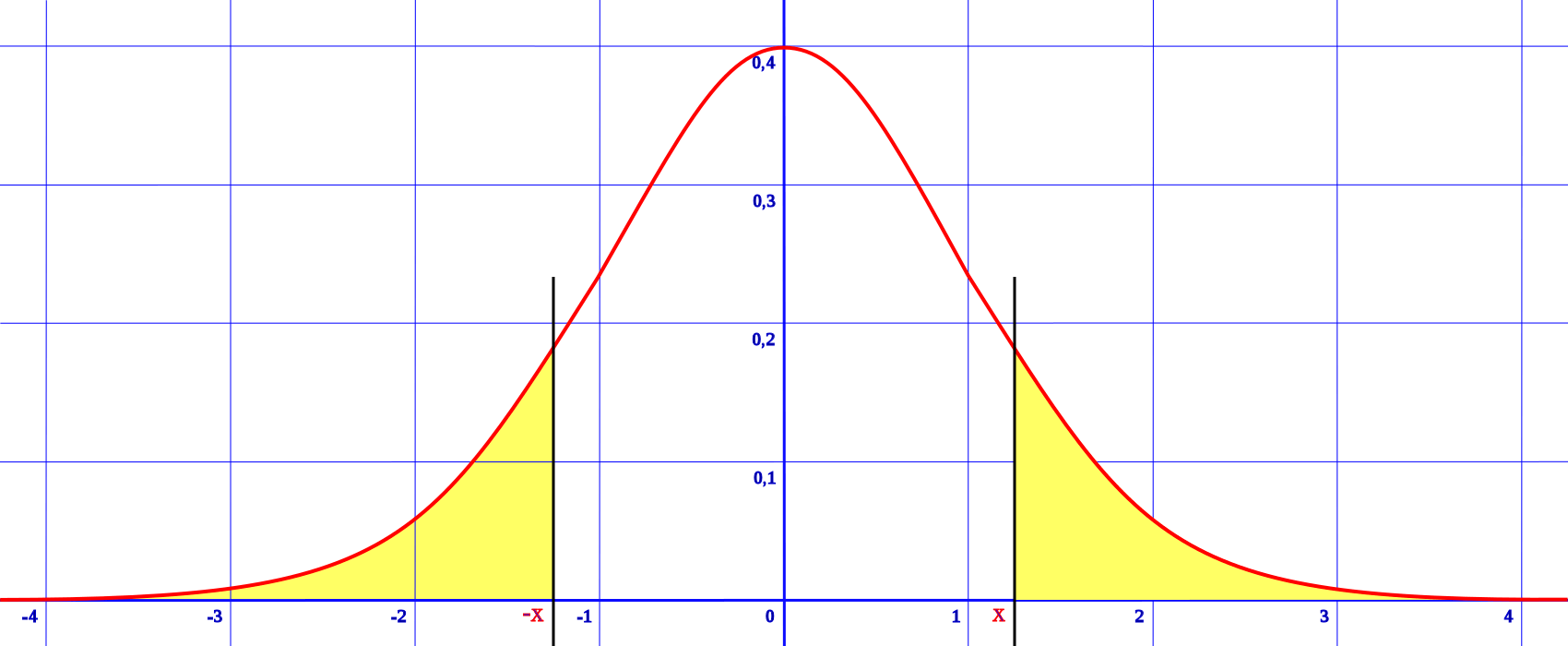
Two-Tailed Distribution
Continue for One-Sided Tests!
On the other hand, one-sided tests care about a difference between two groups in one direction. Going off of the School #1 and School #1 example discussed previously, for a one-sided test questions such as:
“Does School #1 have a greater number of students over time on average than School #2?”
or vice versa
One-Tailed Hypothesis Tests often look like this in structure:
or
Such that is the one-sided difference we are testing the significance of.
Graphically, One-Tailed Tests look like this:
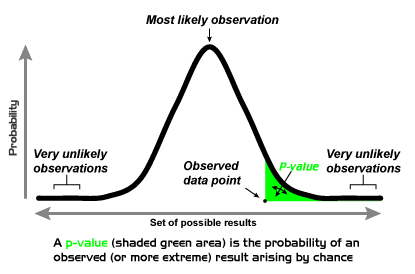
One-Tailed Distribution
