Illustrated · 1 min
+1 contributors
Contributors

The Basics of Orbital Diagrams
- There are different types of orbitals, that all have different energy levels. These orbitals are filled with electrons (the amount of electrons depends on which element you are looking at).
- S orbitals make up 1 box, and contain a max of 2 electrons
- P orbitals make up 3 boxes, and contain a max of 6 electrons total (2 in each box)
- D orbitals make up 5 boxes, and contain a max of 10 electrons (2 in each box)
- F orbitals make up 7 boxes, and contain a max of 14 electrons (2 in each box)
Here is a cheat sheet to remember the order of the orbital diagrams!

Image source: Caroline Monahan
Electron Configuration vs Orbital Diagrams
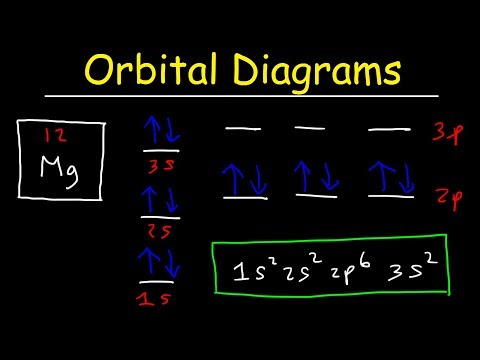
- The electron configuration is a written out version of the orbital diagram!

Image source: Caroline Monahan
The Three Rules for Creating Orbital Diagrams
- The lowest energy orbitals are filled before the higher energy orbitals (Aufbau Principle)
- Each orbital gets one electron first, before adding the second electron to the orbital (Hund’s Rule)
- Only 2 electrons, of opposite spins, can occupy each orbital (Pauli Exclusion Principle)

Image source: Caroline Monahan
Practice Problem Walkthrough
What is the orbital diagram for Sulfur?
- Look at the periodic table to see how many electrons sulfur has
- In this case, sulfur has 16 electrons that need to be placed into orbitals

Image source: Caroline Monahan
- Looking at our cheat sheet, draw the orbitals one at a time, adding electrons as you go, until you reach a total of 16 electrons

Image source: Caroline Monahan